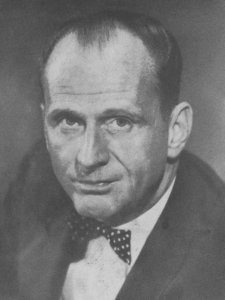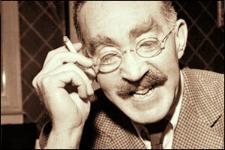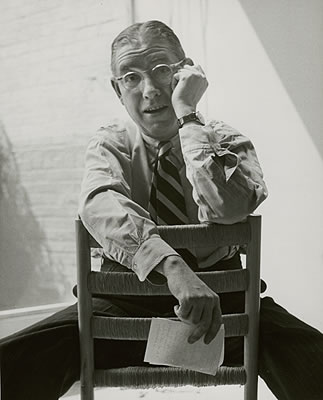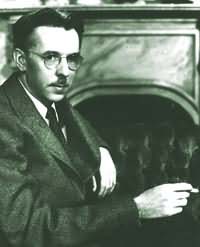
Yesterday evening we attended a "do" at the local High School. My husband's grandson was taking part in a pageant to find "Mr. Irresistible" - a spoof of the "Miss Whatever" beauty pageants which used to be popular. The grandson didn't win, though he put on a grand show. The winner was 'PJ' a diminutive oriental lad, all of 4ft 6", wearing heavy-framed spectacles. From appearance alone, he seemed the least likely winner, measured against some of his tall, athletic opponents, representatives of various sporting endeavours. PJ was wonderful - talented, funny, infectious and the audience loved him. I kept wondering about his birthdate! On art, music, books, movies, politics, life - sometimes with astrology thrown in.
Friday, December 15, 2006
Mr. Irresistible meets Astrology World.
Yesterday evening we attended a "do" at the local High School. My husband's grandson was taking part in a pageant to find "Mr. Irresistible" - a spoof of the "Miss Whatever" beauty pageants which used to be popular. The grandson didn't win, though he put on a grand show. The winner was 'PJ' a diminutive oriental lad, all of 4ft 6", wearing heavy-framed spectacles. From appearance alone, he seemed the least likely winner, measured against some of his tall, athletic opponents, representatives of various sporting endeavours. PJ was wonderful - talented, funny, infectious and the audience loved him. I kept wondering about his birthdate! Thursday, December 14, 2006
The Outer Planets and TV Drama.

Wednesday, December 13, 2006
Dennis Kucinich - Scorpio's Iron Hand in Libra's Velvet Glove?

"I am not going to stand by and watch thousands more of our brave, young men and women killed in Iraq," Kucinich said to applause from a crowd gathered at City Hall. "We Democrats were put back in power to bring some sanity back to our nation."
un-American. Our nation’s very name makes of striving for unity a sacred cause."
Tuesday, December 12, 2006
Richard Dawkins, the astrologers' nightmare.
Around ten years ago Dawkins opened a diatribe with:
"Astrology is neither harmless nor fun, and we should see it as an enemy of truth, says Richard Dawkins, author of 'The Selfish Gene'. Why, he asks, do so many of us indulge in these pre-Copernican dabblings which are nothing short of wicked fraud?"
more at
http://www.simonyi.ox.ac.uk/dawkins/WorldOfDawkins-archive/Dawkins/Work/Articles/1995-12romance_in_stars.shtml
That opening gambit reminds me of our Oklahoma Senator James Inhofe who is very vocal on the subject of global warming, and continually insists that it's one of the biggest hoaxes of all time.
Dawkins and Inhofe should get together - they'd make a good pair.
I have my own opinions about astrology, some of which might bring a wan smile to Dawkin's face. I do not ascribe to everything the astrologers tell us. But I DO have unswerving faith that there IS something going on - something which is capable of being observed by those with the right kind of sensitivity. I think that's the key to it all. Sensitivity. Some of us are extra sensitive to light, some to sound, some adversely sensitive to pollen, cats, etc. It seems natural to me that there is a kind of sensitivity some of us have which "appreciates" or "sees" astrology working, while others remain blind.
Dawkins feigns affront that astrologers can make lots of money from this so-called "fraud". He conveniently forgets that he makes money too, from his constant harping about astrology, in the form of publicity for his books, TV fees, fees for articles in the press. Pot calling kettle ?? Hypocrisy ??
Monday, December 11, 2006
Astrology Message Boards

Sunday, December 10, 2006
The Accidental Prophets

A recent search for information about various writers and novelists illuminated an unexpected side issue.
In my blog entry relating to James Michener I noted that he seemed to have amazing foresight. Several of his novels featuring a particular country, in depth, were each followed some years later by the same countries coming into prominence on the world stage. In a long interview here:http://www.achievement.org/autodoc/page/mic0int-4
he said "I think that some of us have a deep seated sensitive antennae about what is going to happen."
I had decided to look into the biography of Nevil Shute, author of one of my favourite books "A Town Like Alice". I discovered that Shute wrote a couple of novels which, later, seemed to have been prophetic. "No Highway" published in 1948 dealt with what might happen due to metal fatigue in aircraft. His ideas came close to fact with the Comet disasters of the 1950s. "What Happened to the Corbetts" also published as "Ordeal" was written just before the start of WorldWar2. It tells how badly aerial bombing affected a town similar to Southampton, in the south of England, and how the bombing of civilians became a major part of the war. British people of a certain age will have no trouble recognising this as fact! His novel "On the Beach", a story of the world ending as a result of the explosion of atomic bombs, thankfully has not yet proved prophetic. It could still be "pending" however, should people forget the warning bells it rang! Shute also touched on a slightly supernatural theme in a novel called "Round the Bend" in which an aircraft mechanic becomes the mystical leader of a religious movement.
Seeing a slight correspondence between Michener and Shute, I searched around for other instances of novels which seem to portray events which later came to pass in real life. It appears that American writer Morgan Robertson produced an early example in his story "Futility" . He told of a ship called Titan which sank in a way eerily similar to The Titanic, 14 years later. When this book was written there were no ships of such enormous size being built. Robertson also appeared to be crystal-gazing when he later(1914) wrote a book called "Beyond the Spectrum". In this book, he described a war in the future, fought using aircraft which dropped "sun bombs" on their targets. These were powerful enough for a single bomb to destroy a city. When this book was written, aeroplanes were small, flimsy, and unreliable machines capable of carrying one person. Nuclear weapons were still unimagined. Robertson's war began in the month of December, as did the Japanese attack on Pearl Harbor which brought the USA into WW2.
Michener was born 1907, Shute 1899 and Robertson 1861.
There are, of course, common sense explanations for the authors' apparent ability to see into the future, these men were not deliberately trying to predict events, as far as we know.
Michener didn't foresee actual events, but was drawn or inspired to write about countries which later came to prominence for one reason or another. He was widely travelled, highly intelligent, politically minded and had lived in all the countries he wrote about. Common sense would say that he was "putting two and two together" with a bit of Aquarian intuition.
Shute was a skilled aeronautical engineer as well as novelist. He had technical knowledge more than sufficient to foresee possible outcomes where the area of his expertise was involved. "An accident waiting to happen", in the case of metal fatigue, and some extrapolation of known facts in the case of aerial warfare ?
Robertson was the son of a ship's captain and spent some time as a cabin boy himself, so the sea was "in his blood", he had no doubt heard some tall tales from the old salts he must have encountered. These, with a little embroidery, might have helped him to invent his ship Titan. His "Beyond the Spectrum" published in 1914 is harder to explain.
Those are explanations for the sceptics. Someone more open-minded, and sensitive to peculiar coincidences like these, might see a different explanation.
Novelists and short story writers continually tap into vast resources of imagination. For hours at a time, on a regular basis, their minds are "elsewhere", concentrating outside of mundane events. Isn't this akin to meditation? Could it be that as they concentrate so intently in realms of the imaginary, coloured with knowledge stored in their memory banks, they somehow seep through a time barrier or into another dimension?
Any correspondences in the natal charts of these three writers in question could help in finding an explanation.
Morgan Robertson born 30 September 1861 Oswego, New York
Nevil Shute born 17 January 1899, Ealing, England
James Michener born 3 February 1907, New York
Using my limited astrological skills, without the aid of a safety net - I mean time of birth, concentrating on major aspects, and placements only ....drum roll:
1. All 3 writers have Sun and Mercury in the same sign (not uncommon.)
2. Uranus opposes Pluto(Shute), Uranus opposes Neptune(Michener) and Uranus squares Saturn/Jupiter(Robertson). The first two are generational, but might still have significance.
3. In Robertson's case Neptune opposes Sun. Shute and Michener both have Neptune and Sun inconjunct.
So.... attention is drawn to the outer planets, especially Neptune's links to the Sun. (The orbs are a bit wide, but Neptune is slow, so perhaps it's OK.)
More detail:
Robertson: Sun at 7 Libra/Neptune at 00Aries (Aries Point) opposition
Shute: Sun at 27 Capricorn/Neptune at 22 Gemini- inconjunct
Michener: Sun at 14 Aquarius/Neptune at 10 Cancer-inconjunct
I doubt that opposition and inconjunct aspects are obvious choices to produce the effect in question - but who knows? It's said that Neptune represents imagination, among other things, and mysticism. Maybe the push-pull of an opposition, or friction from an inconjunct aspect in a natal chart can produce an effect in the mind of the native strong enough to push aside the "veil" of present reality. This effect would be most likely to show up when those with such aspects engage in mental activities which need acute concentration. An interesting subject to research !
Morgan Robertson, the writer with Sun and Neptune in opposition, dispayed the most surprising ability of the 3, but the other two writers do show lesser, or more explainable abilities, which are still remarkable.
Perhaps the best explanation (for now) is that intense concentration of a mind with certain Neptune/Sun energies built-in, and knowledge in specific fields, gained from experience, can result in reasonably accurate prognostication.
It sounds reasonable enough to me!
Friday, December 08, 2006
Louisa May Alcott, Sagittarian - More than a Little Woman
Louisa May Alcott born 29 November 1832, Germantown, Pennsylvania.The only books I remember clearly from my childhood were written by this author. I received "Little Women" as a gift one Christmas, and after reading it with much delight sought out its sequels "Good Wives", "Little Men" and "Jo's Boys". Louisa May Alcott wrote much else, of course, but these books were what brought her fame.
Louisa May was one of four daughters of transcendentalist and teacher Bronson Alcott, and Abigail, his wife, a vocal proponent of women's rights. They settled in Concord just outside of Boston. Louisa May and her sisters were educated mainly by their father. They were often in company of his friends who included such luminaries as Ralph Waldo Emerson, Henry David Thoreau, Nathaniel Hawthorne and other literary figures, all of whom lived nearby. The Alcott family was not materially prosperous however, the children grew up in basic poverty, but surrounded by intellectual richness.
Louisa May began writing early, first for her sisters, in the form of poems or plays which they would perform. She was forced to take any kind of work available for a few years in order to help the family finances, but she continued writing short stories and poems which were published in popular magazines. At age 22 her first book, "Flower Fables" was published . It was not until age 35 that she wrote "Little Women". The tale is partly autobiographical, drawing broadly from the experiences of herself and her sisters during childhood. At least 30 of her books were published, "Little Women" has never been out of print.
Louisa never married. In later life she became an advocate of women's suffrage and was the first woman to register to vote in Concord, MA. Her health had been permanently damaged when serving for a short spell as a Civil War nurse. Louisa contracted typhoid fever, she recovered but suffered the poisoning effects of mercury from a drug used at that time to cure the disease . Her health failed gradually, she died, aged 56, two days after her father had passed away. Interestingly her father was born in 1799, on the same day and month as Louisa May - 29 November.
So, does Louisa May Alcott's astrology fit? I have noticed that some internet sources offer a birth time. I believe this has to be suspect. I doubt that records of birth times were kept in 1832. In most states it was not until the 20th century that time of birth was officially recorded. The time offered gives a Virgo ascendant and Gemini midheaven, which for me is a little too "convenient" for an author!
I suppose it is possible that in some of Louisa May's writings or diaries she has mentioned an estimated time of birth, but I'm doubtful - why would it be of any importance to someone who had no interest in astrology ? I'm not convinced, so will continue minus birth time.
Sun and Mercury in Sagittarius with 19 degrees between them. Sagittarius is the sign of philosophers and free thinkers. It has been said that Louisa May, though surrounded by transcendentalist philosophies in her young life, did not ascribe to them herself - she followed her own free-thinking, possibly fuelled by her Moon and Uranus in Aquarius.
Saturn is in Virgo, squaring Mercury within 2 minutes of arc - the writer's Saturnian link!
There is a Grand Trine in Earth linking Mars in Taurus, Saturn in Virgo and Neptune in Capricorn. I believe that this accounts for Louisa May's determination to provide for her poverty stricken family, which she continued to do throughout her lifetime. If she had any ambition or inclination to write worthy intellectual tomes, she decided to forego it in favour of writing what she was sure would sell and provide for her loved ones.
Jupiter, the publishing planet and traditional ruler of Pisces, lies strong in that sign, it squares Louisa's Mercury in Sagittarius, and opposes Saturn in Virgo, producing dynamic energy between the writing and publishing planets.
Pluto in Aries trines her Sagittarian Sun, but exactly squares her Venus in Capricorn. Perhaps while powerful Pluto may have aided her deepest ambitions, did the powerful, if diminutive, planet place an obstacle to her love life ?
She is quoted as having said "I have fallen in love with so many pretty girls, never once, the least bit, with any man". Whereas nowadays that statement might be thought to imply a certain sexual orientation, in the 19th century I very much doubt that was the case.
I think Louisa May Alcott's astrology is fitting , even without the benefit of a birth time.
My interest in astrology inspired me in the past to try to categorise the sisters in "Little Women" according to their archetypes. I decided that Jo, who I'm sure was Louisa's alter ego had to be Aquarian (reflection of her Moon) . Meg, the homemaker seemed to me to depict Taurus. Amy, the spoiled, vain sister was typically Leo. Beth the gentle one fitted Pisces well, I thought. All four elements were covered, though I doubt the author was aware of it!
Thursday, December 07, 2006
Larry McMurtry, Son of the West and Son of Mercury
Larry McMurtry, born 3 June 1936, Wichita Falls, Texas. (Birth time unknown)"Lonesome Dove" is what I know best of this author. I read the book, watched the TV series, bought the DVDs, and have watched them countless times. I was enthralled by this tale of the old West, almost as enthralled as I was by James Michener's "Centennial". How strange that I should find myself, at a fairly late stage in life, not too far from the locations of both books. We visited Archer City, Larry McMurtry's home town last summer, had a coffee in the famous "Dairy Queen" there, and saw his enormous used book store "Booked Up". We visited the location of Michener's "Centennial" in Colorado this year, too.
The information on Larry McMurtry's life available on the internet is basic, and not very revealing. The following is from Yahoo
Prolific author and screenwriter McMurtry has carved a niche as the chronicler of a fictional West (with particular emphasis on his native Texas) in transition. He is credited with reviving the genre and imbuing it with realism laced with satire. Although he has written novels set in other areas of the US, the flavor of the Southwest permeates. Raised in Archer County, TX on a cattle ranch established by his grandfather, McMurtry began his literary career at North Texas State University writing for the literary magazine "Avesta." Upon graduation, he worked intermittently as a teacher, first at Texas Christian University (1961-62) and then at Rice University (1963-64 and 1965-69). He continued his literary career as well, working as a freelance journalist and book reviewer.
Larry McMurtry is the author of twentyseven novels, including "The Last Picture Show", "Terms of Endearment", "Lonesome Dove", winner of the 1986 Pulitzer Prize for Fiction, and, most recently, "Folly and Glory". His nonfiction works include a biography of Crazy Horse, "Walter Benjamin at the Dairy Queen", "Paradise", and "Sacagawea’s Nickname: Essays on the American West" Several of his novels have been adapted for TV or movie screen.
His astrology:
Venus, Mercury, Sun and Mars are all in Gemini at 5, 8, 12 and 14 degrees respectively. What better indication for a literary career than a stellium in Gemini ruled by planet Mercury? Saturn doesn't link easily with those planets though, at 21 Pisces. Disappointing, because I feel sure that Saturn often does link into an author's astrological signature . Perhaps in McMurtry's case his generational planets Uranus and Neptune, both in Earth signs Taurus and Virgo, lend a certain amount of stability and discipline ? Or perhaps Capricorn was rising at the time of his birth. The publishing planet Jupiter lies at 20 Sagittarius, widely opposing his Gemini stellium, could the tension of this opposition perhaps be the catalyst which led him from teaching to writing? His Moon lies in Scorpio. Pluto, the third generational influence, is in Cancer. Saturn, Moon and Pluto form a Grand Trine in Water. McMurtry doesn't strike me as a superficially emotional writer, but he does imply deep understanding of emotional matters, often too ethereal to put into words. The relationship between Gus and Captain Call (Lonesome Dove) is a good example of this. Much later in his career McMurtry co-wrote the screenplay for "Brokeback Mountain", which deals with a relationship between two men - different from that in "Lonesome Dove", but dealt with in a similarly compassionate style. He was able to touch me sufficiently to bring tears in both instances. Perhaps this is his Water Grand Trine at work.
Larry McMurtry is a true "son of the West", with an innate talent for words. He has enabled us to share some of the magic which lies within the history of his beloved country.
Wednesday, December 06, 2006
James A. Michener- Aquarian Storyteller
James A(lbert) Michener. Born 3 February 1907, New York.There is no birth time available for James Michener. His birth date could, in fact, be questionable. He said that he was a foundling with no knowledge of his date or place of birth, he was adopted by a woman who was thought by some people to be his biological mother. She took him to Doylestown, in Bucks County, Pennsylvania, which was his home, along with several other orphans, until he left to thumb his way across the country. The question mark over his birth date makes any astrological analysis somewhat shaky, let's see how well the chart for 3 February 1907 fits.
James Michener was one of America's outstanding authors of the 20th Century. He is one of the Pluto in Gemini generation of writers, and they, in my opinion are "la creme de la creme". Unlike some of his contemporary journalist/humorist writers who were discussed in earlier blogs, this man lived a long, relatively happy, healthy and active life. He died aged 90 in 1997. He wrote at least 40 books, many of which became bestsellers, some have been made into movies, TV series, or stage shows. Notable among these are "Hawaii", "Centennial", "South Pacific", "Chesapeake", "The Source", "Space", "Iberia", "The Covenant", "Texas", "Alaska", ......the list goes on!
I first discovered James Michener via a television mini-series of "Centennial", back in the 1970s in England , I didn't ever forget it. I bought the book, read it from cover to cover - a notable feat for me and my impatient mind, when presented with a thick book! At various times since then I tried unsuccessfully to buy a VCR set of that TV series. I eventually found a set (at great cost!) a few months ago, via the internet. Watching it all again was like a dream come true for me. I saw the movie "Hawaii", and later read the book, saw the TV series "Texas" which I thought didn't stand up quite so well to TV's manhandling.
So, to the astrology :
James A. Michener, if his birthdate is correct, was born with Sun and Mercury conjunct in Aquarius. Saturn is exactly semi-sextile (30*) in Pisces - that's the Saturnian link which I believe helps to define a writer. Michener admitted to being very disciplined, writing every day , for10 hours, 7 days a week for 3 years to complete one book. Jupiter, the publishing planet is found in Cancer opposed by Uranus (his Sun's ruler) in Capricorn. His Moon lies in Libra exactly trining Mercury and Sun in Aquarius, so with Pluto in Gemini, there's a Grand Trine in Air, fuelling his mental capacity , he was said to be a brilliant student. His Aquarian Sun would have inclined him towards his interest and participation in politics.
Venus lies in Sagittarius - I knew it! I have this placement. It can relate to a love of travel, possible marriage partners of different nationality to oneself.
Both of those factors fit Michener (and me)! He lived in many different countries in every part of the world at various times in his life. He married 3 times. His literary success certainly overshadowed his personal life. His first marriage, in 1935, ended because of their long separation during the war. A second marriage lasted seven years, ending in a bitter divorce. While in Japan, he met his third wife, Mari Yoriko Sabusawa.
Mars, strongly placed in Scorpio probably helped him survive a poverty-stricken childhood and early adulthood with values intact. He said that he had to become tough, but was glad of his childhood experience . An interview at http://www.achievement.org/autodoc/printmember/mic0int-1 offers a chance to get to know Michener a little better.
James Michener, a brilliant scholar, seemed set for an academic career. War changed his direction. During his naval service in World War 2 which could have been avoided, though he decided to serve, he started writing. His first book was based on his experience of the South Pacific, and was, of course, a great success. In time it was to become both stage show and movie.
After more successful books Michener diversified somewhat, ran for Congress, was not elected, but spent many years in public service. (see comments)
During the interview (linked above) Michener was asked about a coincidence that the countries chosen as the subjects of several of his books each came into prominence on the world stage sometime later....
"And somebody the other day, a fine professor, made an introduction of me, which I had not thought about, but which I had thought about a great deal since. At that time, in the world, there were about a half dozen trouble spots: the Near East, the Jewish-Arab relationships, South Africa, revolution in Poland, the emergence of Japan, the absorption in the United States of two outlying territories like Hawaii and Alaska and four or five other things. And he pointed out that I had written full-length books about all these areas before they came into prominence. And I did! There they are. Look at the dates.
Now this cannot be because I was exceptionally brilliant. I am not brilliant. I'm something else. I don't know what the word would be, but it isn't brilliant. And I'm not all-wise. I'm a pragmatist. I learn as I go along. But I did have a feeling through my study of geography and history and people, that these places had to come into prominence. And that when they did come into prominence, people would want to read about them."
I suspect that it was NOT pragmatism, but insight or even precognition - which he denied.
Another quote from the same interview which allows a little more insight into this man:
.
James Michener: I would hate for any young person to think that she or he was the center of the universe. I lived in a little town, in a medium-sized state, and in a medium-sized country. I mean, Canada and Brazil and China and Russia are all much bigger than we are. And I live on a medium-sized planet. Jupiter and Saturn are much bigger than we are. And our galaxy, our star, you know, is one of the smallest stars and doomed after four and one-half billion years. And our galaxy is not the big one in the sky. And it's only one of about a billion or more. So I cannot believe that I am the hottest thing in the universe. And I think that sobers you up...........................
I think one ought to see oneself in perspective, and part of that perspective with me is that we are on this planet for a very short time, and that we had better understand that the life system that produced us goes on, and did go on long before we got here. And that the animals and the birds have their place, and the dogs and the cats and the lions and tigers. And that man is the apex of that pyramid, but he ain't the whole pyramid. No way. He is the apex, but not the whole pyramid itself. And I think that those things make someone like me have a rather stable point of view. About books and about art and about politics and about what the good life is. "
James Michener was jaw-droppingly talented, yet he said, on several occasions that he thought true writers were people like the Bronte sisters, Emily Dickinson, Eugene O'Neill, who sat down and wrote from their limited experience but vast imagination, with little, if any, research. Michener's style and subject matter demanded huge amounts of research.
From orphan child to gifted student, from naval officer and author to public servant, James Michener was an amazingly multi-faceted, multi-talented individual. Does the astrology of 3 February 1907 fit what we know of him? Yes, pretty much, but Mercury so close to the Sun doesn't feel quite right to me . He was such a disciplined, serious writer and researcher, somehow Mercury in Capricorn would seem more appropriate. However, a birthdate as far back as 25 January would be necessary to give Mercury a Capricorn placement. Could that be a possibility ? He states that he was a foundling baby. Was 3 February the date he was found, or the estimated date of his birth? There is no information on this because Michener would not discuss the matter. I'm sure, from what I've read, that Sun in Aquarius IS accurate, Venus in Sagittarius fits him exactly, too. If his birthdate were adjusted to January 25, with Mercury in Capricorn, the Moon would move from Libra to Gemini - either would be fitting, perhaps Gemini is more appropriate? In the end though, the birth date stated, 3 February, has to be accepted - its accuracy can never be established .
If Mabel Michener, his adopted mother, was in fact his biological mother as some have said, then she would have known his date of birth. I shall continue to wonder about this.
Tuesday, December 05, 2006
Mercury Rocks!

Monday, December 04, 2006
Christmas in Oklahoma

Sunday, December 03, 2006
The Astrology of Blogging ?
What astrological factors would incline a person to become a blogger? Saturday, December 02, 2006
Six Humorists and Their Astrology- Conclusions.
I'm very pleased to say that there ARE some similarities.
3 of the 6 had Sun/Moon oppositions (2 between same signs, planets reversed), 2 others had oppositions between different planets.
4 of the 6 had Yods in their charts (2 inconjunct aspects linked by a sextile)
4 of the 6 had a planet closely conjunct their Suns (Lewis & Parker had Mars, Thurber had Venus, Perelman had Saturn).
As Neptune moved from Taurus to Gemini to Cancer a subtle change of approach can be detected.
Here's an odd thing - they were all either winter or summer-born people, none between.
Lewis, Perelman, Thurber and Smith born early February and December, Parker and Nash born August.
This was likely to put their Sun and/ or Mercury in either Capricorn or Virgo - giving them earthy stability with Mercurial benefits.
I understand that though Mercury governs all communication , to succeed as a writer of any kind there ought to be some influence between Mercury and Saturn to provide stability - the wish to sit down and write, in other words. 2 of the 6 have Mercury in Capricorn (Lewis and Perelman), two others have minor aspects Mercury to Saturn( Parker and Thurber). Nash has Saturn at the point of a Yod, H Allen Smith has Uranus and Venus in Capricorn, but no link to Mercury, Saturn is square his Sun though.
I'm curious about those Yods and oppositions. Both are said to be indications of innate tension. The tension in some of these lives is apparent, even from the scant information I was able to glean. Perhaps humour provided a release from this built-in problem - which apparently continued to follow some of them around in spite of their efforts to ease it. Even after achieving success and fame it seems that several of the six were not happy people.
I picked these individuals for no other reason than that they each have impressed me at some stage in my life, most have remained in memory for more than 50 years ! There are numerous other well-known humorists and serious writers of the same era, of course. The odd coincidences I have noted may not occur generally. The only external links between the 6 are: all American, all born between 1885 and 1907, all humorists, all successful, they all appeal to me.
Conclusion: If one uses a broad brush and stands well back, astrology works ! I've always known that, but it's nice to see it in action.
Friday, December 01, 2006
H.Allen Smith, Sagittarian raconteur

H(arry) Allen Smith is my second Sagittarian humorist of the Pluto in Gemini era, and the last of my Super Six. Here's another slightly different style of humorous writing. In H. Allen Smith we don't see acid satire, or get the feeling that he wanted to be "one of the elite" that seemed apparent in Parker and Perelman. Nor is there as much social comment as in Sinclair Lewis, and the whimsy of Thurber or Nash is also less evident here. I could whimsically surmise that perhaps Pluto in Gemini's influence has evolved since it's debut with Sinclair Lewis, hitting a kind of crescendo with Parker, Thurber and Nash, calming a little by Perelman and calming even further by H.A.Smith's time when Pluto lies at 23.44 Gemini, in the last third of that sign. There's also the matter of Neptune, this second generational planet had moved from Taurus through Gemini into Cancer over the course of the births of my Super Six. I can "feel" the difference!
The one amazing discovery I made when looking at H.Allen Smith's natal chart was that his Sun in Sagittarius is exactly opposite his Moon in Gemini! Another instance of this aspect in the charts of my Super Six. Ogden Nash, S J Perelman, H Allen Smith all have Sun closely opposing Moon. James Thurber has Sun opposing Neptune, Sinclair Lewis has a Moon Pluto opposition. Smith's Sun and Mercury both lie in Sagittarius, though not close. Venus and Uranus in Capricorn, Mars and Saturn in Pisces, Pluto and Moon in Gemini, Neptune in Cancer, Jupiter in Leo (trine Mercury - good news for a writer?)
I've copied a brief biography from Internet booklist, as information on the personal life of this writer is hard to come by on-line. He wrote his autobiography, "To Hell in a Handbasket" which I intend to seek out on trips to secondhand book stores.
"Harry Allen Smith was born in McLeansboro, Illinois. He left home at fifteen and soon found work as a journalist. At the age of nineteen, while editor of the Sebring, Florida American, he met his lifelong companion, Nelle Mae Simpson, whom he married in Tulsa, Oklahoma in 1927. From 1929 to 1941, Smith worked in New York City, where he became known for his lively interviews with the famous people of the day from Sally Rand to Einstein, and where he made friends with such newspaper legends as Gene Fowler and H. L. Mencken. In 1941 he became nationally known as a humorist with the publication of Low Man on a Totem Pole. After a brief stint in Hollywood, Smith and Nelle settled in Mount Kisco, New York in 1945. In 1967, having fallen in love with the Southwest, they moved to Alpine, Texas, where he wrote The Great Chili Cook-off. H. Allen Smith was still hard at work at "the writin' trade" when he died in San Francisco at the age of 70."
I have his book "We Went Thataway" journal of a trip he made with his wife across the United States (Sagittarius Sun showing itself?) I also have a book of short stories which he edited "Desert Island Decameron", both these are first editions obtained for a few $$ during wanderings among antique and secondhand stores.
Smith's humour is often subtle, reading his work reminds me of listening to a talented raconteur in an English pub telling tales of his exploits, liberally spiced with chuckles and some belly laughs from his audience. He writes in a very conversational style, different from Perelman's offerings which now strike me as being rather pretentious. Perhaps I have evolved since the days when I haunted my local library in the 1950s!
H. Allen Smith does not appear to be of the "Pagliacci" ilk. He seems to have had a happy marriage and generally happy life, as did the other Sagittarian of my Super Six, James Thurber.
Two quotes from H.Allen Smith: "On Monday mornings I am dedicated to the proposition that all men are created jerks."
"The human animal differs from the lesser primates in his passion for lists."
************************************************************************
Here endeth research into my Super Six humorists of the Pluto in Gemini era.
Perhaps a quick collection of significant points I've noted from their astrology is in order - coming up!
S. J. Perelman, Aquarian escape artist ?


His children were often a source of pain to him. Doubtless in part because of his own remoteness, his daughter failed repeatedly at marriage and his son committed several street crimes before eventually settling down. Perelman's own emotional life seemed crabbed and depressive. Ms. Herrmann speculates that at some point in his life, he had to resort to electric-shock therapy or lithium. "
"I don't believe in kindly humor--I don't think it exists".-S.J. Perelman, The New York Times, October 18, 1979
Thursday, November 30, 2006
Ogden Nash, Poet with Leo's Sense of Fun

Ogden Nash, born 19 August 1902 in Rye, NY at 1.30am
It seems to me that what James Thurber did via cartoon drawing, Ogden Nash did writing verse. Adjectives such as "kind", "loving" and "gentle" are used to describe this man and his work in a variety of articles and reviews on-line.
In Nash's natal chart the Sun is in Leo, Mercury in Virgo (see how often Virgo features in these writers' charts!) Venus, Mars and Neptune all in Cancer - here's his loving kindness and the reason wit and satire became gentle in his hands. Moon and Jupiter in Aquarius probably account for his habit of mocking the establishment, conservative politicians and religious moralising - not unlike Sinclair Lewis' approach, but with a more emphasised sense of the absurd. Sun and Moon are exactly opposing each other, but without knowing more about Nash's personal life, it's not possible to say how this materialised for him. Simply put, it's meant to signify conflict between needs and wants. I notice that a similar opposition occurs in the chart of my next subject, S J Perelman.
Saturn is in Capricorn, Uranus in Sagittarius. Pluto is, of course in Gemini as with all six of my chosen subjects There is a Yod in Nash's chart (as there was in Dorothy Parker's and James Thurber's). Nash's Yod points to Saturn, with Sun/Pluto sextile. He was obviously a very hard worker, working almost to the time of his death - perhaps in his case this was his way of relieving the tensions of ill health and a tempermental wife upon whom he doted.
Ogden Nash's Leo Sun would have influenced his playful use of language, and his almost child-like sense of fun - apparent in his many rhymes about animals and insects:
"THE CENTIPEDE
I objurgate the centipede,
A bug we do not really need.
At sleepy-time he beats a path
Straight to the bedroom or the bath.
You always wallop where he's not,
Or, if he is, he makes a spot."
"THE FLY
God in his wisdom made the fly
And then forgot to tell us why."
Ogden Nash used the English language like a ball of clay, moulding it to his will and his verse:
"I would live all my life in nonchalance and insouciance,
Were it not for making a living, which is rather a nouciance."
"If called by a panther/Don't anther."
His own assessment of "serious" works of prose and poem:
One thing that literature would be greatly the better for
Would be a more restricted employment by authors of simile and metaphor.
Authors of all races, be they Greeks, Romans, Teutons or Celts,
Can't seem just to say that anything is the thing it is but have to go out of their way to say that it is like something else.
What does it mean when we are told
That the Assyrian came down like a wolf on the fold?
In the first place, George Gordon Byron had had enough experience
To know that it probably wasn't just one Assyrian, it was a lot of Assyrians.
However, as too many arguments are apt to induce apoplexy and thus hinder longevity,We'll let it pass as one Assyrian for the sake of brevity.
Now then, this particular Assyrian, the one whose cohorts were gleaming in purple and gold,
Just what does the poet mean when he says he came down like a wolf on the fold?
In heaven and earth more than is dreamed of in our philosophy there are a great many things,
But I don't imagine that among them there is a wolf with purple and gold cohorts or purple and gold anythings.
No, no, Lord Byron, before I'll believe that this Assyrian was actually like a wolf I must have some kind of proof;
Did he run on all fours and did he have a hairy tail anda big red mouth and big white teeth and did hesay Woof woof? ".............................................
Nash's working life started uncertainly with a variety of different jobs, leading eventually to a position with Doubleday, a well-known New York publishing house, this is when he began writing his humourous poetry, which apparently came to him with little effort, after a shaky attempt to write more serious verse. Later he became a regular contributor to the New Yorker, and other quality magazines, and was to count Dorothy Parker among his circle of friends.
Ogden Nash married Frances Rider Leonard in 1931, with whom he had two daughters. His experiences with fatherhood provided more comic fodder for his verse, evident in the 1936 collection "The Bad Parents' Garden of Verse." He offered this observation as a result of a party, comparing his children and their companions to tribal warriors:
"Of similarity there's lots
Twixt tiny tots and Hottentots."
According to some on-line biographies Frances Nash was a hard woman to like, very temperamental - yet Nash remained devoted to her, and his family (stellium in Cancer!) He suffered bouts of ill health throughout his life, and frequently wrote humourously about his encounters with the medical profession. His book "Bed Riddance...A Posy for the Indisposed" is one example.
Nash always had a burning ambition to write for musical comedy. He eventually attained his dream when he provided the lyrics for Kurt Weill's classic "Speak Low" in collaboration with my next subject S.J Perelman, who was to become his lifelong friend. Nash and Perelman co-authored the show "One Touch of Venus" from which the song came. ''Speak Low'' was to become the show's signature number, but there are many more, including ''Very, Very, Very,' which, satirically, takes off on targets from fine art to free love. As the Nash lyric explains, ''It's a minor peccadillo/To patronize the wrong pillow.''
As well as his writing, Ogden Nash undertook a regular circuit of lectures, which he found exhausting but gratifying. He carried on working almost up to the time of his death in 1971.At one of his last venues he said of humour:
"It is not brash, it is not cheap, it is not heartless. Among other things I think humor is a shield, a weapon, a survival kit. . . . So here we are several billion of us, crowded into our global concentration camp for the duration. How are we to survive? Solemnity is not the answer, any more than witless and irresponsible frivolity is. I think our best chance lies in humor, which in this case means a wry acceptance of our predicament. We don't have to like it but we can at least recognize its ridiculous aspects, one of which is ourselves."
I'd have liked Ogden Nash - no doubt at all.
Wednesday, November 29, 2006
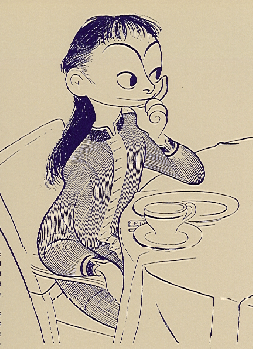
James Thurber - a softer, rounder Sagittarian wit


[To an admirer who told him that his output read very well in French translation]:
Tuesday, November 28, 2006
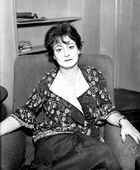
Dorothy Parker - Bittersweet Virgo cynic ?


There's little in taking or giving,
There's little in water or wine;
This living, this living, this living
Was never a project of mine.
Oh, hard is the struggle, and sparse is
The gain of the one at the top,
For art is a form of catharsis,
And love is a permanent flop,
And work is the province of cattle,
And rest's for a clam in a shell,
So I'm thinking of throwing the battle ---
Would you kindly direct me to hell?
"So surely is she mine," you say, and turn
Your quick and steady mind to harder things ---
To bills and bonds and talk of what men earn ---
And whistle up the stair, of evenings.
And do you see a dream behind my eyes,
Or ask a simple question twice of me ---
"Thus women are," you say; for men are wise
And tolerant, in their security.
How shall I count the midnights I have known
When calm you turn to me, nor feel me start,
To find my easy lips upon your own
And know my breast beneath your rhythmic heart.
Your god defer the day I tell you this:
My lad, my lad, it is not you I kiss!
Monday, November 27, 2006
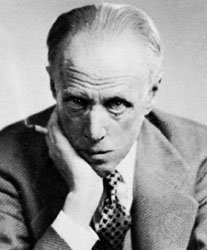
Sinclair Lewis, textbook Aquarian ?

"I have, for the future of American literature, every hope and every eager belief. We are coming out, I believe, of the stuffiness of safe, sane, and incredibly dull provincialism. There are young Americans today who are doing such passionate and authentic work that it makes me sick to see that I am a little too old to be one of them."
Sunday, November 26, 2006
When Pluto met Gemini
During my early teenage years, in a small English market town , I would regularly haunt the local library. It was there that I discovered a few books by some American writers whose style I admired greatly - enough to start dreaming of emulating them, and becoming a writer or journalist myself. "Dream on" was the message of my headmistress (paraphrased) at a brief career interview. So I did - and do!The writers who impressed me had something in common, something which I discovered today, as I set about writing this blog entry. They were all born with Pluto in Gemini. Two had Sagittarian Suns, two Aquarians, and one with Sun in Leo, one Virgo.