Showing posts with label wisdom. Show all posts

Thursday, June 29, 2017

Astrological Wisdom

British Astrologer of the 20th century, Ingrid Lind:
It is fatal to think of "the Stars" as determinants. We must not turn them into inexorable or malignant gods. This is altogether to mistake their power and to misunderstand the function of astrology, which is to give us a glimpse of a cosmic purpose with which we should try to harmonise. A man imprisoned in Saturn's dungeons may find real freedom in himself, and the chaos of disillusion of Neptune may drive him inwards until he finds the secret of his own integrity. Hard times may turn him into a walking complaint or he may learn to enjoy freedom from possessions. There is no difficult condition that courage cannot turn to good use.
(From the Conclusion to her book Astrology & Commonsense .)


One never has to go far to find wise words from astrologer Robert Hand. From Chapter 8 of Essays on Astrology (1982):

There are rhythms in human development, rhythms that weave in and out of each other, sometimes working together to reinforce each other, sometimes working against each other. Astrologers have long known about these rhythms, for that is the central study of astrology: the relation between the rhythms of human development and cycles of the heavens. Astrology is nothing more than this. It is not an effort to chart Fate or to describe an individual's immutable destiny. Astrology teaches that every individual is a creature of the cosmos and reflects its cycles. These cycles in turn affect the probabilities of different kinds of experience happening within an individual's life at various times.


From astrologer Liz Greene's Mythic Astrology (1994):
No horoscope can indicate whether an individual will turn healthy self-assertiveness into violence, or imaginative self mythologizing into dangerous delusions of global dominion. Mozart's horoscope may look surprisingly like that of the school music teacher. Factors beyond the scope of astrology - heredity, environment, historical epoch - interact with individual character to produce unpredictable results.
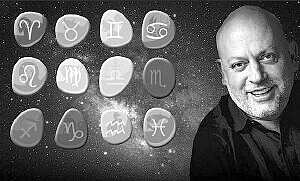


Snippets from the section "Introducing the Moon" in The Psychic Explorer co-written by astrologer Jonathan Cainer, first published 1986. All astrological input was from Mr. Cainer:

Our modern world is very solar. Despite recent advances in the feminist cause, we still live in a society dominated by male energy - and perhaps that is one reason why masculine sun signs have become so popular! There is a strong tendency for most of us to accept glib, generalized information and simplified scientific truisms. The sun rules "simplicity", and it also speaks of "material growth and self-interest", two very characteristic 20th-century ideals. The lunar principles of compassion, sympathy and understanding do exist in our world, but most of us would agree that they normally play a muted second fiddle in the process of human motivation.

It is crucial to recognize that people of either sex have two sides to their personality. Inside every macho man is a soft, poetic, sensitive individual trying to get out. Inside every soft woman is a strong, capable and ambitious person waiting for an opportunity to express herself. However, most women, at least on a superficial level, find it easier to identify with the lunar side of their character, while most men have more affinity with solar energy. In other words, women are often more in touch with their moon signs and men with their sun signs.

If you can accept the notion that each individual is not just a one-dimensional personality with a cardboard cut-out facade but a complicated, sensitive mixture of differing (and sometimes opposing) inclinations, you are ready to enter the world of real astrology.

Thursday, June 01, 2017

THIS TOO....

I've sometimes wondered what astrologers do when in need of a lift out of the doldrums. We ordinary mortals often reach for the chocolate, the apple pie, ice cream, or the bottle of Scotch, Vodka, etc. I'm not insinuating that astrologers aren't ordinary mortals, of course, perish the thought! But they are in a position to know more about themselves and the future, and their future than the average person on the street. So, do they have an antidote for the blues?

I ask this because current events, news and commentary on-line these days can lead one to feel despairing, desolate, downright depressed. So, what could astrology offer as a pick-me-up of the non-fattening, non-inebriating kind?

As a non-astrologer, but with some knowledge of the subject, I'd say this: "Nothing stays the same for long, everything changes. Just as the planets move in regular cycles, so does life. A bad patch is followed by a good patch, and vice-versa. Some patches take longer than others to give way to the next stage - these are what we call "the bad times" and "the good times". Enjoy the latter while you can and during the former resign yourself to putting on weight and drinking more than you should".

The old adage "This too shall pass" tells much the same story as astrology. That sentiment, Wikipedia tells us,
is often expressed in wisdom literature throughout history and across cultures, this particular phrasing appears to date to the early 19th century, appearing in a collection of tales by the English poet Edward Fitzgerald. It was notably employed in a speech by Abraham Lincoln before he became the sixteenth President of the United States. Fitzgerald's usage of the phrase is in the context of a retelling of a Persian fable. Some versions of the fable, beginning with that of Attar of Nishapur, add the detail that the phrase is inscribed on a ring, which has the ability to make the happy man sad and the sad man happy.

Wednesday, November 27, 2013

Rushing in, looking for wisdom....

Marcel Proust wrote: “We don't receive wisdom; we must discover it for ourselves after a journey that no one can take for us or spare us.” True. None of us is born wise. Some of us, though, don't manage to attain wisdom, even after traumatic life-journeys.

Illustration, left, is Athena, Greek goddess of wisdom, renamed Minerva by the Romans; she's accompanied here by her owl, still regarded as a symbol of wisdom. Below, right, is Saraswati, Hindu goddess of wisdom and learning,

Where, I wonder, is wisdom - or the potential to attain it - found in a natal chart? Even the book I usually turn to on such matters, astrologer C.E.O. Carter's Encyclopedia of Psychological Astrology, is silent on the matter. Mr Carter was, perhaps, a wise man to avoid pontificating on this !

My own two penniworth, unwisely offered (sings under her breath: "Fools rush in where wise men never go.....")

Wisdom emerges from a combination of the traits we are born with, and the experiences life, our background and environment hand to us. In a natal chart I'd be looking first and foremost for balance. Without balance, wisdom is going to be difficult to find.

Balance doesn't necessarily mean Libra's scales though. It means balance in the chart as a whole. Balance can come via aspects, blending of elements and qualities, the spread of planets, the patterns they make, the signs occupied, the angles emphasised. If the chart seems generally well-balanced there's a good chance the individual will have a well-balanced attitude to life, and therefore be ripe to acquire the beginnings of wisdom from education, reading, relating, observing, suffering, celebrating, wishing, wondering........all those things and more.

Does this mean then that a chart which is heavy in just one area will manifest as an adult without wisdom? It could mean a lack of circumspection and imbalance of focus. It could mean great success in whatever direction the individual decides to proceed, but success isn't the same as wisdom.

The question now arises: what actually is wisdom? YourDictionary.com says it is
"the quality of being wise; power of judging rightly and following the soundest course of action, based on knowledge, experience, understanding, etc.; good judgment; sagacity learning; knowledge; erudition ....."
Judgment. Ah yes! Good judgment is the beginning of wisdom. It's still a tricky area to define though. I recall the days when I had to write annual reports for the staff members in my department. One section of the report form required me to assess the individual's judgment. I usually left this part to the last, and always struggled with it.

Whether a person's judgment is good or bad is a subjective decision, and takes good judgment on the part of the one doing the judging! Whether a person has wisdom or is a know-all clever clogs is also somewhat subjective.

Conclusion: I don't know for sure whether wisdom - or the potential to attain it - can be found in a natal chart.
“I'm not young enough to know everything.”
~ J.M. Barrie, in "The Admirable Crichton".

Wednesday, September 14, 2011

Words of Wisdom from 3 Female Astrologers

British Astrologer Ingrid Lind from 20th century:
It is fatal to think of "the Stars" as determinants. We must not turn them into inexorable or malignant gods. This is altogether to mistake their power and to misunderstand the function of astrology, which is to give us a glimpse of a cosmic purpose with which we should try to harmonise. A man imprisoned in Saturn's dungeons may find real freedom in himself, and the chaos of disillusion of Neptune may drive him inwards until he finds the secret of his own integrity. Hard times may turn him into a walking complaint or he may learn to enjoy freedom from possessions. There is no difficult condition that courage cannot turn to good use.
(From the Conclusion to her book Astrology & Commonsense.)

Astrologer Liz Greene:
I do not think we have lost our fear of fate, although we mock it; for if the modern individual were so truly enlightened beyond this ‘paganish’ concept, he would not surreptitiously read astrology columns in the newspaper, nor evidence the compulsion to ridicule whenever possible the spokesmen of fate. Nor would he be so fascinated by prophecy, which is fate’s handmaiden.


The late Maya del Mar, written in 2003: excerpt from a Special Message, "Future Note: The State of the World".

Maya died in November 2006. Her words echo down the years.
"In the 50's, how many of us expected the revolution of the 60's, which loosened up the whole tightly wound society? It was a huge breath of fresh air, and it was strongly resisted by the power structures. At that time we had a big outer planet conjunction—Pluto and Uranus meeting. Pluto is transformation and Uranus is revolution, so together they started a major reform cycle.

We are approaching the first big turning point of that cycle. Uranus will square Pluto from 2010-2012, and the push for change will be irresistible. This process begins with Pluto entering the cardinal sign of Capricorn in January 2008, and continues with Uranus entering the cardinal sign of Aries in May 2010. Cardinal signs mean action, and we will be caught up in a whirlwind of activity. Uranus in Aries means a new beginning in the assertion of independence.

Hold the light!"


(Engraving by Marcantonio Raimondi : Two women with the signs of Libra and Scorpio)

Thursday, July 15, 2010

Astrologers' Words of Wisdom #8 ~ John Anthony West

These words of wisdom are taken from The Case For Astrology by John Anthony West, published 1991 (500 pages). The author presents "compelling new evidence that proves the astrological premise: that correlations exist between events in the sky and on earth, and that correspondences exist between the human personality and the positions of the planets at birth."

John Anthony West is described on the dustjacket not as astrologer, but as "writer, scholar and Pythagorean, born in New York City in 1932." This book entitles him to be included in the "Astrologers' Words of Wisdom" set - none moreso in fact. In his blog John Anthony West's Phoenixfire Blog (not updated since 2008) his profile reads: "Rogue egyptologist and mystic in skeptic's clothing." Perhaps the blog was superseded by his website (here).

This book, addressing astrology and its opponents, was something of a departure for Mr. West whose books have concentrated mainly on Egyptology. Good on him for taking the time, hard work and enthusiasm to produce such an excellent volume on this different, yet related, topic!

In the Summing Up section under the paragraphs headed Conclusion he writes:
For the universe is in every one of its manifestations and interchanges nothing but order and coherence - though that order and coherence is invariably the outcome or result of a fundamental drama in which the forces of order prevail over the forces of disorder. It is this drama that is the basis of so many of the Creation myths all over the world, in Egypt for example, expressed in the battles betweem Seth and Horus, and the Osirian cycle of death and rebirth.

But if disorder or randomness were the essential characteristic of our world, the norm as it were, and order merely an accident, there could be no science in any meaningful sense, since nothing would be measurable, repeatable or predictable - and measurability, repeatability and predictability are cornerstones of the scientific method.

Yet, it is a fact that not a single one of astrology's many and vociferous foes addresses this aspect of astrology (astrology as a paradigm of cosmic order), while virtually every serious book that attempts to defend astrology within the framework of our modern understanding insists upon the existence, reality and validity of these metaphysical and Pythagorean principles.*

This impasse is probably beyond resolve. For it does not rest upon proof or disproof, the desire for objectivity, or even upon deliberate bad faith and stupidity on the part of astrology's opponents, though there is no shortage of either. It rests ultimately upon psychological factors, upon levels of understanding, and upon different - and diametrically opposed - ways of viewing the world.


*Footnote: The extreme science-oriented wing of astrology is an exception. Its proponents accept the scientific evidence as it stands but are as uncomprehending of the metaphysical implications as the skeptics
.

Tuesday, March 17, 2009

WISDOM and the Natal Chart


Blogging buddy Wisewebwoman featured the following 5 minute video on her blog recently. I thought it so good that I couldn't resist airing it here. The thread running through the video is "wisdom".
(Illustration, left, is Athena, Greek goddess of wisdom, renamed Minerva by the Romans; she's accompanied here by her owl, still regarded as a symbol of wisdom. Below, right, is Saraswati, Hindu goddess of wisdom and learning)


Where, I asked myself, is wisdom to be found in a natal chart? Even the book I usually turn to on such matters, astrologer C.E.O. Carter's Encyclopedia of Psychological Astrology, is silent on the matter.

I'll dive in (and probably flounder) with my own two penniworth, after the video.


Wisdom emerges from a combination of the traits we are born with, and the experiences life, our background and environment hand to us. In a natal chart I'd be looking first and foremost for balance. Without balance, wisdom is going to be difficult to find.

Balance doesn't necessarily mean Libra's scales though. It means balance in the chart as a whole. Balance can come via aspects, blending of elements and qualities, the spread of planets, the patterns they make, the signs occupied, the angles emphasised. If the chart seems generally well-balanced there's a good chance the individual will have a well-balanced attitude to life, and therefore be ripe to acquire the beginnings of wisdom from education, reading, relating, observing, suffering, celebrating, wishing, wondering........all those things and more.

Does this mean then that a chart which is heavy in just one area will manifest as an adult without wisdom? It could mean a lack of circumspection and imbalance of focus. It could mean great success in whatever direction the individual decides to proceed, but success isn't the same as wisdom.

The question now arises: what actually is wisdom? YourDictionary.com says it is
"the quality of being wise; power of judging rightly and following the soundest course of action, based on knowledge, experience, understanding, etc.; good judgment; sagacity learning; knowledge; erudition ....."
Judgment. Ah yes! Good judgment is the beginning of wisdom. It's still a tricky area to define though. I recall the days when I had to write annual reports for the staff members in my department. One section of the report form required me to assess the individual's judgment. I usually left this part to the last, and always struggled with it.

Whether a person's judgment is good or bad is a subjective decision, and takes good judgment on the part of the one doing the judging! Whether a person has wisdom or is a know-all clever clogs is also somewhat subjective.

My judgement on this: I'm almost certainly not wise enough to define where wisdom is to be found in a natal chart. Perhaps it can't be found there at all, and maybe that's the wisest answer.


IRISH OR NOT.....HAVE A GOOD ONE !