Showing posts with label parallel universes. Show all posts

Monday, August 15, 2016

Rolling with the Flow


A wander up another shady river's course, a river somewhat similar to the literary river featured in an earlier post. (HERE).

The mouth of the earlier literary river was a movie, "The Painted Veil" , the mouth of this river has many cinematic tributaries. I've chosen, from the many, the 1998 movie "Sliding Doors".


Two Different Paths - “Sliding Doors”
Everyone wonders what would have happened if they made the other decision instead of the one they chose, and this movie shows both sides for the main character Helen. Depicting parallel universes in which Helen either misses or catches a train and the results of that fateful action, “Sliding Doors” brings to life a concept that everyone wonders about. Great cast performances make it entertaining to watch how Helen’s separate lives differ, all while raising philosophical questions about fate and free will.

"Sliding Doors" wasn't adapted from a novel though many of the movies of similar theme were. In common: one small change has a ripple effect, resulting in massive changes.

Wandering back a short way along this river's course, I find that"Sliding Doors" reviewers have said that the film is a simpler version, more appealing to the general public, of a couple of other movies: Blind Chance and Run, Lola Run.

Numerous movies, and novels have comparable themes - many are listed on line, here or here for instance - from which it becomes clear that the theme has a "feline" cousin.

The "what if" and alternative reality tropes all base stories on a roughly similar idea, which, if we follow the literary river further back towards its source, likely gleaned inspiration from words and ideas originating many centuries ago: a proverb-turned-poem with its origins as far back as the 14th century (older than print). Probably the best-known version is that which appeared in Benjamin Franklin's Poor Richard's Almanac: (HERE)
For want of a nail, the shoe was lost;
For want of a shoe, the horse was lost;
For want of a horse, the rider was lost;
For want of a rider, the message was lost;
For want of the message, the battle was lost;
For want of a battle, the kingdom was lost,
And all for the want of a horseshoe nail.

Is it possible the literary source goes back even further? Didn't the Greeks have a useful relevant theory ? They had them for just about everything!
How about this?

Although Heraclitus argued for eternal change, his contemporary Parmenides made the radical suggestion that all change is an illusion, that the true underlying reality is eternally unchanging and of a single nature. Parmenides denoted this reality as τὸ ἐν (The One). Parmenides' idea seemed implausible to many Greeks, but his student Zeno of Elea challenged them with several famous paradoxes. Aristotle responded to these paradoxes by developing the notion of a potential countable infinity, as well as the infinitely divisible continuum. Unlike the eternal and unchanging cycles of time, he believed that the world is bounded by the celestial spheres and that cumulative stellar magnitude is only finitely multiplicative.

“Eventually, all things merge into one, and a river runs through it. The river was cut by the world's great flood and runs over rocks from the basement of time. On some of the rocks are timeless raindrops. Under the rocks are the words, and some of the words are theirs.
I am haunted by waters.”

~ Norman Maclean, A River Runs Through It and Other Stories


Remembering that it's Music Monday, staying with the river theme:

Thursday, April 28, 2011

PARALLEL UNIVERSES, OTHER MEs & YOUs ......ASTROLOGY?

Snippet from an episode of TV documentary "The Universe"
Narrator: Even as you peacefully watch TV, whole other invisible worlds could be raging all around you.
Michio Kaku: These parallel universes are in your living room. This means that in your living room, there are dinosaurs. You can't hear them, you can't see the dinosaurs that are rampaging throughout your living room, but they're there.
Narrator: The quantum principle that creates many versions of each person can also create entire universes.

Michio Kaku: The universe, at one point, was actually smaller than an electron. If that's true, and if electrons are described by being many places at the same time in parallel states, this means that the universe also exists in parallel states, you inevitably get parallel universes. There's no choice


Full piece at: http://www.tv.com/the-universe/parallel-universes/episode/1236985/trivia.html

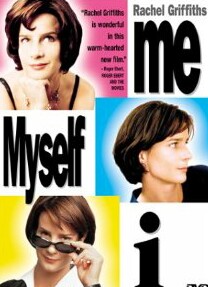
We watched a VHS tape of a 1999 Australian movie: Me Myself I recently.
It's really just a bit of fanciful fluff, I guess, but enjoyable. What drew me to the storyline was the alternate/parallel universe theme. That theme is used at its most simplistic level in the movie, with no real explanation of the hows or whys.

Plot in a nutshell: thirty-something woman, a serious journalist, unmarried, bored or disgusted by the men she meets, living in chaotic near-squalor feels despondent enought to want to commit suicide by standing in a bath of water with hairdryer in hand. Just as she switches it on a thunderstorm erupts and the power is cut off.

Shortly after, while crossing the street she is hit by a car whose driver is....herself. She is confronted by yet another version of herself as she recovers. This version of her is married with three children. Married to the boyfriend the original version of her turned down over 13 years ago.

The storyline follows the original journalist gal who is shunted into the life and lifestyle of her alternative version (and vice-versa, we find out later on).

It's not hard to imagine, without further help, the often funny, sometimes serious difficulties the gal encounters in her strange, alternate lifestyle with husband and children.

Two minor things I noted:
1) That scene with the hairdryer and the bath - I've seen something like that in a movie before. Mel Gibson, in a movie called What Women Want, - after the electric shock he was able to hear women's thoughts.
2) The only person to realise that his new Mom was not his usual Mom was the youngest child - little boy aged 3-ish. The family dog, usually first to "smell a rat" in movies, seemed quite happy to accept this alternate version of his human food-handler.

The theme of parallel universe(s) has been thrown around quite a bit in movie-land and TV drama. Sliding Doors, Twice Upon a Yesterday, The Family Man are a few of many such movies. Current TV series Fringe is a good example of it handled on a slightly more scientific level, with some whys and hows thrown in - albeit fictional ones.

A thought occurs: would astrology still be valid if ever science proved that alternate universes do in fact exist - and there are indeed numerous versions of "us" living the astrological cycles but in different ways?

I don't see why astrology couldn't be equally valid. As long as different versions of "us" were born at exactly the same point in time, living through the same planetary cycles (if time existed!)

There are already many ways the contents of a natal chart can be interpreted. A simple example, taken from the story of the movie above: the woman as an unmarried serious journalist wasn't happy, felt unfulfilled yet needed her freedom. Her counterpart, married for 13 years, husband and family of three intact, writing fluff pieces for a woman's magazine was, we find later, not happy either. She was having an affair, fed up with her own life pattern. Similar feelings, different causes.

I see no reason why astrology, its cycles and alignments, wouldn't be valid in parallel-land. We'd all be under the same sky..... or would we? That is the question to which there is no answer. Knew I'd find one!