Showing posts with label James Michener. Show all posts

Saturday, September 16, 2017

Saturday and Sundries

We're currently re-watching the 1970s TV mini-series Centennial, via a DVD set. I never tire of this story - often think that it was my love of Centennial, and another mini-series and novel, Lonesome Dove, which set my mind on the right track for my move across the Atlantic, and at a late stage of life. I still wake up surprised some mornings, to find myself smack-dab on the Chisholm Trail! That cattle trail is not the exact one featured in a chapter of Centennial - but it's comparable.

On this viewing of the TV adaptation of James A. Michener's epic novel - we're two-thirds through the series, as I type this - what I've noticed most is how, though passage of time has brought massive changes in lifestyle, especially in the 21st century, in deeper aspects nothing much has changed. The pattern of killing, retribution killing, then killing again, remains. Much of today's killing is done far away from the USA in the Middle East; retribution occasionally occurs here at home as well as directly, abroad. It's as though this nation, born in blood, is fated to live on in blood. There were some good men then (fictional in this case, but actual also), there are good men now, but never enough - then or now.

My 2008 archived post on Centennial is HERE.


Husband's new blog/website Cabinet Card Photographers has taken him many long hours of research work, which he has enjoyed and pronounced addictive.


Fall foliage Prediction Map -

It's interactive - could come in useful for leaf-peepers.


MASSES
by Carl Sandburg

Among the mountains I wandered and saw blue haze and red crag and was amazed;

On the beach where the long push under the endless tide maneuvers, I stood silent;

Under the stars on the prairie watching the Dipper slant over the horizon’s grass, I was full of thoughts.

Great men, pageants of war and labor, soldiers and workers, mothers lifting their children—these all I touched, and felt the solemn thrill of them.

And then one day I got a true look at the Poor, millions of the Poor, patient and toiling; more patient than crags, tides, and stars; innumerable, patient as the darkness of night—and all broken, humble ruins of nations.


If an infinite number of rednecks
fired an infinite number of shotguns
at an infinite number of road signs,
they'd eventually recreate
the complete works of Shakespeare
in Braille.
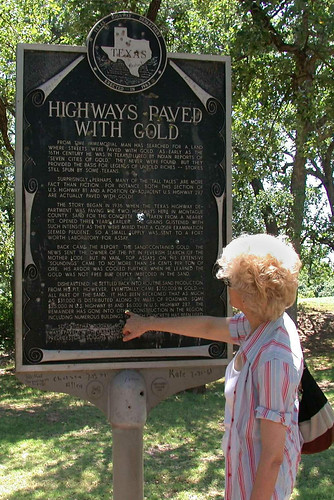
Ann and the Bullet Holes
 I discovered the truth of it when on vacation, meeting  Himself, in 2003.


Wot - no astrology?
This Twitter offering, from #Rejected Horoscopes, might be good for a titter:

Thursday, December 04, 2008

Involuntary Prophets ?

Mentioning James Michener and Nevil Shute yesterday called to mind a post of mine from 2 years ago. (My oh my, 2 years! Doesn't time fly when you're enjoying yourself?) I'm re-posting a slightly adjusted version,'cos I still find the subject intriguing.


ACCIDENTAL PROPHETS(First posted 10 December 2006).

James Michener seemed to have amazing foresight. Several of his novels featuring a particular country, in depth, were each followed some years later by the same countries coming into prominence on the world stage. In a long interview here: , he said
"I think that some of us have a deep seated sensitive antennae about what is going to happen. And somebody the other day, a fine professor, made an introduction of me, which I had not thought about, but which I had thought about a great deal since. At that time, in the world, there were about a half dozen trouble spots: the Near East, the Jewish-Arab relationships, South Africa, revolution in Poland, the emergence of Japan, the absorption in the United States of two outlying territories like Hawaii and Alaska and four or five other things. And he pointed out that I had written full-length books about all these areas before they came into prominence. And I did! There they are. Look at the dates. Now this cannot be because I was exceptionally brilliant. I am not brilliant. I'm something else. I don't know what the word would be, but it isn't brilliant."

Nevil Shute, author of one of my favourite books "A Town Like Alice", wrote a couple of novels which later seemed to have been prophetic. "No Highway" published in 1948 dealt with what might happen due to metal fatigue in aircraft. His ideas came close to fact with the Comet disasters of the 1950s. Another novel,"What Happened to the Corbetts" also published as "Ordeal" was written just before the start of WorldWar2. It tells how badly aerial bombing affected a town similar to Southampton, in the south of England, and how the bombing of civilians became a major part of the war. British people of a certain age will have no trouble recognising this as fact! His novel "On the Beach", a story of the world ending as a result of the explosion of atomic bombs, thankfully has not yet proved prophetic. It could still be "pending" however, should people forget the warning bells it rang! Shute also touched on a slightly supernatural theme in a novel called "Round the Bend" in which an aircraft mechanic becomes the mystical leader of a religious movement.

Seeing a slight correspondence between Michener and Shute, I searched around for other instances of novels which, without purporting to be science fiction, portray events which later came to pass in real life.

American author Morgan Robertson produced an early example in his story "Futility". He told of a ship called Titan which sank in a way eerily similar to The Titanic, 14 years later. When this book was written there were no ships of such enormous size being built. Robertson also appeared to be crystal-gazing when he later(1914) wrote a book called "Beyond the Spectrum". In this book, he described a war in the future, fought using aircraft which dropped "sun bombs" on their targets. These were powerful enough for a single bomb to destroy a city. When this book was written, aeroplanes were small, flimsy, and unreliable machines capable of carrying one person. Nuclear weapons were still unimagined. Robertson's war began in the month of December, as did the Japanese attack on Pearl Harbor which brought the USA into WW2.

Michener was born 1907, Shute 1899 and Robertson 1861.

There are, of course, common sense explanations for the authors' apparent ability to see into the future, these men were not deliberately trying to predict events, as far as we know.

Michener didn't foresee actual events, but was drawn or inspired to write about countries which later came to prominence for one reason or another. He was widely travelled, highly intelligent, politically minded and had lived in all the countries he wrote about. Common sense would say that he was "putting two and two together" with a bit of Aquarian intuition.

Shute
was a skilled aeronautical engineer as well as novelist. He had technical knowledge more than sufficient to foresee possible outcomes where the area of his expertise was involved. "An accident waiting to happen", in the case of metal fatigue, and some extrapolation of known facts in the case of aerial warfare ?

Robertson was the son of a ship's captain and spent some time as a cabin boy himself, so the sea was "in his blood", he had no doubt heard some tall tales from the old salts he must have encountered. These, with a little embroidery, might have helped him to invent his ship Titan. His "Beyond the Spectrum" published in 1914 is harder to explain.

Those are explanations for the skeptics. Someone more open-minded, and sensitive to peculiar coincidences like these, might see a different explanation.

Novelists and short story writers continually tap into vast resources of imagination. For hours at a time, on a regular basis, their minds are "elsewhere", concentrating outside of the mundane. Isn't this akin to meditation? Could it be that as they concentrate so intently in realms of the imaginary, coloured with knowledge stored in their memory banks, they somehow inadvertently seep through a time barrier or into another dimension?

Any correspondences in the natal charts of these three writers?

Morgan Robertson born 30 September 1861 Oswego, New York
Nevil Shute born 17 January 1899, Ealing, England
James Michener born 3 February 1907, New York

1. All 3 writers have Sun and Mercury in the same sign (not uncommon.)

2. In Robertson's case Neptune opposes Sun. Shute and Michener both have Neptune and Sun inconjunct(quincunx).

So....Neptune's aspects to the Sun may well be significant, especially as Mercury (writers' planet) shares the same sign as Sun in the three charts.

More detail:
Robertson: Sun at 7 Libra/Neptune at 00Aries (Aries Point) opposition
Shute: Sun at 27 Capricorn/Neptune at 22 Gemini- inconjunct (quincunx)
Michener: Sun at 14 Aquarius/Neptune at 10 Cancer-inconjunct(quincunx)

Neptune represents imagination and mysticism. Maybe the push-pull of an opposition, or friction from a quincunx aspect Neptune/Sun can push aside the "veil" of present reality. When individuals with such aspects engage in activities needing acute and long-term concentration, it could be that their visions become more than simple imagination. An interesting subject for research.

Morgan Robertson, the writer with Sun and Neptune in opposition, dispayed the most surprising ability of the three authors, but the other two do exhibit lesser, or more explainable, examples though still remarkable.

Perhaps the best explanation, for now, is that intense concentration of a mind with certain Neptune/Sun energies in-built, and knowledge in specific fields, gained from experience, can result in reasonably accurate prognostication. It sounds reasonable enough to me!

Wednesday, December 03, 2008

Southern Hemisphere Ramblings

There's a new movie out this week: "Australia", it's 2 hours 45 minutes long. We'd intended going to see it the other night but were bogged down solving a serious computer problem, so postponed our outing. It wasn't written by the great James Michener, but it sounds as though it should have been. Australia presented an ideal subject for him, but he never gave it his undivided attention, and his time ran out before he could do so. Any passing reader interested in James Michener might find my 2006 post on his astrology of interest.

In reading the transcript of an interview with Michener I came across this interesting tidbit, comparing the size of Australia and the USA and accounting for the enormous difference in the way the two developed. James Michener said:

One of the most memorable experiences of my life is talking with a great geographer who had a map of Australia and a map of the United States, here and here. And he said, "Jim, remember always that these two are exactly the same size -- bar that little bite down there which gives us a few more miles.
Distances from here to here are the same; from north to south are the same. What is the difference? I thought, "Well, we are good people and they are not, or we are educated and they are not, or we had the early pilgrims and they didn't." "No," he said, "it's the Mississippi River."

If you rip out of the United States the Mississippi River and all its tributaries, you have Australia. Beautiful coast, some rivers here, beautiful coast over here, and not a thing in the middle. And the reason it makes the difference is this: that when you have that river system -- now we are talking about the Ohio, the Tennessee, the Missouri, the Nebraska, fifty rivers -- when you pull that out, you have left a desert. And you don't have enough people to support the industries on the two coasts. You can't grow; you can't have a great airline; you can't have this; you can't have that. And the difference is in the land. And I believe that without any question.

I think that the difference between the United States and Australia is we have that fantastic river system, and they don't. And if they had it, they would be better than we are maybe because they are a tough bunch of cookies down there. I think the land is a fundamental with me"


Stories set in Australia, for me, first bring to mind Nevil Shute's "A Town Like Alice". I've always loved the book, and the movie, and even better the TV series, which was a much closer adaptation of the book than the movie had been. It had Bryan Brown too. Which brings me neatly back to "Australia". Bryan Brown, though not the leading man has quite a meaty role in the new movie "Australia".

I started looking at his natal chart. Born June 23, 1947 at 8:45 AM
in Sydney, Australia. His natal Sun is in the first degree of Cancer, ascendant in Cancer, Moon in Leo. I then realised that there's a question to which I haven't, so far, been able to find a satisfactory answer. Do people born in the southern hemisphere fit the same interpretations we use in modern tropical astrology in the northern hemisphere? Is Bryan a sensitive double Cancerian or, if the zodiac flips for the southern hemisphere, is he more of a hard-nosed, pragmatic business-driven type?


This subject of hemispheres has bamboozled me before, way back. I searched the net, without finding anything on the topic I could live with. It's a topic astrologers tend to back away from. Not surprising really - it could turn out to be a huge can of worms.

The only two theories I found, apart from the one that says there's no difference at all in astrology for the two hemispheres, propose that:
a) the zodiac should be flipped, its signs should be inverted for the southern hemisphere, making Aquarius Suns into Leo Suns, Taurus into Scorpio, Aries into Libra and so on. Or
b) the zodiac and sign interpretation should stay basically the same, retaining the qualities of the archetypes, but with subtle adjustments to account for the opposite seasons involved, north to south.

I prefer the second idea. The elements and modes remain in the same configuration in both hemispheres, the alternation of elements and modes remains exactly the same. When the Sun is in the area we call Aries, it's in Aries all over the world, therefore it's in Cardinal Fire all over the world. In the northern hemisphere we see Cardinal Fire Aries as indicating the initiator, the enthusiast, any description fitting a forward thrust of some kind. Southern hemisphere people could forge appropriate interpretations with fine tuning which fits their seasons - eg.the Cardinal Fire Aries autumn.

Astrology, in the main, originated in the northern hemisphere. Our northern minds are so used to understanding in one "dimension" only on this topic. Large groups of the population of the southern hemisphere also have northern roots - way back. It's a tricky subject, and one I ought not to meddle with!

Before I step deeper into the quagmire then, here endeth my very random ramble. I rather wish, for both my own and a passing reader's sake, that we'd gone to the movies after all, then I could've written an easy, straightforward review with, maybe, leading man Hugh Jackman's natal chart. Or maybe not, the same issue would have arisen for he was born in Australia too!

Tuesday, August 19, 2008

A Masterpiece by James Michener

We've started watching again my twenty six and a half hour long VCR set of a 1970s TV series, "Centennial".
In my opinion it's the best TV series ever made, adapted from the book by James Michener, who I see as one of the best and most hard-working writers ever. The amount of research involved in his novels would cause any but the brave to falter!

I wrote about Michener and his natal chart in my early blogging days in late 2006:
"James A. Michener - Aquarian Storyteller".
Michener's style often reminds me of another Aquarian novelist, Charles Dickens (7 February 1812). Others might find this a peculiar thought, but I see the painstaking research and fine characterization, allied to subtle social comment included in their plots, bearing a striking resemblance. Naturally their natal charts contain many differences, but I see Aquarius shining through.

Most of Michener's novels are sagas, "Centennial" is no different. It traces the development of beautiful Colorado, from pre-historic times to what was "the present"-the early 1970s, at the time of Michener's writing. Fact and fiction intertwine as the story swings from days when only Native American tribes, odd-ball woodsmen and trappers inhabited the plains and mountains, to the days of early European settlers, good, bad and ugly. Onward, through a variety of adventures with ranchers, business men and politicians of the 20th century.

The late David Janssen plays the part of ranch owner Paul Garrett, descendant of the character we met in the story first of all, Pasquinel, woodsman and trapper who hailed originally from Quebec. As the saga draws to a close, the words Paul Garrett utters are even more pertinent today, over thirty years later:

"The Earth isn't something you take from without ever thinking about giving back. The Earth is something you protect every day of the year. The river is something you defend every inch of its course. We have to look to the past and get back to some basic principles if there is going to be any future worth having."


AMEN!

I've discovered that "Centennial" was released in DVD format just this summer. I highly recommend it to anyone who hasn't already seen it or read the book. There are countless familiar faces in the series, some sadly no longer with us, some in the intervening years have become almost household names. A reviewer at Amazon.com remarked, "No one can teach history like James Michener". I agree. He informs while entertaining his audience and, on occasion, moving them to tears.

This YouTube video is one of the final scenes from the TV series. I find it very moving. Country star Merle Haggard, who enters the story briefly in the last episode, as a descendant of one of the original characters, can be heard singing in the background.