Tuesday, September 06, 2016

Shyly

Why we should celebrate shyness- an essay by David Robson last week at BBC's website:
From Agatha Christie and Charles Darwin to Keira Knightley, Francoise Hardy and Morrissey, the socially awkward and anxious have changed the world for the better. Have we forgotten the benefits of being shy?


A good read, I found, and an interesting take on being shy. Mr Robson references a new book by Joe Moran:
How could someone so successful still be so insecure? This is the paradox at the heart of a new book, Shrinking Violets, by the cultural historian Joe Moran, which explores shyness in politics, literature and psychology. Moran’s book portrays this full spectrum. Consider Dirk Bogarde, who, having learned how to hide his feelings from bullies at school, likened himself to a hermit crab hiding in a scavenged shell. “I was safe from predators,” he wrote, “and by predators I meant everyone I met.” He had hoped to conquer his shyness in adulthood, but he found it was “a malady” that “crippled me before I walked into a crowded room, theatre, restaurant or bar”. Acting in the West End, he would throw-up before every performance, saying “you can’t be as frightened as I am now and still be alive. This is as near death, execution, and everything else that I’ve ever come across.” As Moran points out, Bogarde was not taking these words lightly: he had fought at D-Day and in the following battles in Normandy.

Consulting my tattered copy of 20th century British astrologer C.E.O. Carter's "An Encyclopaedia of Psychological Astrology" I found this under "Shyness":
Shyness is a form of Sensitiveness (q.v.) and is to some extent connected with too pronounced a consciousness of the self. It is also to some degree analgous with suspicion and timidity.
Astrologically the usual indications are Saturnian-lunar afflictions in some form or other, and a lack of the positive elements in the map. Cancer is especially shy, and just as the lunar influence is strongest in childhood and then grows weaker, so adults usually grow out of their shyness.

Besides Cancer, Virgo is often extremely shy, and the same is sometimes found in Scorpio or Pisces children (v.Self-confidence).

Under "Sensitiveness" which Mr Carter directed the reader to see, he talked about this being common to all watery signs, especially Cancer, and to the negative signs, excepting Taurus. Leo and Sagittarius probably come next in lack of sensitiveness, he wrote. Also:
Virgo is easily hurt and inclines to adopt an attitude of what is commonly called "huffiness". Capricorn readily feels slights or snubs and is very sensitive to neglect or being overlooked. Libra is easily hurt but has a short memory for such things. Gemini and Aquarius are predominantly mental and do not feel injured over-easily.
Under Self-confidence Mr Carter, among other things, emphasised that a prominent Mars is the chief thing to look for....Moon Venus and Neptune are the least self-reliant, Neptune has much to do with inferiority complexes (q.v.)

A quick look at natal charts of some of the people mentioned in David Robson's essay, to discover if C.E.O. Carter's propositions...erm...hold water.

I'm stating only what immediately jumped out to me from these linked charts, at Astrodatabank, in context of this post:

Charles Darwin


Astro.com has two different times on birth on offer. In one (DD rated, so not reliable) Darwin had Sagittarius rising with Neptune conjunct Saturn on his ascendant. That'd be a shy signature. In a chart with a rectified time of birth Virgo was rising with the Saturn/Neptune conjunction closer to the nadir...still good but not as good.


Agatha Christie


Sun in Virgo, Virgo rising, Saturn in Virgo in first house of self. Yes!


Francoise Hardy


Virgo rising, with Neptune in Libra in first house; Saturn in 10th house of career opposing Venus in Sagittarius. Not as clear a shyness signature, but more of a dampener I'd say. Shyness not out of the question.


Dirk Bogarde


Saturn and Jupiter (not quite conjunct) in Virgo opposing Mercury and Uranus conjunction in Pisces. His Pluto at 6 Cancer trined his Mercury/Uranus in Watery Pisces.


As someone with Cancer rising, I'm pretty sure I have that to thank for intense childhood shyness, which continued into maturity, better hidden. Being an only child didn't help either, I guess. There was less of Cancer involvement in the few charts I investigated, above. Extreme, deeply Cancerian shyness could deter a person from even trying to seek public acclaim or fame and fortune. Characters like those investigated here might be secretly shy, but not cripplingly shy enough for it to act as deterrent. This broad, random proposition could be easily struck down though (said she, shyly).

Any thoughts ?

Monday, September 05, 2016

Music Monday - Labor Day

Short History of Labor Day
Always the first Monday in September, Labor Day was the idea of Peter J. Maguire (although recent research has shown that it might have been his brother Matthew’s idea), a labor union leader who in 1882 proposed a celebration honoring the American worker.

The date chosen was simply “convenient,” according to Maguire, because it was midway between the Fourth of July and Thanksgiving.

Although the day’s focus on organized labor has diminished over the years, the holiday has become a way to mark the end of the summer season—and the start of the school year.
Appropriate song for Music Monday's Labor Day?
This'll fit - in all its forms:
..."And I've been workin' like a dog..."


Peter Sellers performs A Hard Day's Night by The Beatles, in the style of Laurence Olivier's interpretation of Richard III.


The Baroque Chamber Orchestra


Jazzed ... Ramsey Lewis Trio (1966)


Original trailer for the film of the song:


Saturday, September 03, 2016

History Ablaze

Following yesterday's pattern, another historical theme surfaces today: 350 years ago this weekend The Great Fire of London consumed a large part of that famous capital city.

From The Book of Days website
SNIP:
THE GREAT FIRE OF LONDON

London was only a few months freed from a desolating pestilence, it was suffering, with the country generally, under a most imprudent and ill-conducted war with Holland, when, on the evening of the 2nd of September 1666, a fire commenced by which about two-thirds of it were burned down, including the cathedral, the Royal Exchange, about a hundred parish churches, and a vast number of other public buildings. The conflagration commenced in the house of a baker named Farryner, at Pudding Lane, near the Tower, and, being favoured by a high wind, it continued for three nights and days, spreading gradually eastward, till it ended at a spot called Pye Corner, in Giltspur Street. Mr. John Evelyn has left us a very interesting description of the event, from his own observation, as follows:

'Sept. 2, 1666.-This fatal night, about ten, began that deplorable fire near Fish Streete in London.

'Sept. 3.-The fire continuing, after dinner I took coach with my wife and soon, and went to the Bankside in Southwark, where we beheld that dismal spectacle, the whole Citty in dreadful flames neare ye water side; all the houses from the Bridge, all Thames Street, and upwards towards Cheapeside downe to the Three Cranes, were now consum'd.
..............


Astrologer William Lilly had predicted the Great Fire years before, via one of his mysterious hieroglyphic drawings. A good relevant essay, by Maurice McCann, is at Skyscript


SNIP
Lilly, it was claimed, had successfully predicted the outbreak of the fire fourteen years before when he had published Monarchy or No Monarchy in England a book containing nineteen hieroglyphic drawings giving carefully disguised predictions. As a consequence of one of these, featuring a large fire, Lilly was seriously suspected of causing the fire. It was also thought that he wished to obtain credit for forecasting the event. Being fearful of what might happen to him, Lilly persuaded the committee that his prediction had not been precise and he was allowed to go.

After the fire?
A snip and Conclusion from an article by Dr John Schofield at a BBC website
London After the Great Fire

SNIP
At least 65,000 people had been made homeless by the Fire. At first they camped in the fields outside the walls, but within days had dispersed to surrounding villages or other parts of London. Rents soared in the unburnt area, but somehow accommodation was found for all who needed it. Much merchandise had been destroyed, and there was virtually no fire insurance, so many people were ruined, and some moved away permanently.

Conclusion -
We have perhaps been overimpressed by the Great Fire, and must place it in context - the Fire, destructive though it was, devastated only about one third of the conurbation of London then standing. Within the area of the devastation a new city of brick and occasionally stone arose, but around it a larger area remained timber-framed for generations to come. Inside the City, if we could have walked down a street like Fenchurch Street in 1675, we would have seen an abrupt change from the brick buildings of the new city to the timber and plaster frontages of the pre-Fire city, at the point where the Fire was stopped. This sudden contrast took generations to erase. But it is also true that the Fire created the opportunity to build, in the central area, a city in a new form, which would quickly become the hub of the British Empire in the decades which followed. So the creation of the Empire owes something to the Great Fire of 1666.

Friday, September 02, 2016

The Queen's Beasts (not especially arty farty this Friday!)

Today's topic might be of no great general interest, but is about something I've investigated and want to record, for future reference.

Around a year ago, husband and I were trawling through a couple of antique stores in a town just to the west of Oklahoma City; on our way out of town we spotted a newly opened small store, popped in to take a look around. It was a bit on the junky side. Just one item grabbed my attention: a big, shallow, display box framed and glassed in, containing 10 decorated glass dishes (each around 4.5 inches square), set in two rows on a background of red velvet. The frame had seen better days, scratched and needing repair to one corner. The little dishes had survived in good condition. They made up a full set, depicting what are known as The Queen's Beasts.
The Queen's Beasts portray the genealogy of Queen Elizabeth II in heraldic form.

I found this photograph of a similar set on an old auction website online


How this item had arrived in Oklahoma is anyone's guess! Having always had an interest in heraldry, I was keen to know its price. The store owner stalled when we enquired, saying that, as he didn't know the significance of the item he had asked a friend to investigate, and was not in a position to quote a price. I suspected he already had a buyer in mind, perhaps another, posher, antique store.

Back home I Googled - like ya do - discovered that the glass dish set, produced by a London company called Georama, probably during the 1970s, was very possibly issued ahead of Queen Elizabeth II's Silver Jubilee in 1977.

Intrigued, I found that it'd be possible to find at least some of the individual glass trays for sale in either the UK or USA on E-bay or Etsy, not a full set though. Individual prices varied from just a few pounds sterling in the UK to around $20 in the US. Mailing costs for such delicate items, either nationally or internationally makes the deals quite uneconomical. I shall content myself, instead, with this blog post. Maybe one day I'll invest in a single little dish and have it framed. The one shown, left, was for sale at Etsy recently.

So... illustrations of the 10 Queen's Beasts.


For these pics and brief descriptions I owe a hat-tip to this heraldic forum.


The Lion of England

“The crowned golden lion of England has been one of the supporters of the Royal Arms since the accession of James I in 1603. The shield shows the Royal Arms as they have been borne since Queen Victoria came to the throne in 1837. In the first and last quarters are the lions of England; the lion and tressure (a double frame) of Scotland appear in the second and the harp of Ireland in the third. Richard Lion-heart, son of Henry II, probably first chose 3 golden lions set one above each on a red field as the Royal Arms of England. Since then, these lions have appeared on the coat of arms of every sovereign of this country.”


The Unicorn of Scotland

“From the end of the 16th century, two unicorns were adopted as the supporters of the Scottish Royal Arms. In 1603, the crown of England passed to James VI of Scotland, who then became James I of England. He took as supporters of his Royal Arms a crowned lion of England and one of his Scottish unicorns. The unicorn holds a shield showing a lion ramping in a royal tressure (a double frame), adorned with fleur-de-lis.”


The Red Dragon of Wales

“The red dragon was used as his badge by Owen Tudor. His grandson, Henry VII, took it as a token of his supposed descent from Cadwalader, the last of the line of Maelgwn, King of Wales. The beast holds a shield bearing a leopard in each quarter; this was the coat of arms of Llewelyn ap Griffith, the last native Prince of Wales.”


The White Lion of Mortimer

“The White Lion of Mortimer descends to the Queen through Edward IV. The shield shows a white rose encircled by a golden sun, known heraldically as a ‘white rose en soleil’ which is really a combination of two distinct badges. Both of these appear on the Great Seals of Edward IV and Richard III, and were used by George VI when Duke of York. Unlike the Lion of England, this beast is uncrowned.”


The White Greyhound of Richmond

“This beast was a badge of John of Gaunt, Earl of Richmond, son of Edward III, but was also used by Henry IV and especially by Henry VII. The Tudor double rose can be seen on the shield, one rose within another, surmounted by a crown, symbolising the union of the Houses of York and Lancaster.”


The White Horse of Hanover

“The White Horse of Hanover” was introduced into the Royal Arms in 1714 when the crown of Great Britain passed to the Elector George of Hanover. This grandson of Elizabeth, sister of Charles I, became George I, King of Britain, France and Ireland. The shield shows the leopards of England and the lion of Scotland in the first quarter, the fleur-de-lis of France in the second and the Irish harp in the third quarter; the fourth quarter shows the arms of Hanover.”


The Black Bull of Clarence

“This beast descended to the Queen through Edward IV. The shield shows the Royal Arms as they were borne not only by Edward IV and his brother Richard III, but by all the Sovereigns of the Houses of Lancaster and Tudor.”


The Yale of Beaufort

“The Yale was a mythical beast, said to be white in colour and covered with gold spots. Its peculiar characteristic was that it could swivel each of its horns independently. It descends to the Queen through Henry VII, who inherited it from his mother, Lady Margaret Beaufort. The shield shows a portcullis surmounted by the arched royal crown. The portcullis (uncrowned) was a Beaufort badge, but was used both crowned and uncrowned by Henry VII.”


The Griffin of Edward III

“The griffin is an ancient mythical beast. It was considered a beneficent creature, signifying courage and strength, combined with guardianship, vigilance, swiftness and keen vision. It was closely associated with Edward III who engraved it on his private seal. The shield shows the Round Tower of Windsor Castle with the Royal Standard flying from the turret (the badge of the present House of Windsor), enclosed by two branches of oak surmounted by the royal crown.”


The Falcon of the Plantagenets

“The falcon was first used by Edward III as his badge. It descended to Edward IV, who took it as his personal badge, the falcon being seated within an open fetterlock or padlock. The slightly open fetterlock (which can be seen on the shield) is supposed to refer to the struggle Edward IV had to ascend the throne - he forced the lock and won the throne.”


Thursday, September 01, 2016

September!


Autumn's not here yet, but the gates have opened! And...they reveal an annular solar eclipse today, in Virgo!

But when fall comes, kicking summer out on its treacherous ass as it always does one day sometime after the midpoint of September, it stays awhile like an old friend that you have missed. It settles in the way an old friend will settle into your favorite chair and take out his pipe and light it and then fill the afternoon with stories of places he has been and things he has done since last he saw you.
~Stephen King, ’Salem’s Lot

To the Light of September
By W. S. Merwin

When you are already here
you appear to be only
a name that tells of you
whether you are present or not

and for now it seems as though
you are still summer
still the high familiar
endless summer
yet with a glint
of bronze in the chill mornings
and the late yellow petals
of the mullein fluttering
on the stalks that lean
over their broken
shadows across the cracked ground

but they all know
that you have come
the seed heads of the sage
the whispering birds
with nowhere to hide you
to keep you for later

you
who fly with them

you who are neither
before nor after
you who arrive
with blue plums
that have fallen through the night

perfect in the dew

Wednesday, August 31, 2016

Capital Punishment

We're on an episode by episode diet of a couple of Netflix's British TV offerings at present.
They are set in different time periods, and in Britain: The Grand set in or around 1920, in Manchester, north of England; and Inspector George Gently set in the mid 1960s in the north-eastern counties of Durham and Northumberland. In episodes of both series, instances of capital punishment have been portrayed, in quick but detailed scenes. Hanging. No gaggle of observers present, as often seen in American movies when the electric chair or gas chamber scenes are part of plots. Basic, fast : hangman, witness and priest. Bag over convict's head, noose round neck - lever pulled down - done and dusted! In a relevant scene from The Grand it was a teenaged female hanged, in the Gently series several murderers convicted before 1965 were hanged in various 90 minute episodes.

The sight of those fictional hangings came as a surprise - gave my sensibilities quite a jolt! For most of my life, in the UK, the death penalty had become a thing of the past. The last hanging in Britain happened in 1965, so since capital punishment was no more an option, I had given little time to considering the pros and cons. Arriving in Oklahoma, though, I was shocked to discover that, here, the death penalty is still "a thing" - in the 21st century! Not only that, but the fact that, in the course of administering said penalty via lethal injection, more than once things have gone wrong due to incompetence, or other excuse.

There are plans for the death penalty to be abolished in the USA, in states still allowing it.
With reference to the Democratic Platform 2016:
In 2012, Democrats wrote that "the death penalty must not be arbitrary." The 2016 platform goes further. We will abolish the death penalty, which has proven to be a cruel and unusual form of punishment. It has no place in the United States of America.
That's not Hillary Clinton's position.
Another empty promise? We shall see.

An interesting piece on the history of the death penalty is at the PBS website HERE. Goodness me! Some of those ancient methods of carrying out the ultimate punishment are worse than anything seen in the most horrific of horror movies: burning, boiling, drawing and quartering, drowning, crucifixion, burial alive, beating to death, and impalement. "The Romans had a curious punishment for parricides (murder of a parent): the condemned was submersed in water in a sack, which also contained a dog, a rooster, a viper and an ape. The most notorious death execution in BC was about 399 BC when the Greek philosopher Socrates was required to drink poison for heresy and corruption of youth."

William the Conqueror seems to have been the only historical "good cop" in a universe of "very bad cops". He opposed taking life except in war, and ordered no person to be hanged or executed for any offense. However, he allowed criminals to be mutilated for their crimes. (I thought there'd have to have been a snag!)

My own feelings on the death penalty: a lifetime's hard labour (and I do mean hard) would be a more appropriate punishment for horrendous crimes. These days death offers (mostly) a quick and easy way out. In cases where further evidence surfaces, proving the convicted person to have been innocent, though unfairly punished for a time, he or she would still be alive, and perhaps eligible for compensation.

“You look at the crime and you look at the criminal. If it's a dope dealer who guns down an undercover narcotics officer, then he gets the gas. If it's a drifter who rapes a three-year-old girl, drowns her by holding her little head in a mudhole, then throws her body off a bridge, then you take his life and thank god he's gone. If it's an escaped convict who breaks into a farmhouse late at night and beats and tortures an elderly couple before burning them with their house, then you strap him in a chair, hook up a few wires, pray for his soul, and pull the switch. And if it's two dopeheads who gang-rape a ten-year-old girl and kick her with pointed-toe cowboy boots until her jaws break, then you happily, merrily, thankfully, gleefully lock them in a gas chamber and listen to them squeal. It's very simple. Their crimes were barbaric. Death is too good for them, much too good.”
― John Grisham, in A Time to Kill.

Tuesday, August 30, 2016

Wild Imaginings?

Could Donald Trump really become the USA's next president - other than in our feverish nightmares or scary daytime imaginings? Rational analysis says not.

Hillary Clinton Has Edge Over Donald Trump In General Election
This is a piece to watch, ratings will be updated
SNIP :
Hillary Clinton would have a significant electoral advantage over Donald Trump in the general election, based on an NPR analysis.

The Democratic former secretary of state would start out with already exactly enough electoral votes to win the presidency, 270-191, based on states considered safe, likely and to lean toward either candidate. The ratings, which will be updated at least monthly until Election Day, are based on fundamentals — historical trends and demographics, plus reporting and polling (both public and private).

But there is also the potential that this fall's presidential battlegrounds could be re-sorted — pitting white, working-class voters, whom Trump is appealing to, against Latino voters, who appear to be in Clinton's corner. Traditional ways of thinking about the map should and will be challenged. So in addition to our current ratings, we also explore several possibilities and scenarios, including Trump's potential path and even two potential ties, based on Trump doing well in the Upper Midwest and Clinton racking up wins in competitive states where the Latino vote is important.............

However, it's always wise to consider any situation from a different angle. As mentioned before in comments here, this election isn't like yer average general election in the USA. Third parties, this time around, are drawing more interest, due to much disaffection for, and frustration with, Democratic and Republican nominees Clinton and Trump, both have "baggage" which, unless blinded by glass ceilings or white supremacy leanings have to be glaringly apparent.

Why a Trump win in November, against all odds, isn't out of the question:

Donald Trump Is Going To Be Elected by Michael Rosenblum

SNIP
Donald Trump is going to be elected president.
The American people voted for him a long time ago.
They voted for him when The History Channel went from showing documentaries about the Second World War to “Pawn Stars” and “Swamp People.”
They voted for him when The Discovery Channel went from showing “Lost Treasures of the Yangtze Valley” to “Naked and Afraid.”
They voted for him when The Learning Channel moved from something you could learn from to “My 600-lb Life.”
They voted for him when CBS went from airing “Harvest of Shame” to airing “Big Brother”..........

Mike Michaud's comment on the above piece:
This is exactly the sort of smug, dismissive, snotty, condescending elitist horsecrap that is ACTUALLY getting Trump wherever it is that he is getting.

Keep on sneering at all those icky troglodytes that are so far beneath you, you nasty 'broad-minded' and 'tolerant' and 'enlightened' jerks.

Keep right on hysterically denouncing and deriding and dehumanizing anyone who has the audacity to disagree with you and your disgusting hypocrisy and corruption, or, more offensively still, refuses to let you train them to be yet another one of your never-ending litany of oppressed victim-dependent voter blocks that 'need' you in power to 'rescue' them so you can earn your martyr sainthood merit badge. What on Earth would you have to humble-brag to your snob ivory tower friends about then?

Keep right on sneering... That is of course, while you aren't busy crowing and strutting about all the listening and understanding and perspective-respecting that you do.

Oi.
I can, quite easily, appreciate both points of view. While a certain "dumbing down" evident in some TV fodder is undeniable, so is the glee with which those who consider themselves to be better educated, of more "refined" taste and higher intellect, love to criticise and scoff at those who enjoy lighter TV fare. But comment about TV fare is just one instance of the smugness, snobbery, and general atmosphere of hoity-toit that's certain to offend and inflame people. I've been secretly offended myself, in times past, when mentioning that I enjoyed programmes such as American Idol or The Voice. I can, kind of, relate to the feelings of those who enjoy some shows mentioned in the first piece above, when they read and hear critics of their taste. It doesn't stop there, there's a general feeling that one's lifestyle, one's choices, one's "non-college education", just about everything one does is constantly sneered at by those who consider themselves to be above and beyond.

This is one facet of the unremitting class war, 21st century style in the USA. It's not entirely political. There's more than a whiff of the adult version of bullying about it. When someone like Donald Trump appears in the adult playground, someone shrewd enough to understand what has been going on for generations, someone smart enough to use it to fuel their own dastardly plans, an opportunity for political backlash has arrived and wild imaginings ensue.

Monday, August 29, 2016

Coming Soon, Movie-wise


A re-make of The Magnificent Seven (itself a re-make of Seven Samurai). The re-remake is set in a different environment:
As the town Rose Krick is put under the siege of industrialist Bartholomew Bogue, the residents enlist the help of seven outlaws, headed by bounty hunter Sam Chisolm, to protect them while they prepare for the anticipated violent confrontation. However, upon meeting the town's residents, the Seven find themselves fighting for much more than money.

The strange sounding Miss Peregrine's Home for Peculiar Children. Film based on book (often augurs well)- debut novel by American author Ransom Riggs. Tim Burton is involved - we should expect something very peculiar!
When his grandfather mysteriously dies, 16 year old Jacob "Jake" Portman travels and discovers "Miss Peregrine's Home for Peculiar Children" run by the mysterious Miss Peregrine. However, he is chosen to protect the Peculiar Children as an evil band of forces is intent on killing them, know as the "Wights" led by the mysterious Mr. Barron.

We're told that, movie-theatre-wise at least, things are about to improve. A summer of fodder aimed mainly at kids during their over-long summer break, or slightly older slash-bang addicts, made cinemas into no-go areas for many of us.
Your First Look At The 2017 Oscar Contenders:
Film Season Is Coming
.
Of interest from that bunch, for me (which doesn't necessarily mean Oscar-worthy):

Birth of a Nation
A 2016 American period drama film loosely based on the story of Nat Turner, the enslaved man who led a slave rebellion in Southampton County, Virginia in 1831.

The Founder
Chronicling the rise of McDonald's fast food empire, The Founder tells the true story of how Illinois salesman Ray Kroc met brothers Mac and Dick McDonald, operating a hamburger restaurant in southern California in the 1950s. Kroc subtly maneuvers himself into a position to take control of their company, which grows into one of the world's best-known brands after he buys the chain for $2.7 million in 1961.
I'm interested in this film mainly because I've blogged (twice) on this very topic in the past: HERE and HERE.

And, because I can never resist sci-fi:
Arrival
When multiple mysterious spacecraft touch down across the globe, an elite team is put together to investigate, including linguist Louise Banks (Amy Adams), mathematician Ian Donnelly (Jeremy Renner), and US Army Colonel Weber (Forest Whitaker). Mankind teeters on the verge of global war as everyone scrambles for answers—and to find them, Banks, Donnelly, and Weber will take a chance that could threaten their lives, and, quite possibly, humanity.

It's Music Monday. Movies? Hmmm... Dr. Hook, a favourite old band of mine with a favourite track:


Saturday, August 27, 2016

Bookishly...


By Rose Murray: Compare Your [natal] Chart to Successful Authors!


Streaming service Hulu will soon have:
"A spanking-new, 10-episode adaptation of Margaret Atwood’s seminal dystopian novel The Handmaid’s Tale."


The Mysterious Ancient Origins of the Book, an article by Keith Houston


I agree with these thoughts:

Old Books are best!...
What though the prints be not so bright,
The paper dark, the binding slight?
Our author, be he dull or sage,
Returning from a distant age
So lives again. We say of right:
Old Books are best.

~Beverly Chew, 1886


My test of a good novel is dreading to begin the last chapter.
~Thomas Helm


The oldest books are still only just out to those who have not read them.
~Samuel Butler


Friday, August 26, 2016

Arty Farty Friday ~ Michelangelo...(and those horns! )

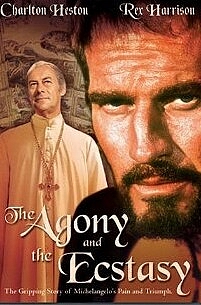
We've recently watched, courtesy of Netflix, the 1965 movie The Agony and the Ecstasy, the story, partly based on Irving Stone's biographical novel of the same name, deals with the conflicts of Michelangelo and Pope Julius II during the painting of the Sistine Chapel's ceiling. It's a reasonable depiction of likely events, I guess. The film was made in the then current style used for epic stories (Ben Hur, El Cid, etc.) but the film comes over, in 2016, more as a lush, expensive documentary; but I'm glad to have seen it, at last.

I had in mind to blog arty-fartily about Michelangelo, but he is too huge a figure in the art world to reduce him to a tiny blog post. Michelangelo's astrology has been picked over many times. His natal chart can be seen at Astro-databank HERE.


Michelangelo
A few pointers to his nature, as shown in his natal chart are indicated in a book, DESIRE and DESIGN: A Look at Venus and Mars in Action by Mary Jane Staudenmann, excerpt below from Google Books, HERE.
(Click on images for clearer views).


The sight of one of Michelangelo's masterpiece sculptures in the movie, that of Moses, brought back a question: those mysterious horns on Moses' head! I'd noticed these in the past, but never had the time, or resources, to investigate the mystery. This time I had Google at my finger-tips.


There appear to be two possible explanations for the horns: a mis-translation, or a symbol of power.

From HERE:
What about the horns? Scholars believe this was a mistranslation of Hebrew scriptures into Latin by St. Jerome, called the Vulgate. It was the Latin translation of the Bible used at that time. Moses is described as having “rays of the skin of his face.” Jerome translated it to horns from the word keren, which means either radiated or grew horns.

Horns were a symbol of wisdom and rulership in ancient times. Was Moses a descendent of antediluvian kings, those who reigned before the flood, as some interpreted it?

Michelangelo was not the only artist to put horns on Moses. Several paintings and sculptures from the medieval and renaissance era depict him this way and can still be seen on the streets and in museums.

And HERE:
In her book The Horned Moses in Medieval Art and Thought (Los Angeles, UC Press, 1970), Ruth Mellinkoff describes how prominent this “mistranslation” became in depicting Jews physically, as well as metaphysically, as being in league with the Devil. Of course, the best known – but certainly not only -- example of this depiction is Michelangelo’s magnificent Moses.

Most commentators have simply said that Jerome mistranslated “keren” as “horned” rather than “radiant.” But Bena Elisha Medjuck, a McGill University Department of Jewish Studies graduate student, offered a more complex explanation in his 1988 thesis “Exodus 34:29-35: Moses’ ‘Horns’ in Early Bible Translation and Interpretation.”[1] Medjuck explains that Jerome was well-acquainted both with the variant meanings of “keren” and with the prevailing translation of his contemporary Jewish scholars – with whom he consulted! Jerome chose the “horned” translation as metaphor faithful to the text: a depiction of Moses’ strength and authority, and a glorification of the Lord! Jerome even explained this in his accompanying commentary!

Horns were almost universally viewed by ancient civilizations as symbols of power, not as the negative or demonic symbols they became for Christians thousands of years later. For example, both Alexander the Great and Attila the Hun were described as wearing horns. Mellinkoff reminds us that horned helmets were often worn by priests and kings, with the horns connoting that divine power and authority had been bestowed upon them.

I can't help wondering why horns were seen as a symbol of power. Several attempts at explanation can be found on the internet, Wikipedia's page on Horned Deities is probably the most reliable and factual. In a nutshell, it appears that horned animals were held in great esteem in ancient times - rams and bulls for instance. The first two zodiac signs (Aries the ram and Taurus the bull) even depict these animals, as do the astrological glyphs for the signs, with associated astrological ages, BC.

 Isis, Goddess of Ancient Egypt
Power and virility were thought to reside in animals' horns - or so the story goes. Ancient warriors are said to have worn helmets bearing the depiction of horns. See HERE. Egypt was likely the source of continuation of an earlier belief, from there spreading through Greece, to Rome and beyond. With the rise of Christianity, though, horns slid into disregard becoming, in time, a pagan symbol of Satan and darkness, even became a common hand symbol for "the cuckold" (index finger and little finger extended, middle fingers bent to palm).

Those explanations, on the face of it, are plausible; something doesn't sit well with me though. Extremely early man could well have held his fellow Earth creatures in high regard, but for such a belief to have bled into later, more sophisticated civilisations, such as those of Egypt and Greece, seems less plausible. But then, I look at this through a 21st century lens. Donning my sci-fi hat (no horns) I could imagine a quite different source: something broadly similar to that Arthur C. Clarke wrote about in a novel I read a few years ago: Childhood's End. Arthur C. Clarke visualised an Earthly memory, surviving in mangled form, from man's earliest hazy days, half-forgotten, half-retained, its source way, way further back in the history of our planet than we are able, currently, to investigate. Fanciful? Sure it is!

Thursday, August 25, 2016

"'Ello 'ello 'ello what's all this then ?"

As Virgo's atmosphere seeps in, I'm getting my own, minimal, Virgo on. I have only Neptune in Virgo, but it is in harmonious trine to communication planet Mercury. I'm allowed to don a uniform and play at grammar policing, just once in a while.
“And all dared to brave unknown terrors, to do mighty deeds, to boldly split infinitives that no man had split before - and thus was the Empire forged.”
― Douglas Adams, The Hitchhiker's Guide to the Galaxy

First, a matter of policing myself: 'til....till...until. I'd regularly noted "till" being used, even in newspaper headlines, rather than 'til, the version I'd always thought to be the only correct one, being the shortened version of until. I was wrong. It seems that "till" is quite correct, and was actually the older form, 'til having been introduced at a much later date. (See World Wide Words.) In spite of till being the original word, I shall continue using 'til because the word till has two other commonly understood definitions: as noun: a cash register or drawer in which to keep cash; and as a verb to till when cultivating the ground, for crop growing.


Britain, Great Britain, British Isles, England, UK - not really a matter of grammar, this, more of general knowledge. Those terms are not always interchangeable.
The UK – a sovereign state that includes England, Scotland, Wales and Northern Ireland.
Great Britain – an island situated off the north west coast of Europe.
British Isles – a collection of over 6,000 islands, of which Great Britain is the largest.
England – a country within the UK.
See HERE for a detailed explanation.


Effect and affect - this is a golden oldie for me, mentioned before in these posts, sighed over it, many times, when reading online.

effect = noun, produced by a cause; a result.

affect = verb, to act on; to produce a change.


Ongoing irritation: could of vs. the correct could have....UGH! Also, another constant irritation: go or went instead of say or said - even more of an UGH!

To/too - I think Americans have abandoned the double 'o' and use 'to' to indicate some kind of excess, rather than 'too'. I find this confusing, when reading!

Good, better, best isn't a problem but bad, worse, worst seems to be. I often see worse written instead of worst, as though the writer wasn't aware of a superlative.


Finally: "very unique" grates on me....it isn't possible. Something is either unique or it's not unique, it can't be more unique than unique. Unique = being the only one of its kind; unlike anything else.

Wednesday, August 24, 2016

Once Again Into Virgo

About to begin copy-typing the Virgo section from Louis MacNeice's "Astrology", this month, following my current monthly bloggy pattern, I noticed that, back in 2010 I had already called on Mr MacNeice's book for some assistance in constructing a post on zodiac sign Virgo. I shall give my typing fingers a rest this month and do a copy-paste job instead, perhaps replacing illustration:

 Virgo by David Palladini
The Sun has now moved along the zodiac trail from the area western astrologers label Leo to that we know as Virgo. Virgo, the Mutable Earth sign ruled by Mercury. Mercury also rules Gemini (Mutable Air); it's somehow easier to connect Mercury with Airy Gemini than Earthy Virgo.

In a 1964 book, Astrology, recently acquired (more on this in tomorrow's post) author, Louis MacNeice, not an astrologer, but poet and scholar, has this to say about zodiac sign Virgo, quoting Ingrid Lind, a 20th century British astrologer:

Ingrid Lind once again asks straight away: "How can earth be mutable and mercurial?" And the answer yet again is in the other ingredients (though she says, this internal conflict does tend to make a Virgo type a worrier).
I like the expression "Virgo type", as against the more commonly used "a Virgo" - it covers my constant quibble that "there ain't no such thing as a Virgo, or an Aquarian...or...etc. etc. etc." I'll remember to use the expression Virgo(or whatever)-type myself in future. There are certainly "types" who clearly reflect major characteristics of zodiac signs and/or planets, though these people may not always have natal Sun in the relevant sign.

MacNeice then quotes astrologer (Rupert?) Gleadhow:

Virgo (is) "perhaps the most earthbound" of the 12 signs, but her earthiness is very unlike the earthiness of Taurus: Mercury could never rule Taurus. In fact the earth gives Virgo common sense and Mercury supplies an unusually keen intelligence. The two together make for disciplined thinking and acting.
Virgo is traditionally represented holding a sheaf of corn and, in western Europe Virgo's time of year is harvest-time. Granaries may connect with Virgo too - also the separating of wheat from chaff, in a way representing a very Virgoan characteristic: discrimination.


MacNeice writes that Virgo is thought of as the patroness of critics and craftsmen, but not of creators or commanders......Virgo is a great deal more than a sharp-tongued and keen-eyed housewife. It is the patron sign of Switzerland (which was to be expected), but also of Paris and of cats (no doubt because cats are so neat).

He tells us that Tolstoi is accepted by astrologers as a Virgo man, having had not only Sun and Mercury in the sign but the Moon as well. Which would suggest that Virgo CAN be creative sometimes, though perhaps what is most Virgonian about Tolstoi is the exact and conscientious way in which he tried to lead a new life in his old age.

Quoting astrologer André Barbault, MacNeice writes:
.......Anyway, the traditional Virgo type is somewhat dry and cold, a fusser over detail, a discriminator, a rationalist, a perfectionist, yet prepared to sacrifice himself. Barbault suggests that if the Pisces man is like an astronomer brooding on the infinite spaces, the Virgo man is like a biologist with a microscope.

 From Searle's Zodiac by Ronald Searle
As I've noted before in these blog posts, my husband's eldest daughter has Sun, Moon, Mercury, Venus & Pluto in Virgo and has spent almost all her career in the newspaper business - how much more of a Mercury-type is there? Coincidentally her birthday is the same as that of Louis MacNeice, apart, of course, from the year. She matches some, but not all of the characteristics mentioned above. Her Leo ascendant (matching that of her Dad) accounts for her softer, warmer nature and sense of humour - more than might be expected from text book descriptions of Virgo.

Other posts on zodiac sign Virgo can be accessed via the Label Cloud in the sidebar, by clicking on.....well, "Virgo".

Tuesday, August 23, 2016

Trump Mark II ?

Scott Adams, creator of the comic strip "Dilbert" was mentioned here, in a post about Donald Trump, a few months ago:
Stray Thoughts about Donald Trump, "What Rough Beast".

For anyone interested to see Scott Adams' natal chart, it's available at Astro-databank HERE. Gemini Sun, Libra Moon (in Via Combusta, by the way); and Aries rising.

Mr Adams, though reportedly not a supporter of Trump, still believes a Trump win is not as unlikely as we are being led to believe by mainstream media. Take a look at this
19 August post on Adam's blog:
Trump's Regrets.

IT BEGINS:
By now, most of you know that Trump expressed “regret” at saying things in the past that might have hurt people. Most viewers interpreted this as an apology, of sorts.

Trump? Apologize?

I have some thoughts on this, in no particular order.
3rd Act

This is the so-called 3rd act that I have been predicting for about a year. In movie terms, this is the point where the protagonist encounters a problem that can’t be solved unless he changes something about himself. In a typical movie script, the hero might need to conquer a specific fear, open his heart to love again, or become more open-minded – that sort of change. In our movie, Trump needed to display more human empathy to appear less scary to the public. He has been doing that in speeches and statements all week, but the “regret” speech capped it.

In movie script terms, the timing for Trump’s 3rd act is perfect. The clock was running out on the election cycle and polls said Trump was in a hole that was only getting deeper. Clinton’s Dark Arts team – probably led by the one I call Godzilla – had framed Trump as dangerous and unstable. He was a goner. There was no way out. Game over.

Unless…he…changed...........


I forced myself to watch the video of Trump's speech at a rally in Charlotte NC last week. I skipped through all the introductory waffle, just listened from the start of Trump's speech. He did look, and sound, more as a presidential candidate ought to look and sound. How worthy of trust his promises would be remains in doubt, as do any promises made by Hillary Clinton. Talking the talk and walking the walk are miles apart, thousands of miles. Still, someone has convinced Trump that he must change his style if he's to survive with any semblance of dignity intact. If he's able to retain this newer version of himself for three more months, unexpected as this may seem, perhaps Hillary Clinton will not look as landslide-worthy as she has of late.

A post and comments I read, after drafting the above, set me wondering, this one, at Lawyers Guns and Money. Poster and commenters have scant respect for Scott Adams - but I'm not easily swayed by their opinions - they had little good to say about Bernie Sanders during past months. For me that labels most of them as establishment Democrats, elitist liberals. Which then labels me as overly judgmental! Anyway, as a comparative newcomer to this nation and its politics and cartoon strips (which hardly ever consult), I thought that a note of their commentary should be included here.

Still on Trump - here's another possible explanation of his popularity with a certain group (whichever version of himself is on offer). This from Daily Kos:
A Consideration about Trump's Appeal -- Ageism.
By Soprano, on Monday Aug 15, 2016.

IT BEGINS:
Here’s something I haven’t heard anyone consider when wondering why Trump is so popular to angry, white, male baby-boomers: ageism.

The baby-boomers are a large section of our population. They (“We” I should say; I’m 64) have changed our society as we have gotten older, to our advantage.

We’ve hit a wall, though. America’s love of youth. Notice how the elder members of any cast on t.v. are, at the most, in their 40s, usually in their 30s. Models for clothing advertisements are almost always young — not too many models of my age and size out there. Even AARP has embraced youth; now, their magazines are full of people in their 50s, not so much with older folks. The articles addressed towards them are usually about how they are falling apart and need help; not so much about the positives of growing older (and yes, there are positives). People over 70 are pitiful victims, doncha know?..............

There's more than a grain of truth in that. Ageism regularly grates on yours truly - though not sufficiently to propel me into Donald Trump's camp; but then I'm neither male nor baby-boomer. I am white, and I'm and often angry about the political strangle-hold of the establishment and slimy political insiders in this country. What to do? Watch and wait, for there's always "the unexpected"!

Monday, August 22, 2016

Music Monday ~ Two Birthdays & a Link

Who'll it be for this Music Monday ? Shall I feature Claude Debussy - he was born this day, 22 August in France, in 1862. Or should it be Tori Amos? Today is her birthday too, born in North Carolina in 1963.

Before deciding, I noticed that Tori Amos has recorded an album in tribute to several classical composers, Claude Debussy being one of them. The album title is Night of Hunters. This is a rather nice link between two natives of 22 August. It deserves a couple of videos.

Claude Debussy's Girl with the Flaxen Hair:
The [French] title "La fille aux cheveux de lin" was inspired by Leconte de Lisle's poem by the same name, one of his Chansons écossaises (Scottish songs) from his 1852 collection Poèmes antiques (Ancient Poems). The image of a girl with flaxen-coloured hair has been utilized in fine art as a symbol of innocence and naivety. (Wikipedia)


The piece Tori Amos chose to honour Debussy was his Girl with the Flaxen Hair. She called her tribute piece Carry.(See HERE)


Carry ~ Tori Amos


Another video, clarifying the lyrics.