Showing posts with label Rome. Show all posts

Monday, February 26, 2018

Music Monday ~ Tripping Over Memories


What brought that on?

Last week I contributed this at Quora, in answer to the question:
"What was your first travel experience?"

I did travel, within the UK, a few times before 1962, but that year saw my first venture outside of Britain, into Europe - to Italy. It was a honeymoon trip. I'd married an Italian guy. It was a mistake, the marriage was short-lived and fairly unpleasant, but some details of that first trip abroad remain etched in memory.

We travelled all the way from northern England to Italy by train, without a break. First to London, then to Milan via France and Switzerland, then to Brescia where first husband's family lived, then a few days later, on to Rome.

What I remember most about the actual journey is becoming deadly tired, but unable to sleep. I recall changing trains in Basle, Switzerland, with a little time to spare before the onward train . We visited a station cafe, ate sauerkraut - an unwise choice on a nervous stomach! I’ve avoided the dish ever since.

At last we arrived in Brescia. I met husband's sister and her husband, who took us to meet husband's parents. I lacked self-confidence back then, and have to admit that I suspected already this marriage had been a mistake. Sister and brother-in law were lovely though, made me feel quite comfortable; the same could not be said about the parents-in-law! Never mind. I'll skim over the couple of awkward days, until we caught a train to Rome - where my husband had once lived and worked.

The Rome experience made all past discomfort and awkwardness worthwhile for me. Rome was love at first sight! We stayed in a tiny hotel in one of the cobbled side streets in the main part of the city. Our simple room was on the top floor - no elevator. I recall the scents and smells of those narrow, cobbled streets - baking, cooking, pizza, herbs, fruit, the noise, the voices floating up through an open window. The bread rolls, cheeses and pears husband would bring each morning for breakfast from street vendors below.

Each day we'd go out and wander the city, or visit a couple of nearby towns. So much to see : the fountains, the churches, the river, the famous landmarks - no need for detail! Among all those legendary sights and landmarks it was the Forum which most fired my imagination - don't know why, but it seemed to draw me into it.

Our time in Rome too soon came to an end and the long journey home loomed ahead. I found the trip home less strenuous - even teased husband that I was going to get off the train somewhere near Venice and not continue the homeward journey, but return to Rome! I didn't do that, of course, but I did return to Rome, twice more - before the marriage bit the dust for good. I suspect it was only the prospect of visiting Rome again that kept it from dying a quick death, even before it did.

And so it was...

Wednesday, June 21, 2017

It is the month of June, The month of leaves and roses...

It is the month of June, The month of leaves and roses, When pleasant sights salute the eyes and pleasant scents the noses. (Nathaniel Parker Willis).
June....Juno: yes, in a handful of past posts I've confidently written that the month of June was named in honour of goddess Juno; such archived posts can be accessed via "Juno" in the Label Cloud in the sidebar. I've lately stumbled across evidence that I (and countless other writers, bloggers and internet websites) could be mistaken in this supposition. An excerpt from a book The Roman Festivals of the Period of the Republic by William Warde Fowler throws doubt on the June/Juno theory. The author includes a passage, in Latin, from Macrobius which he claims shows that Roman scholars were "at sea" as to the answer on whether the months of May and June were named after deities in the same way that March was certainly named in honour of Mars, god of war. There's more detail on the May/Maia question, which I'll not include here. As for June/Juno:


One source giving a hint that June/Juno might be questionable is Encyclopedia Mythica, where it is stated:
June
The fourth month
[In ancient Rome the year began in March] was named in honor of Juno. However, the name might also come from iuniores (young men; juniors) as opposed to maiores (grown men; majors) for May, the two months being dedicated to young and old men.

Monday, May 08, 2017

MAY (not the Theresa variety) + Ancient Rome

A nod to Music Monday first, according to the lyrics I'm several days late....


May is now fully upon us.

I've not scribbled about ancient Roman Festivals for a while so, a look at what used to be going on, way back when in Ancient Rome, during the month of May.

The last days of April and first three days of May saw Ludi Floriales, honouring Flora, goddess of flowers, fertility, sex, the blossom of spring and the renewal of the cycle of life.

"Ludi" = Games by the way, and these springtime Games, dating from 173 BC, primarily celebrated fertility. From ancient writings, it appears Ludi Floriales were on the wanton, spicy side, including strip-tease performances by prostitutes. An abundance of flowers would have been displayed around the city, and in garlands bedecking its citizens. On the final day of the Games chariot races were held. It's thought that the Maypole, as a phallic symbol, is probably a descendant of these Roman Games.


Ancient Rome had barely caught its breath after those licentious goings on when another festival kicked in:Lemuria, on May 9, 11 and 13. To appease the ghosts of the dead, who were believed to be walking the city on these dates, Romans would walk barefoot and throw black beans over their shoulders, during darkness. Each head of household was required to do this nine times at midnight, while his household members clashed metal pots to persuade ancestral ghosts to leave.

Ancient Roman writer, Ovid believed that the source of these practices was guilt, due to the murder of Remus, brother of Romulus, founder of Rome. (Remuria/Lemuria) See Wikipedia here.


Around a week after Lemuria came Agonalia, on May 21. This festival honored a little known god, Vediovis. The object of it is thought to have related to protection and/or war. A ram would be sacrificed by an important religious official.

 Model of a Lituus
Two days later, May 23, saw Tubilustrium, honouring Vulcan. The god Vulcan was responsible for manufacture of sacred war trumpets or tubas(the lituus). Sacrifice of a female lamb marked this festival, and Salii (see Wikipedia) twelve youths known as the leaping priests of Mars, danced through the streets.


That was it for May. Citizens were involved in festivals during the first half of the month, they no doubt needed a rest after the naughtiness of the month's first few days, followed by some ghost-busting activities! Festivals later in the month were the responsibility of city officials and dignitaries.

Thursday, March 17, 2016

17 March Meant Hanky Panky in Ancient Rome

Almost shoulder to shoulder with ancient Rome's Ides of March on 15th came Bacchanalia and Liberalia on 17th.

The ancient Roman calendar had only ten months and started the year on 1 March. It was dedicated to Roman God of War, Mars who was honored daily with parades of the priests of Mars dancing through the streets. The culmination of the year end celebration was March 16 and 17th which were the feast days of Bacchus which was how Dionysus was known throughout the Roman empire. Fear of a powerful non-roman religious hierarchy resulted in restrictions by Senate decree in 186 AD which were not repealed until Julius Caesar was in power. Into this vacuum flowed numerous other cults whose mythic stories often replayed the great cosmic drama of life-death-rebirth. (See here)


Roman historian Livy took against all that Bacchanalian cavorting, but quite likely slid into hyperbole - a slide not unknown among writers in the USA, in our own time:

LIVY:
When wine, lascivious discourse, night, and the intercourse of the sexes had extinguished every sentiment of modesty, then debaucheries of every kind began to be practiced, as every person found at hand that sort of enjoyment to which he was disposed by the passion predominant in his nature. Nor were they confined to one species of vice -- the promiscuous intercourse of free-born men and women; but from this store-house of villainy proceeded false witnesses, counterfeit seals, false evidences, and pretended discoveries. From the same place, too, proceeded poison and secret murders, so that in some cases, not even the bodies could be found for burial. Many of their audacious deeds were brought about by treachery, but most of them by force; it served to conceal the violence, that, on account of the loud shouting, and the noise of drums and cymbals, none of the cries uttered by the persons suffering violence or murder could be heard abroad.

While it does seem that the religious activities of the Bacchanalia did expand to include violence against its initiates and apostates, some of Livy’s criticism may have been directed at the co-mingling of different types and classes of citizens and residents.

Between whatever the reality was and the opposition Livy was able to motivate, Rome eventually decided it had had enough. Not only were the Bacchanalia severely regulated, many of its practitioners were persecuted in a violent campaign not matched until Rome went after the Christians.
According to Livy, 7,000 people were arrested. More than half of them were killed.(See here)


Interesting considerations:
It is possible that Dionysian mythology would later find its way into Christianity. There are many parallels between the legends of Dionysus and Jesus; both were said to have been born from a mortal woman but fathered by a god, to have returned from the dead, and to have transformed water into wine. The modern scholar Barry Powell also argues that Christian notions of eating and drinking the flesh and blood of Jesus in order for individual followers to feel Jesus within them was influenced by the cult of Dionysus.

Certainly the Dionysus myth contains a great deal of cannibalism, in its links to Ino. Dionysus was also distinct among Greek gods, as a deity commonly felt within individual followers. In a less benign example of influence on Christianity, Dionysus' followers, as well as another god, Pan, are said to have had the most influence on the modern view of Satan as animal-like and horned. It is also possible these similarities between Christianity and Dionysiac religion are all only representations of the same common religious archetypes.

Furthermore, it is worth noting that the story of Jesus turning water into wine is only found in the Gospel of John, which differs on many points from the other Synoptic Gospels. That very passage, it has been suggested, was incorporated into the Gospel from an earlier source focusing on Jesus' miracles.
(See here)

The Bacchanalia proper was, later on, generally replaced by the Liberalia on 17 March, in honor of another aspect of Bacchus, Liber or Liber Pater.

Liberalia, a rustic festival when Roman youths generally first assumed the male toga, began dressing like adults - akin to moving from wearing short trousers to long trousers for youths of our day, perhaps.

...young men discarded the Etruscan-derived toga praetexta, which was decorated with a broad purple border and worn by boys and girls. The boys then donned the clothing of adulthood, the pure white toga virilis (man’s gown). The garment identified him as a citizen of Rome, making him an eligible voter. This ancient ceremony was a country or rustic ceremony. The processional featured a large phallus which the devotees carried throughout the countryside to bring the blessing of fertility to the land and the people. The procession and the phallus were meant also to protect the crops from evil.

At the end of the procession, a virtuous and respected matron placed a wreath upon the phallus.
While Liberalia is a relatively unknown event in the modern time, references to Liberalia and the Roman goddess Libera are still found today online and in astrology.
See here)

Hmmm!

Thursday, December 17, 2015

Unwrapping the Christmas Gift

For ancient Romans 17th December marked the first day of their last major winter festival : Saturnalia, in honour of their god Saturn. There are already a handful of posts on Saturnalia, accessible from the Label Cloud in the sidebar. Let's see what else can be dredged up on the topic!

One of the major ingredients of our time's Christmas celebrations is the giving and receiving of gifts. Christians might suppose that this tradition stems from the story of the 3 Wise Men visiting the baby Jesus, bringing gifts of gold, frankincense and myrrh - not sure that's true, but seems likely. There's another reason though. Saturnalia. As well as a holiday from school for pupils, the establishment of a special market; freedom to gamble for all, slaves included; less restraints on drinking and more wine available to slaves; official dress (togas) not worn but all wore the pilleus -freed man's hat. [I wonder if this is the root of those darned paper hats beloved of Christmas party givers - in Britain if not in the USA?] Slaves were exempt from punishment and allowed to disrespect masters; also...getting to it now....another tradition of Saturnalia was the buying and giving of presents.

Lists of "what to buy for...whomever" in Roman times included: writing tablets of various kinds, dice, nuckle [sic] bones, moneyboxes, combs, toothpicks, a hat, a hunting knife, an axe, various lamps, balls, perfumes, pipes, a pig, a sausage, a parrot, tables, cups, spoons, items of clothing, statues, masks, books, pets.
(Information from Martial Epigrams Book 14 (c. 84 or 85 A.D.)

So, take Saturnalia's traditions, Sol Invictus celebrations, northern traditions of Santa Clausian activity and evergreen trees, add Christianity, stir briskly, leave to marinate for many centuries, and serve well seasoned!

Saturday, October 03, 2015

The Roman Way in October

I'm having mild withdrawal symptoms don't ya know? Haven't had an Ancient Roman Festival to feature for quite some time. Let me see what was goin' on during October in those long ago Roman days.


Ludi Augustales – October 3-12 Following his predecessors Sulla and Caesar, games were held in Augustus' honor starting in 11 BC. It became a ten-day event under Tiberius. Usually only the last day featured chariot racing.

Yeah, well, those horses and chariot wheels did tend to screw up the turf - not good for the athletes.

Black Day: Anniversary of Arausio – October 6 A day considered unlucky since it was the anniversary of the defeat to German tribes in 105 BC.

Those dang Germans !

Meditrinalia – October 11 To Jupiter, in his form as the wine-god, and Meditrina, goddess of healing and medicine. This was the first occasion on which Romans tasted the year's new vintage.

After quaffing all that new vintage stuff, no doubt Meditrina's skills of healing came in very handy! Ah-ha... we have a post about this, from 2011 (AD that is)- See HERE

Fontinalia – October 13 To Fons or Fontus, god of fountains, springs, and wells. Fountains and wellheads around the city of Rome were decorated with garlands.

And there are lots and lots, and lots of fountains in Rome - I saw many of 'em, but that was many decades ago (not nearly as many decades ago as this Festival though)!


Equus October – October 15 A race of two-horse chariots on the Campius Martius in honor of Mars. The right hand horse was sacrificed to the god with the tail being taken to the regia where its blood was left to drip on the hearth. The head was fought over between the residents of the Via Sacra (the rich and powerful) and the Subura (the poor). This festival and the next represented the usual close of the military season.

Ew...Ew...Ew......!!!


Armilustrium – October 19 To Mars. This marked the end of the military campaigning season. Soldiers' weapons were ritually purified and stored for the winter on the Aventine Hill. The assembled army was garlanded with flowers and reviewed in the Circus Maximus. Trumpets were played. There was a procession with torches and sacrificial animals.

Inhabitants of the USA carry on their version of this particular festival continually, by ritually saying "Thank you for your service" to any individual wearing military uniform, in any situation...whether said individual has ever done anything remotely like service to man or beast, or not. (Perhaps this should be my cue to run and hide!)


Ludi Victoriae Sullae – October 26 - November 1 Sometimes modern readers are puzzled about why Sulla's contemporaries complain so much about him. It should be realized that some of the things he did could be rather offensive to the traditional Roman. For example, after he won the battle of the Colline Gate in 82 BC to restore his control of Rome from the Marian faction, he chose the first anniversary to institute annual games in honor of the victory and by implication of course, himself. Now what had once only been done for gods, was being done on behalf of a mere man. This set a precedent for Caesar. Usually only the last day featured chariot racing.

"the Marian Faction"?
Any connection to "Marian...Madam Librarian
What can I say, my dear, to catch your ear...."?

Thought not!


This:
Julius Caesar’s family was socially distinguished: its members were patrician, and claimed descent from Venus and Aeneas. Although not prominent in politics, they were closely connected with the Marian faction in Roman politics – Caesar’s aunt was married to the popular leader Marius, and he himself married Cornelia, the daughter of Cinna (a follower of Marius). Cornelia died in 69 BC, after which Caesar married Sulla’s granddaughter Pompeia, in 67 BC.


Source HERE

Monday, June 01, 2015

Music Monday's "Furrin Parts"

So much from which to choose! I'm going with Rome, because I fell in love with the city back in the early 1960s when I spent several weeks there.

Paragraph below is extracted from a 2007 post HERE

I spent some time in Rome, Italy in the early 1960s (photo on right). I used to wish frequently that I could turn back time; not all the way back to the days of the Roman Empire, but far enough to allow me to experience the Eternal City without so many tourists and so much traffic. A decade or so before my visits, only very wealthy travellers had access to Rome. I imagined with envy what it must have been like to wander the ancient sites and sights, free of horrendous traffic, noise and fumes. I used to frequent cobbled back streets, away from tourist areas. Occasionally I'd feel that I did catch a glimpse and a feel of how it used to be. I'm luckier than most, though. At least I saw the city before worse pollution and even heavier traffic took its toll.
I used to have a lovely EP (extended play) vinyl record containing 4 songs about Rome. I lost it, along with everything else, in our Great Fire of 1996. For the first time since then I've been able to find three of the four songs on YouTube. These versions are nice but not nearly as good as those on my record, that female singer's name is still buried in my memory banks, so far not recoverable. Below, the first two songs are sung by Lando Fiorini, the third by Mario Lanza.

The songs:

Quanta Sei Bella Roma. Translates as How Beautiful You are, Rome [in the evenings].
Full translation of lyrics


Vecchia Roma (Old/Ancient Rome)

A garbled not very useful translation (the song is, I think, regretting modern changes in the city's life).


Arriverderci Roma (Goodbye, Rome, until we meet again)
Translation of lyrics


Any contributions of more songs from "furrin parts" enjoyed by passing readers?

Wednesday, April 15, 2015

Pregnant Cows or Pregnant Barley?

Hat-tip Wikipedia
Fordicidia, a Roman agricultural festival in honour of goddess Tellus, known as "Grain Goddess", regularly associated with Ceres in rituals pertaining to the earth and agricultural fertility was held in Ancient Rome every
April 15.

A pregnant cow (forda or horda) was sacrificed to Tellus in each of the 30 wards of Rome and one on the Capitoline Hill. The sacrifice was in hope of promoting fertility (presumably of cattle and crops in the fields). The unborn calves were cut away from the mother, burnt, and the ashes were used by the Vestal Virgins in a purification rite in the festival of Parilia on 21 April. (An archived post on Parilia is HERE)

That's one version of the tale, the most widely reported, and a pretty gruesome one at that! One website has a different take on the Fordicidia/Fordicalia. The writer at piereliogion.org suspects that something could have been lost in translation. The theory goes like this:
......the words forda and horda do mean ‘pregnant cows’, that is, ‘cows in calf.’ The two different forms forda- and horda- are dialect forms in which the h- and f- are allophonic (you say tomayto, I say tomahto). There is a similar situation with the words hordeum and fordeum which both mean ‘barley’ ......Furthermore, the name of the festival Fordicidea, the form usually used in classical Rome is questionable. The name in Ovid’s Fasti certainly ends in -cidea which has a meaning ‘slaughter’ (as in ‘suicide, genocide’), but both Hordicalia and Fordicalia are also attested various places as names of the festival and these have the more usual form of the name of a festival in Latin, with a typical -alia ending.....
The writer points out that wastefully slaughtering upwards of 30 pregnant cows was not in the best interests of farmers, and had no sympathetic magical resonance with prayers that there should be a good harvest of grain in the coming season - Tellus being Grain Goddess.

Regarding the alternative explanation, the writer goes on to explain:
How can barley be pregnant, one might well ask? Barley gets pregnant in the spring, when the over-wintered grain (which just looks like lawn grass all winter), shoots up and begins to form ears, inside the stalks. At first it isn’t noticeable, but eventually, a close look shows that the stalks between the nodes are getting “fat” because the ears are forming inside, while they are still covered by the sheaf of one of the blades of the barley. In English, the barley is said to be “in the blade” meaning that it is forming ears. This is a time of great anxiety for grain farmers since they are hoping that everything will turn out right and the ears will eventually shoot above the main part of the plant and then ripen properly. Very widely among the Indo-Europeans, there is a festival to encourage the grain growth at this time, which seems to be the main impetus for these Tellus Mater festivals.
It's hard to say which version is most likely correct, but I'm thinking that, if Roman high authorities had anything to do with it, then I doubt the sensibilities of the farmers for their cows would be taken into account. Slaughter of the pregnant cattle, if ordered from on high, would have to be carried out, regardless. Makes little sense to us, but then, so do many orders of our 21st century governments.

Wednesday, April 01, 2015

Day of Venus

It's All Fools' Day, but it's also Venus's day. Ancient Romans celebrated The Veneralia on this day, in tribute to Venus Verticordia ("Venus the changer of hearts") and Fortuna Virilis ("Manly" or "Virile Fortune").

It was the Romans who named the month Aprilis, possibly a reference to the Latin verb aperire, to open (the season when trees and flowers begin to open); or perhaps as April, being sacred to the goddess Venus, and her Veneralia being held on the first day, Aprilis was originally Aphrilis, from the name of Venus's equivalent Greek goddess, Aphrodite (Aphros).

The cult of Venus Verticordia established in 220 BC, during the last years of Rome's Punic Wars, was in response to advice from a Sibylline oracle. A series of prodigies was taken to signify divine displeasure at sexual offenses among Romans of every category and class, including several men and three Vestal Virgins. Tsk tsk!!

"A series of prodigies"...hmm, obviously not referring to a band of baby mathematicians or lyre players, nifty beyond their years. Collins English Dictionary clears that up:
prodigy
1. a person, esp a child, of unusual or marvellous talents
2. anything that is a cause of wonder and amazement
3. something monstrous or abnormal
4. an archaic word for omen.

Ceremonials during Veneralia entailed all women, both married and unmarried, visiting the men's baths. It was a day for women to seek divine support and aid in their love lives. Wearing myrtle wreaths, they would make a libation of poppy with milk and honey and drink the potion while praying that Venus would bring them harmony and peace. Incense was also offered to the goddess in hope of hiding any perceived physical imperfections from view while the women were in the baths.

In 114 BC Venus Verticordia was given her own temple. She was meant to persuade Romans of both sexes and every class, whether married or unmarried, to cherish the traditional sexual proprieties and morality known to please the gods and benefit the State. During the Veneralia, her cult image was taken from her temple to the men's baths, where it was undressed and washed in warm water by her female attendants, then garlanded with myrtle. Women and men asked Venus Verticordia for her help in love, sex, betrothal and marriage.

See also: Wikipedia

Monday, February 23, 2015

Bordering on Limitation Here, There and at The Oscars

Around this date, 23 February, in a couple of previous years (here and here) I've rambled on about Roman god Terminus, god of boundaries and his festival, Terminalia, held this day in ancient Rome.

Boundaries...these can be physically marked by borders, signs, guards etc. or psychological and inter-personal in effect. Astrologers have something to say about the latter type of boundary. Saturn is master of boundary-related issues in astrology, while part of Neptune's area of interest covers the dissolving of boundaries. February 23, at the beginning of Sun's journey through Neptune-ruled Pisces, in our 21st century eyes, seems pretty inappropriate timing for celebrating the god of boundaries! Romans marched to a different drummer though, a different calendar and different astrological ideas.


For some astrological theories on boundaries psychological and inter-personal see the following:


The 3 Major Ways of Setting Boundaries—Which Type are You? - an article by Dr Brian Grady carried at Donna Cunningham's astrology blog.

Working With Saturn: Internal Boundaries by Hiroki Niizato

Pisces: The Dissolution of Boundaries by Sean at The Clestial Observer


We made it through the Oscars last night - not a lot of boundaries crossed there this year. Lots of pretty frocks on the ladies of course, but the guys are so timid about crossing traditional boundaries where their evening "uniform" is concerned. Hundreds of bog standard (though probably horrendously expensive) black tuxedos, bow ties, white shirts, with a smattering of white or ivory tuxedos, one navy blue one (Eddie Redmayne's), one dark red one with matching vest (David Oyelowo who plays MLK in "Selma"); a few black shirts and ties (seems to be the in thing just now outside of formal ceremonies); and a pale blue suit (Jared Leto)- bravo! Late addition: my newest favourite actor, Matthew McConaughey, giving out the last Oscar - for best female actor - sported an elegant metallic pewter tuxedo. Knew he wouldn't let me down by being "ordinary"! Aw..riight!

There seemed, to my ears, to be a boundary when it came to applauding the movie about Edward Snowden, "Citizenfour" when it won an award for...something. I thought the reception very subdued compared to the standing ovations given to "Selma" and "American Sniper". Isn't Hollywood supposed to be liberal to the core? Their liberalness has boundaries, obviously! Maybe, as in the case of "Selma", it'll take 50 years for Snowden's efforts to be fully appreciated and warrant a standing "O". Tsk!!


Music Monday's offering appropriate to ideas of the god Terminus, and boundaries? Hmmm... there's a song I've always liked and its sub-title or alternative title happens to be Exordium et Terminus (which, translated = beginning and end). The song's main title: In the Year 2525 was a 1969 hit by American pop-rock duo Zager and Evans. There's an archived post about it and them here.


Sunday, October 05, 2014

Rolling Away the Stone

5 October, in ancient Rome, marked one of three dates (along with 24 August and 8 November) of a festival known as Mundus Patet, when a stone covering the entrance to a round or bottle-shaped pit was ritually removed. Originally the pit was where earliest Roman inhabitants had stored seed grain, to keep it safe. Somehow, over time and with the mix of Etruscan lore, the entrance to the pit came to be understood as entrance to the underworld. I suppose our nearest approach to something similar would be All Souls Day/Hallowe'en.

On the three dates when the entry to the pit was left open, it was thought that spirits of the dead could roam at will, making those times generally inauspicious. It was decreed that, on any of the three days of Mundus Patet, no public business should be performed, no battles fought, no ships allowed to set sail, and no marriages could take place. Not good days for much of anything. In other words, days of ill omen...although the fact that no battles could be fought would be thought to be A Good Thing these days. The other no-nos seem to me like quite good ideas too!

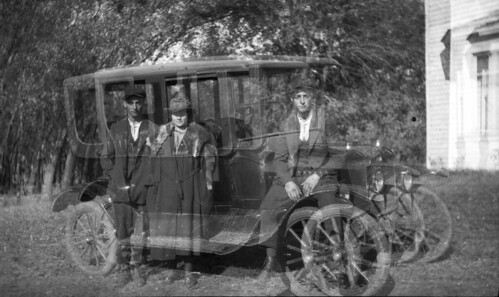
What brought that tid-bit to mind, as well as today's date, was this vintage photograph from husband's collection. A double exposure has created a vision of ghostly figures. I wonder if it was taken on
5 October, 24 August or 8 November?

Ghost car

In honour of the ancient day, a song written by Okie, Leon Russell, and Greg Dempsey. Performed by Leon Russell. (This is not the same song as another with same title by Ian Hunter/ Mott the Hoople).

Saturday, June 21, 2014

SOLSTICE - or in Ancient Rome, Day of Ill Omen

Solstice Greetings! (Intoned with an underlay of sorrow). I've whinged, more than once, at this time of year, that I heartily dislike Oklahoma's summers. For those in more northerly climes or in the southern hemisphere where winter's comin' in, or for those mortals who love the heat, the bugs, and avoid attendant allergies: have at it (as they say)! I shall celebrate come Autumn.


To sidetrack my own negativity I decided to investigate Ancient Romans' customs for signs of Summer Solstice celebration.

Ancient Romans were no slouches when it came to festivals - no excuse was too small, no deity too insignificant to honour if it meant a bit of legalised carousing! However...although there were several days of celebration during June in Ancient Rome, a festival specifically to mark the astronomical Summer Solstice didn't happen.

Sources online tend to copy others' words (and errors). I'm not sure how true it is that Solstice in the time of Ancient Rome fell on 24 June, when Romans celebrated in honour of goddess Fors Fortuna - but in any case, that festival was nothing to do with the position of the Sun at that time of year.

A days-long festival, Vestalia, was held, lasting from June 7 to 15, in honour of Roman Goddess of the Hearth, Vesta. At these times married women could to enter the Shrine of Vesta. At other times of the year only vestal virgins were permitted inside. Again, this festival had nothing at all to do with the position of the Sun in the sky.

The month of June was named for Roman goddess Juno. Several festivals were held in her honour, but no major celebration of Juno took place in June, and certainly none to mark Solstice.

Something I discovered which could have a bearing on why 21 June wasn't a day filled with rejoicing in Ancient Rome: it was known as Black Day, a day of ill omen, being the anniversary of the defeat of the Romans to Hannibal in 217 BC. Roman armies, led by Gaius Flaminius, were ambushed and defeated at the Battle of Lake Trasimene.
Snip from HERE
The historians Polybius and Livy recorded that about 10,000 Romans and allies managed to survive the Carthaginian ambush. At least 15,000 Romans were killed in the battle or drowned trying to escape. About 6000 Romans managed to escape through the fog, but were caught the next day. The Carthaginian commander offered them safe passage if they would surrender their weapons and armor. After doing so, however, the Carthaginians took them prisoner and the Romans soldiers were sold as slaves. Any Roman allies among them were sent back to their hometowns; Hannibal hope to destroy the system of alliances the Romans had created with allied and conquered towns. The Carthaginians then sold the confiscated equipment to merchants, who sold the armor and weapons back to the Romans.

Carthaginian losses were reported at 2500 killed with several hundred more men dying of their wounds in the weeks to come. Hannibal and his army were now the masters of central Italy. Rome was panic-stricken and expecting the enemy at its gates any moment.
It would seem that celebration of the Summer Solstice specifically due to the Sun's position in the sky around 21 June was peculiar to more northerly countries in Europe. When Romans invaded and occupied Britain they'd have come across various Druidic practices and rituals, one of which must have surely been Solstice celebration. Romans probably wrote this off as something only "savages" got up to. Sources have reported that human sacrifice was performed as part of Druidic ritual, though this has been rejected by modern Druids (they would, wouldn't they?) In any case, though, Romans had no business looking down their well-hewn noses at human sacrifice - we know all about their nasty habits!

Saturday, May 10, 2014

A Different Kind of Bean Counting & Related Unpleasantnesses

I knew there'd be another one along in short order! In ancient Rome, three alternate days of this month were known as Lemuralia (or Lemuria)-
9, 11 and 13 May. These days were dedicated to appeasing evil spirits of slain enemies, any malignant wandering spirits as well as those with no living relatives to ritually honour them. The fear was that such spirits, left unappeased, might possess (haunt, I guess), properties of the living - a kind of exorcism in advance.

During this season the temples of the gods were closed, and it was thought unlucky for women to marry on these dates, and in fact during the whole month of May; those who dared to marry were believed to die soon after.

Roman poet Ovid held that the name Lemuralia/Lemuria derived from Remuria and was established by Romulus, Rome's founder, to appease the spirit of the twin brother, Remus, he had murdered.

Traditionally what happened was this: the head of each household, at midnight, would rise from rest, wash his hands three times, then go barefooted around the house throwing black beans behind him, reciting nine times: “Haec ego mitto; his redimo meque meosque fabis” meaning “I send these; with these beans I redeem me and mine”. (In Japan there is a similar bean-throwing tradition during the Shinto lunar new year, Setsubun.) By the by, it appears that beans themselves, black or otherwise, hold certain mysteries, as outlined at the blog of Ayamanatara:
SNIPS-
Black beans: The number of traditions that consider some form of legume to be sacred, cleansing, or good luck is rather astounding. In Hoodoo, you eat black eyes peas on New Year’s Day to bring good luck; red beans are carried for good luck. Eating black eyed peas for good luck at Rosh Hashana, Jewish New Year, is recorded as far back as the Babylonian Talmud. In Italy, Catholics eat fava beans on St Joseph’s Day, and when the fava bean is dried, roasted and blessed, it is considered lucky; you will even find them altars in Sicily. Colorine beans are considered lucky in Mexico. Some varieties of red beans are used as psychedelics in Central and South American traditions. Legumes in general are considered a symbol of prosperity in Japan, Germany and Brazil. Bless with beans! (My own addition - carlin peas were/are traditionally eaten in North of England counties at New Year).

Repetitions of nine: Nine is three times three...Three is the first and primary number of the tangible Divine. A lot of banishments and invocations will use a repetition of nine. It’s powerful juju.
Read on, below, and find another multiple of 3 involved (paragraph after next: - 30 men over 60.)

With the coming of Christianity those Roman bean-throwing traditions at least were modified. The practice of purifying the house of souls with beans was transformed into ossa dei morti, cookies (sometimes called fave dolci) made with almond paste, shaped to look like finger bones - which seem to me to be far more gruesome than throwing a few black beans!

The Vestal Virgins had to be in on Lemuralia too. They prepared sacred mola salsa (salted flour) from the first of the season's wheat, sprinkled it on the altar, on animal victims prior to their sacrifice, and in the sacred fire throughout the year.

A second ritual, performed on the third day, May 13th, was to throw thirty Argei, which were effigies of old men made from rushes, and thought to absorb pollution within the area, into the Tiber river from the Pons Sublicius, Rome's oldest known bridge. This ritual is thought to be a later substitute for the original live human sacrifice of thirty older men (men over 60). Hmm. No wonder Romans were afraid of malignant spirits. No doubt legions of the spirits of over-60s, thrown into the Tiber in years past, couldn't wait to haunt the homes of those Romans still in the land of the living!

The sign of "le corna," - the first and fourth fingers extended, the others turned down and the thumb closed over them, - still used against the Evil Eye in Italy, and in other contexts elsewhere, was a mystic sign used by the Romans in the festival of Lemuralia.

Around 610, Pope Boniface IV designated May 13 as All Saints Day, in honor of all martyred. All Saints Day was later moved to November 1, coinciding with regional harvest festivals, and remembering spirits of the dead.

Also on 13 May in Rome, unconnected to Lemuralia, merchants would offer up incense, and sprinkle themselves and their goods with water from the well of Mercury at the Porta Capena, in hopes of making their businesses prosper; this day was the anniversary of dedication of the Temple of Mercury in the year 495B.C

Wednesday, January 15, 2014

Goddess of Prophecy and More

 Carmenta
Another day, another Roman festival - how they loved their festivals! 15 January, in Ancient Rome, marked the second of two festivals honoring the goddess of prophecy, Carmenta, first day of Carmentalia was 11th January. Carmenta, as well as being a prophetess was goddess of childbirth and midwifery. There was originally one Carmenta worshipped by the "flamines," her priests. Later there were said to be many Carmentes, female deities who appeared to assist women in labor and to tell the fortune of the newborn child. Romans made offerings of rice to the goddess and feasted on cream-filled pastries shaped like male and female genitalia or in triangle-shape filled with raspberry jam.(Link)

Carmenta (known as Nicostrata to the Greeks) was famous for chanting her prophecies in verse.She is also credited with naming Rome's Palatine Hill and in a vision predicted it would be the future site of the Roman Empire. She laid the city's first stone, instituted a system of laws for the surrounding region, and invented the Latin alphabet and language. Quite a gal!

Still on the topic of prophecy and returning to the book from which I quoted yesterday C.E.O. Carter's Encyclopedia of Psychological Astrology:
PROPHECY
It is probable that such prophecy as may truly be the result of inspiration or revelation from higher entities would be shown horoscopically by a strong 9th house, and by Jupiter and Neptune, as well as sometimes Uranus. Such cases, however, are rare, and their possibility is admitted by comparatively few at the present day. Natives of watery signs and also Sagittarius are prone to have presentiments, but it is probable that in most cases these are purely fanciful.

Astrological prophecy, properly so called, has nothing to do with such methods, but depends upon the interpretation of present and future influences mathematically obtained and intellectually apprehended. At the same time it is undeniable that many astrologers, and particularly those with strong Jupiter 9th house influences, develop an intuitive accuracy of judgment that may in time act so promptly and surely that it may appear to partake of the nature of inspiration.

On the other hand, those in whose horoscopes Mercury and Jupiter are afflicted should be cautious in making forecasts, especially when under bad directions to these planets.

Flicking quickly through Astrotheme's lists of well-known people with Jupiter (and other planets) in 9th house, a few well-known astrologers emerged:

Patrick Walker (Jupiter Neptune, Mercury in 9th)
Alan Oken (Jupiter and Pluto in 9th)
Julia Parker (Mercury, Jupiter and Neptune in 9th)
Jonathan Cainer (Jupiter in 9th + Sun in Sagittarius)

I have a lonely Jupiter in 9th, as it happens, but all I can confidently prophecy is that there'll be another anniversary of an Ancient Roman festival along soon.

Wednesday, December 18, 2013

A Horse, a Horse.....

 A relief of Epona,  from Roman Macedonia.
Horses. Today, December 18, second day of Saturnalia in ancient Rome, marked also the feast of Eponalia dedicated to Epona. Epona, originally a Celtic and Gaulish goddess, was patron deity of horses, and the whole equine family: donkeys, mules, ponies. Those working with these animals also came under Epona's protection. Worship of Epona was widespread across Europe and Roman Britain. As well as a holiday and festival in her honour, a temple in Rome was dedicated to her and shrines to Epona were commonly found in stables.

Epona's Celtic/Gaulish origins are understandable. Ancestors of the Gauls of Northern France and of the Celts came from nomadic tribes who spread from the East throughout Europe. Horses, for them, were of prime value in facilitating travel. Later, in ancient Rome, the horse in war - one of Rome's favourite pastimes - became priceless. Even later, and for centuries on, horses became a natural dynamo of agriculture. So, a means of transportation, a symbol of wealth and power, a part of religion, and a necessity in war and in agriculture - no wonder horses were eligible for their own goddess!

The Greeks, never shy of inventing a good story, had a tale about the birth of Epona. A Greek writer, Agesilaos, came up with this: Epona was the daughter of a man named Phoulonios Stellos, who, not interested in women, mated with a mare. That mare gave birth to a human-shaped daughter, Epona.

Though I've never had much to do with horses myself, I do enjoy looking at 'em - I have a small collection of horse sculptures. Maybe a little of the ancient horse worship is in my genes. My two maternal great-grandfathers worked with horses as both grooms and carters, a discovery made while researching my family's history.

So...Hail to Epona then!

Here are a couple of my horses, and a painting by my husband:


See also epona.net

Monday, November 04, 2013

Secessio Plebis

While looking into the history of the Ludii Plebeii (Plebeian Games/People's Games) which historians tell us took place from today, 4 November in 3rd century BC Ancient Rome and continuing through 17th November, I came across mention of the secessio plebis (sounds like some kind of physical affliction!)


Secessio plebis was, in 20th century terms, Ancient Rome's version of a general strike.
It was
".....an informal exercise of power by Rome's plebeian [non-aristocratic, 99%] a general strike taken to the extreme. During a secessio plebis, the plebs would simply abandon the city en masse and leave the patrician order to themselves. Therefore a secessio meant that all shops and workshops would shut down and commercial transactions would largely cease. This was an effective strategy in the Conflict of the Orders due to strength in numbers; plebeian citizens made up the vast majority of Rome's populace and produced most of its food and resources, while a patrician citizen was a member of the minority upper class, the equivalent of the landed gentry of later times. Authors report different numbers for how many secessions there were. Cary & Scullard (p. 66) state there were five between 494 BC and 287 BC."
(Wikipedia)

Might there be some hints here, echoing through the centuries, for we plebs of 2013's equivalent of the Roman Empire? I shall leave passing readers to tease out any broad similarities of circumstance there may be to today's USA. We're all about cycles on planet Earth, cycles of the seasons, of the Moon, of man's inhumanity to man, of all history.

More from about.com
"Magistrates, judges, and priests of the new [Roman] republic mostly came from the patrician order, or upper class. Unlike the patricians, the lower or plebeian class may have suffered under the early republican structure more than they had under monarchy, since they now had, in effect, many rulers. Under the monarchy, they had endured just one. A similar situation in ancient Greece sometimes led the lower classes to welcome tyrants. In Athens, the political movement against a hydra-headed governing body led to codification of laws and then democracy. The Roman path was different.

In addition to the many headed hydra breathing down their necks, the plebeians lost access to what had been regal domain and was now the public land or ager publicus, because the patricians who were in power, took control of it to increase their profits, running it by slaves or clients in the country while they and their families lived in the city. According to a descriptive, old-fashioned, 19th century history book written by the H.D. Liddell of Alice in Wonderland and Greek Lexicon fame, A History of Rome From the Earliest Times to the Establishment of the Empire, the plebeians were mostly not so well off "petty yeomen" on small farms who had needed the land, now public, to satisfy their families' basic needs.

During the first few centuries of the Roman republic the number of chafing plebeians increased. This was partly because the plebeians' population numbers increased naturally and partly because neighboring Latin tribes, granted citizenship by treaty with Rome, were enrolled in the Roman tribes.

The plebeians were oppressed by hunger, poverty and powerlessness. Allotments of land didn't solve the problems of poor farmers whose tiny plots stopped producing when overworked. Some plebeians whose land had been sacked by the Gauls couldn't afford to rebuild, so they were forced to borrow. Interest rates were exorbitant, but since land couldn't be used for security, farmers in need of loans had to enter into contracts (nexa), pledging personal service. Farmers who defaulted (addicti), could be sold into slavery or even killed. Grain shortages led to famine, which repeatedly (among other years: 496, 492, 486, 477, 476, 456 and 453 B.C.) compounded the problems of the poor..........................."


Friday, September 13, 2013

The Ides of September & Chocolate Day

13 September: Romans called it the Ides of September, and on this date celebrated with a feast known as Epulum Jovis.
Wikipedia:
In ancient Roman religion, the Epulum Jovis was a sumptuous ritual feast offered to Jove on the Ides of September (September 13) and a smaller feast on the Ides of November (November 13). It was celebrated during the Ludi Romani ("Roman Games") and the Ludi Plebeii ("Plebeian Games").

The gods were formally invited, and attended in the form of statues. These were arranged on luxurious couches (pulvinaria) placed at the most honorable part of the table. Fine food was served, as if they were able to eat. The priests designated as epulones, or masters of the feast, organized and carried out the ritual, and acted as "gastronomic proxies" in eating the food.
Another description of the proceedings, this from The Roman Festivals of the Period of the Republic by William Warde Fowler:
........We may agree with the latest investigator of the Jupiter-cult that the origin of the epulum is to be looked for in a form of thanksgiving to Jupiter for preservation of the state from perils of the war season, and that no better date could be found for it than the foundation date of the Capitoline temple. This epulum was one of the most singular and striking scenes in Roman public life. It began with a sacrifice; the victim is not mentioned but it was no doubt a heifer, and probably a white one. Then took place the epulum proper, which the three deities of the Capitol seem to have shared in visible form with the magistrates and senate. The images of the gods were decked out as for a feast and the face of Jupiter painted red with minium, like that of the triumphator. Jupiter had a couch, and Juno and Minerva each a sella (chair), and the meal went on in their presence.
The Capitoline Triad was introduced to Rome by the Tarquins, and perhaps was an Etruscan creation. It is possible that the Etruscans looked on Minerva as a goddess of destiny, in addition to the royal couple Uni (Juno) and Tinia (Jupiter). In Rome, Minerva later assumed a military aspect under the influence of Athena Pallas. With the advent of the Republic, it is thought that Jupiter became the only king of Rome, rather than simply the first of the great gods.

That was then, this is now - today we content ourselves by celebrating International Chocolate Day (who knew?) Hey, at least we don't have to sacrifice a white heifer!

Monday, August 19, 2013

VINALIA

See HERE


Wiki tells that on August 19 the people of ancient Rome and its surrounding rural area celebrated Vinalia, one of two annual wine festivals.


From Ancient history, about.com
April 23, according to the William Smith Dictionary, on Lacus Curtius, was the urban Roman wine festival, Vinalia urbana, at which occasion wine casks were first opened and tasted, with a libation poured to Jupiter. Not just Rome, but all of Latium celebrated the 2nd wine festival, the Vinalia rustica on August 19, when the flamen dialis offered lambs to Jupiter and then opened the vintage for drinking.
I'm not much of a wine drinker myself, most of the dry varieties tend to leave me with stomach pains, red wines give me a nasty headache. A mild semi- sweet Moscato or Liebfraumilch is about my limit. Still, to stay in tune with Vinalia and Music Monday, a couple of wine songs and a quote from a favourite philosopher:

First, Days of Wine and Roses composed by Henry Mancini with lyrics by Johnny Mercer, from a 1962 film of the same name. A less well-known tidbit: the song's lyrics were derived from a poem by English poet and novelist Ernest Dowson - a tragic guy, worthy of a blog post all to himself, died aged 32 of alcoholism. His poem Vitae Summa Brevis, in turn is an echo of another man's words - from ancient Rome: "The brief sum of life forbids us the hope of enduring long" –Horace.

Vitae Summa Brevis by Ernest Dowson

They are not long, the weeping and the laughter,
Love and desire and hate:
I think they have no portion in us after
We pass the gate.

They are not long, the days of wine and roses:
Out of a misty dream
Our path emerges for a while, then closes
Within a dream.


See HERE.
The song, sung by the incomparable Ella:


Then there's Red Red Wine - written and sung here by Neil Diamond - the original version:


Finally, from Edward Fitzgerald's translation of of The Rubaiyat some of Omar Khayyám's words:
And much as Wine has play'd the Infidel,
And robb'd me of my Robe of Honour--Well,
I wonder often what the Vintners buy
One half so precious as the stuff they sell.


Ah, make the most of what we yet may spend,
Before we too into Dust descend;
Dust into Dust, and under Dust to lie,
Sans Wine, sans Song, sans Singer, and - sans End!


Sunday, February 17, 2013

Today: Once upon a Time - Feast of Fools


Today, February 17, in ancient Rome marked what was known as the Feast of Fools, it was also date of the Quirinalia. Quirinalia celebrated the Sabine god Quirinus, thought to have been divine incarnation of the city's founder, Romulus. Quirinus was originally part of an archaic Roman triad with Jupiter and Mars. One of Rome's 7 Hills is named for Quirinus - The Quirinal.
(Illustration: Quirinal Hill , one of the Seven Hills of Rome and the location of the official residence of the Italian Head of State. Quirinal Palace was the residence of the king of Italy until the monarchy was abolished in 1946.
(Hat-tip BookDrum)

From Ovid we learn that the day of Quirinalia had  a second name.


Learn too why this day is called the Feast of Fools.
The reason for it is trivial but fitting.
The earth of old was farmed by ignorant men:
Fierce wars weakened their powerful bodies . . .

And round the Forum hang many tablets,
On which every ward displays its particular sign.
Foolish people don’t know which is their ward,
So they hold the feast on the last possible day.


Clarification: The City of Rome was divided into wards (curiae). Each ward celebrated a moveable feast dedicated to its local goddess of the baking-oven, Fornax (festival was called The Fornacalia). These celebrations were set for different dates for each ward, between 5 and 17 February, each ward's date being posted on a tablet in The Forum. Any citizens who missed their local celebration could carry out their dedications in The Forum at Quirinalia, the last date available for Fornacalia, when all 30 curiae could be in attendance. So.... Feast of Fools = the feast for those who, through ignorance or carelessness, had missed the date for their own ward's celebration.

Wednesday, January 09, 2013

Ritual Sacrifice ~~ Agonalia

A note at Wikipedia's page for today, 9 January mentions that in Roman times the date would have marked the first Agonalia or Agonia. This is an obscure archaic religious observance celebrated in ancient Rome several times a year, in honor of various divinities. Ancient calendars indicate that it was celebrated regularly on January 9, May 21, and December 11. The object of this festival was a disputed point among the ancients themselves. The offering sacrificed to the guardian gods of the state was a ram.

Sacrifice. Which hapless early human culture first dreamed up that concept? Or was it one of those mysterious practices which cropped up all over the inhabited areas of the globe more or less concurrently?

The practice of ritual sacrifice can be traced further back than Roman and Greek civilisations. Ancient cultures of South America, Scandinavia, Britain, the Middle East all show evidence of ritual sacrifice having been part of their way of life. Appeasing or cajoling "the gods" would seem to have been the point of it all. The spilling of blood, whether animal or human, was powerfully symbolic - fresh blood had the mysterious, even magical, ingredient signifying life itself. Blood, then,was the highest offering possible. This idea of blood being a magical entity was carried through also by early practitioners of magick.

Gods who need appeasing or cajoling though? How did that idea arise? Perhaps due to the rigours of climate: droughts when water became hard to find, hurricanes, gales, floods, scorching heat, deep snow, heavy frosts all could interfere with primitive routines and the need to find food and shelter. For some reason the early human brain decided that all their various travails must be the doings of some unseen hand, belonging to some unseen being - who had better be appeased and cajoled if life were to continue in their neck of the woods.

That was all once upon a time stuff - in the 20th/21st century:
"And the people bowed and prayed
To the neon god they made........"
(Paul Simon)