Part 1 and some interesting comments are HERE.
This post is my attempt to understand a little more about a possible 600-year arc of capitalism. Why? I guess it's to try to decide whether we really are on the cusp of the tail-end of capitalism - or not.

Humans love to predict. From soothsayers of yore studying entrails of an ox, to to day's psychics and astrologers, we've always strained to see beyond our horizons. We feel vulnerable, I suppose, unable to control random events thrown at us by the universe doing what it does best - progressing, albeit very slowly. We think that if we are aware of what's around the next corner we can psych ourselves up to receive it with some measure of equanimity. Prediction, though, isn't reliable, from whatever source it comes. Often those doing the predicting have axes to grind, or a political view to peddle, or other underlying motivations. It's wise to do a little basic research of one's own.
First up, trying to establish how reliable is the theory of the World Systems Analysis school, mentioned by Morris Berman, the writer whose article was quoted in Part 1. Is the "arc" of capitalism really a period of around 600 years: 1500 to 2100?
Where and when did capitalism breathe its first breath?
Tricky question, almost as tricky as "when, and where, will it breathe its last breath?" For brevity and at the expense of total accuracy, I'll concentrate on western development: Britain, Europe and the USA. It has to be mentioned, though, that six hundred years ago the kingdoms of Western Europe compared to Eastern civilisations would have seemed like backwaters, ravaged by continuous wars, disease and plague. Ming China or Ottoman Turkey then led civilization proper. China was the world's most advanced civilization in the 15th century, but stagnated and was overtaken by Dutch mercantilism and the rise of capitalism.
Elements of capitalism were present in the west as far back as 13th and 14th centuries, but not fully-fledged capitalism. Discovery of a sea route to India, put into regular use for trade, together with the rise of powerful French, English and Spanish monarchies, saw new measures established which could be seen as seminal capitalism.
If taken from the 14th century, 1300 - 1400 any 600-year arc of capitalism would have ended already (maybe it has but we just are not aware of yet!)
16th century found ocean voyages and discovery expeditions increasing in scope and danger. Risk factors and potential profits increased. Merchants risking fortunes on unpredictable adventuring needed high levels of support. Governments encouraged them, motivation being increased trade as well as extension of a nation's reach and power i.e. settlements and colonies abroad. Chartered companies were the solution. A charter, granted by the monarch, gave merchant companies a monopoly on trade with a specific region for a certain number of years, and legal power to enforce order in distant places while carrying out business.
Now capitalism began breathing easily!
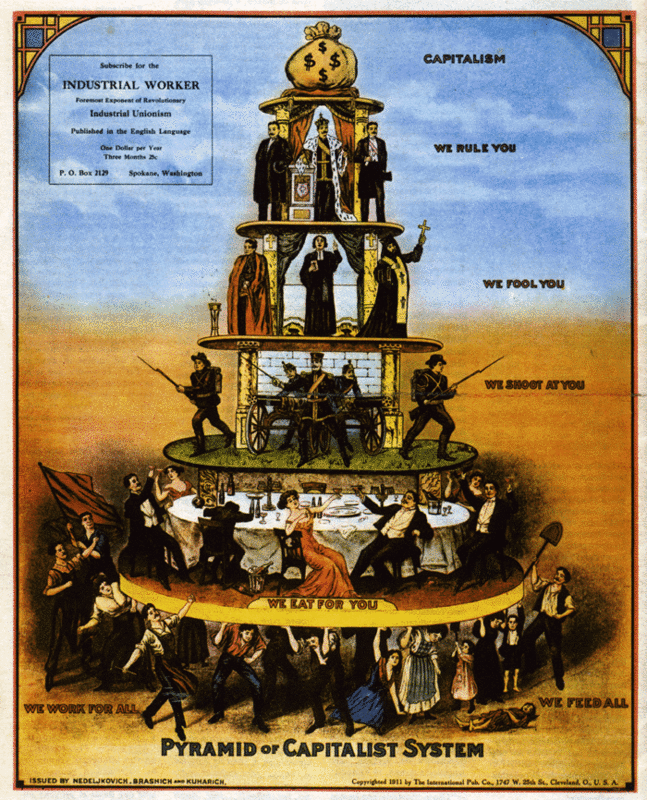 The Industrial Revolution, from early 19th century onward, brought development of factories, steadily increasing in size, employing large numbers of workers in a single private enterprise.
Now capitalism began its heavy breathing.
The bigger companies and factories became, the wider the divide between workers and employers. Working conditions were bad to horrendous, wages poor, but still a co-dependency had been created. Through the 20th century until today, with boom and bust mini-cycles, capitalism has survived. Whether we are now on the edge of a "bust" period, with capitalism snatching for breath, wheezing away, old and diseased but capable of recovery; or almost at the end of a 600-year arc when the last breath will be drawn, isn't completely clear.
The 600-year arc proposed by researchers doesn't peter out until 2100, so we've around 88 years still to go before the strained last breath of capitalism is experienced, if the calculation is correct.
 What of any relevant arcs in astrology?
Some astrologers consider the cycles of the farthest of our inner planets, Saturn and Jupiter, especially conjunctions of these two, to be significant to the topic of capitalism, its rise and fall. Astrologers also rely heavily on the three outer planets, Uranus, Neptune and Pluto and their cycles and aspects to one another for indication of coming events, examining events of the past when similar aspects occurred.
Several outer planet combinations and aspects are possible, many more if including Saturn and Jupiter in the mix, for instance: Uranus/Neptune, Uranus/Pluto, Neptune/Pluto and a few triples too. I find that sorting out astrological cycles and aspects can easily become something of a lucky dip, lending itself to the bending of anything to mean anything. All we have, truly, are best guesses linked to personal experience of what each planet, more often than not, indicates.
Uranus more often than not brings change, Neptune more often than not brings delusion and foggy thinking, Pluto can bring destruction, death and darkness which lead eventually to transformation.
With capitalism in mind we need to establish two things: an exact-as-possible start date to work from - and this for me remains nebulous. Also needed, clarification of which planet(s) are most likely to be involved when investigating capitalism. I can see why astrologers prefer Jupiter and Saturn in this respect. Jupiter = expansion, excess. Saturn = business, the law. A conjunction of the two planets could clearly relate to capitalism - and the cycle of those conjunctions might well show how capitalism progresses. But I think that if capitalism were "on its last legs" we'd have to see Uranus or Pluto prominently indicated at the time Jupiter and Saturn were conjoined or in harmonious aspect - otherwise the indication might just point to capitalism rolling along, booming and busting, in mini-cyclic fashion within a wider arc.
I'm grateful to commenter "mike" at Part 1 for referring me to a blog Astrology and Yoga by astrologer Adam Smith. In a post for 20 September 2012 he wrote, regarding capitalism:
Not to be forgotten are the Uranus/Pluto square (90 degree aspects), seven of 'em, I think, occurring exact at certain points in 2012 to 2015. Bearing in mind that there's up to a 5-year span between 2010 (Jupiter-Saturn opposition) to 2015 (the last Uranus/Pluto square), at some point in this time span we'll see.....what....? Something highly significant relating to capitalism. Whether it'll be its absolute end doesn't strike me as clear-cut at all, but a definite re-jigging or hiccup is coming.
Conclusion - We can't be 100% sure that a 600-year arc is the accurate measure for capitalism's "lifetime"; even if it is near enough correct, the arc's starting point isn't 100% clear. A fair amount of latitude, wiggle-room, needs to be allowed as to calendar years involved, if credence is given to the theory that capitalism is ailing and about to die.
Helpful information on capitalism found HERE and HERE.
This post is my attempt to understand a little more about a possible 600-year arc of capitalism. Why? I guess it's to try to decide whether we really are on the cusp of the tail-end of capitalism - or not.

Humans love to predict. From soothsayers of yore studying entrails of an ox, to to day's psychics and astrologers, we've always strained to see beyond our horizons. We feel vulnerable, I suppose, unable to control random events thrown at us by the universe doing what it does best - progressing, albeit very slowly. We think that if we are aware of what's around the next corner we can psych ourselves up to receive it with some measure of equanimity. Prediction, though, isn't reliable, from whatever source it comes. Often those doing the predicting have axes to grind, or a political view to peddle, or other underlying motivations. It's wise to do a little basic research of one's own.
First up, trying to establish how reliable is the theory of the World Systems Analysis school, mentioned by Morris Berman, the writer whose article was quoted in Part 1. Is the "arc" of capitalism really a period of around 600 years: 1500 to 2100?
Where and when did capitalism breathe its first breath?
Tricky question, almost as tricky as "when, and where, will it breathe its last breath?" For brevity and at the expense of total accuracy, I'll concentrate on western development: Britain, Europe and the USA. It has to be mentioned, though, that six hundred years ago the kingdoms of Western Europe compared to Eastern civilisations would have seemed like backwaters, ravaged by continuous wars, disease and plague. Ming China or Ottoman Turkey then led civilization proper. China was the world's most advanced civilization in the 15th century, but stagnated and was overtaken by Dutch mercantilism and the rise of capitalism.
Elements of capitalism were present in the west as far back as 13th and 14th centuries, but not fully-fledged capitalism. Discovery of a sea route to India, put into regular use for trade, together with the rise of powerful French, English and Spanish monarchies, saw new measures established which could be seen as seminal capitalism.
If taken from the 14th century, 1300 - 1400 any 600-year arc of capitalism would have ended already (maybe it has but we just are not aware of yet!)
16th century found ocean voyages and discovery expeditions increasing in scope and danger. Risk factors and potential profits increased. Merchants risking fortunes on unpredictable adventuring needed high levels of support. Governments encouraged them, motivation being increased trade as well as extension of a nation's reach and power i.e. settlements and colonies abroad. Chartered companies were the solution. A charter, granted by the monarch, gave merchant companies a monopoly on trade with a specific region for a certain number of years, and legal power to enforce order in distant places while carrying out business.
Now capitalism began breathing easily!
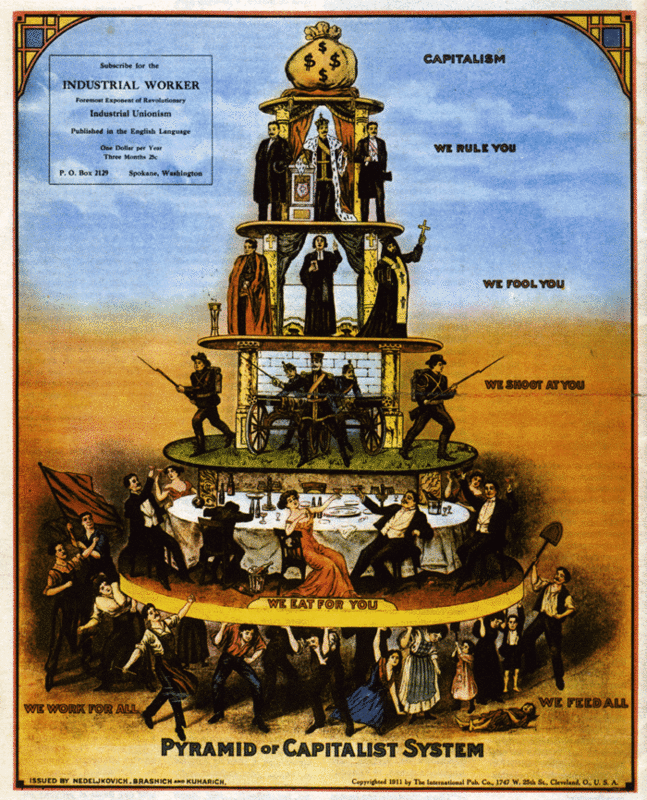
Now capitalism began its heavy breathing.
The bigger companies and factories became, the wider the divide between workers and employers. Working conditions were bad to horrendous, wages poor, but still a co-dependency had been created. Through the 20th century until today, with boom and bust mini-cycles, capitalism has survived. Whether we are now on the edge of a "bust" period, with capitalism snatching for breath, wheezing away, old and diseased but capable of recovery; or almost at the end of a 600-year arc when the last breath will be drawn, isn't completely clear.
The 600-year arc proposed by researchers doesn't peter out until 2100, so we've around 88 years still to go before the strained last breath of capitalism is experienced, if the calculation is correct.

Some astrologers consider the cycles of the farthest of our inner planets, Saturn and Jupiter, especially conjunctions of these two, to be significant to the topic of capitalism, its rise and fall. Astrologers also rely heavily on the three outer planets, Uranus, Neptune and Pluto and their cycles and aspects to one another for indication of coming events, examining events of the past when similar aspects occurred.
Several outer planet combinations and aspects are possible, many more if including Saturn and Jupiter in the mix, for instance: Uranus/Neptune, Uranus/Pluto, Neptune/Pluto and a few triples too. I find that sorting out astrological cycles and aspects can easily become something of a lucky dip, lending itself to the bending of anything to mean anything. All we have, truly, are best guesses linked to personal experience of what each planet, more often than not, indicates.
Uranus more often than not brings change, Neptune more often than not brings delusion and foggy thinking, Pluto can bring destruction, death and darkness which lead eventually to transformation.
With capitalism in mind we need to establish two things: an exact-as-possible start date to work from - and this for me remains nebulous. Also needed, clarification of which planet(s) are most likely to be involved when investigating capitalism. I can see why astrologers prefer Jupiter and Saturn in this respect. Jupiter = expansion, excess. Saturn = business, the law. A conjunction of the two planets could clearly relate to capitalism - and the cycle of those conjunctions might well show how capitalism progresses. But I think that if capitalism were "on its last legs" we'd have to see Uranus or Pluto prominently indicated at the time Jupiter and Saturn were conjoined or in harmonious aspect - otherwise the indication might just point to capitalism rolling along, booming and busting, in mini-cyclic fashion within a wider arc.
I'm grateful to commenter "mike" at Part 1 for referring me to a blog Astrology and Yoga by astrologer Adam Smith. In a post for 20 September 2012 he wrote, regarding capitalism:
We have seen the archetypal boom and bust, peaking in 2010 with the Jupiter-Saturn opposition, which brought us to the brink. Our present Jupiter-Saturn cycle is the last in Earth for another 600 years, and the present economic tumult is the world saying goodbye to the Industrial Revolution and dog-eat-dog capitalism.
Not to be forgotten are the Uranus/Pluto square (90 degree aspects), seven of 'em, I think, occurring exact at certain points in 2012 to 2015. Bearing in mind that there's up to a 5-year span between 2010 (Jupiter-Saturn opposition) to 2015 (the last Uranus/Pluto square), at some point in this time span we'll see.....what....? Something highly significant relating to capitalism. Whether it'll be its absolute end doesn't strike me as clear-cut at all, but a definite re-jigging or hiccup is coming.
Conclusion - We can't be 100% sure that a 600-year arc is the accurate measure for capitalism's "lifetime"; even if it is near enough correct, the arc's starting point isn't 100% clear. A fair amount of latitude, wiggle-room, needs to be allowed as to calendar years involved, if credence is given to the theory that capitalism is ailing and about to die.
Helpful information on capitalism found HERE and HERE.

