[Sir]Anish Kapoor is a leading contemporary British-Indian artist working in large-scale abstract public sculpture. Among his best-known works is the popular Cloud Gate (2006), otherwise known as “the Bean,” featured in Chicago’s Millennium Park. Throughout his career, Kapoor has worked on a variety of scales and with diverse materials—mirrors, stone, wax, and PVC—exploring both biomorphic and geometric forms with a particular interest in negative space. “That's what I am interested in: the void, the moment when it isn't a hole,” he explained. “It is a space full of what isn't there.” (Wikipedia)
FROM:http://www.artnet.com/artists/anish-kapoor/
Born on March 12, 1954 in Bombay, India, Kapoor moved to London in the late 1970s, studying at both the Hornsey College of Art and Chelsea College of Arts. He first gained critical recognition for his work in the 1980s, with his metaphysical site-specific works in which he manipulates form and the perception of space. Kapoor was awarded the Turner Prize in 1991, and named a Commander of the Most Excellent Order of the British Empire in 2003, and Knighthood in 2013 for services to the visual arts. The artist currently lives in London, United Kingdom. Kapoor’s works are held in the collections of The Museum of Modern Art in New York, the National Gallery of Art in Washington, D.C., and the Tate Gallery in London, among others.
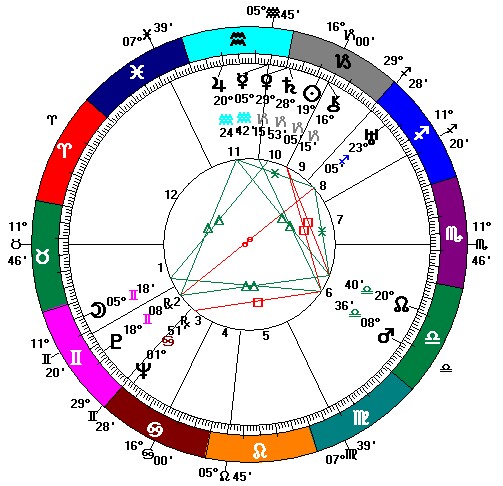
Sir Anish Kapoor's natal chart is at Astrotheme, here. His Sun and Mercury in Pisces somehow feel rather appropriate to his Cloud Gate sculpture in Chicago (above), as does the harmonious trine between Pisces' ancient and modern rulers, Jupiter and Neptune. It's as though Pisces has gathered the reflections of the rest of the zodiac -all that has gone before - and reflects them back to us, in a wide gateway to the future.
Photographs of more of this sculptor's work can be seen via Google Image, here.
On art, music, books, movies, politics, life - sometimes with astrology thrown in.
Showing posts with label sculpture. Show all posts
Friday, March 08, 2019
Arty Farty Friday ~ Sir Anish Kapoor & Cloud Gate
Labels:
Anish Kapoor,
art,
astrology,
Chicago,
sculpture
Friday, January 12, 2018
Arty Farty Friday ~ Paving the Way for Female Artists in Photography & Sculpture
Frances Benjamin Johnston and Barbara Hepworth, these two women, both born in the first half of January, 39 years and the wide Atlantic apart, became two of the first women to be successful in their chosen fields of art: photography and sculpture respectively.
Frances "Fannie" Benjamin Johnston
(15 January 1864 – 16 May 1952) was an early American female photographer and photojournalist whose career lasted for almost half a century. She is most known for her portraits, images of southern architecture, and various photographic series featuring African Americans and Native Americans at the turn of the 20th century.
Rather than posting too small images of some of F.B. Johnstone's photographs here, I'll leave a link to Monovisions a website with a thread of large format images of her photographs - do go take a look:
Vintage: Everyday Life in the U.S by Frances Benjamin Johnston (1900s-1910s)
Dame Jocelyn Barbara Hepworth DBE
(10 January 1903 – 20 May 1975) was an English artist and sculptor. Her work exemplifies Modernism and in particular modern sculpture. She was one of the few female artists of her generation to achieve international prominence.
This video (around 3 minutes long) offers a brief overview showing some of Barbara Hepworth's sculptures.
ASTROLOGY
Both charts are set for 12 noon, time of birth isn't known in either case. Moon positions and ascendants will not be accurate, as shown.
I wondered if there would be similarities in the charts of these two pioneering women, other than their shared Capricorn Sun sign. They did not share a Moon sign. Ms Johnston's natal Moon would have almost certainly been in Aries, whatever her time of birth - Aries is the classic sign of a pioneer, as it happens! If she were born quite a bit earlier than noon, Moon would have been close to Neptune, and Neptune relates to photography (among other things). Also in Ms Johnston's chart Sun is in helpful sextile to Jupiter and both planets link via 150 degree aspects to Uranus, planet of all that is modern or unexpected. I like that formation for her - it's known as a "Yod" or Finger of Fate. The Yod links the signs of Capricorn (practicality, business) and Scorpio (passion, determination), directing these to Uranus in Gemini - the classic communications sign; this lady's photo-journalism was pure communication, and the fact that it was by a female photographer in that era was unexpected. Bingo!
Frances Benjamin Johnston, born on 15 January 1864 in Grafton, West Virginia, USA.
There is no obvious similarity between the charts. I'm not surprised to see that Barbara Hepworth's chart had extra emphasis on Capricorn, including the sign's ruler, Saturn. To my mind sculpture - the manipulation of solid matter into art - naturally links to Saturn (solidity, rigidity) and Capricorn the Cardinal Earth sign of the zodiac.
Mercury and Jupiter are in Uranus-ruled Aquarius, adding an unexpected, modernistic tone.
Uranus in Sagittarius sextiles Jupiter in Aquarius - so here's a loose similarity to Frances B. Johnston's chart - the Uranus/Jupiter link.
Moon in Barbara Hepworth's chart, was at 5 Gemini at noon, if she were born in the very early hours, Moon might have been in the last degrees of Taurus - that would put it in harmonious trine to Venus, planet of the arts in Capricorn and would be very apt - but it's speculation only!
Dame Barbara Hepworth, born on 10 January 1903 in Wakefield, Yorkshire, England, UK.
Frances "Fannie" Benjamin Johnston
(15 January 1864 – 16 May 1952) was an early American female photographer and photojournalist whose career lasted for almost half a century. She is most known for her portraits, images of southern architecture, and various photographic series featuring African Americans and Native Americans at the turn of the 20th century.
Rather than posting too small images of some of F.B. Johnstone's photographs here, I'll leave a link to Monovisions a website with a thread of large format images of her photographs - do go take a look:
Vintage: Everyday Life in the U.S by Frances Benjamin Johnston (1900s-1910s)
Dame Jocelyn Barbara Hepworth DBE
(10 January 1903 – 20 May 1975) was an English artist and sculptor. Her work exemplifies Modernism and in particular modern sculpture. She was one of the few female artists of her generation to achieve international prominence.
Barbara Hepworth was born in Yorkshire on 10 January, 1903. She lived in Cornwall from 1939.
Hepworth emerged in the late 1920s as a leading member of a new generation of sculptors. Her work became increasingly abstract in the 1930s and, after moving to Cornwall, she began to make sculpture in terms of her experience of landscape. She continued to carve throughout her life, but from 1956 she also made works in bronze which allowed her to produce more and which were better suited to international travel.(See HERE)
This video (around 3 minutes long) offers a brief overview showing some of Barbara Hepworth's sculptures.
ASTROLOGY
Both charts are set for 12 noon, time of birth isn't known in either case. Moon positions and ascendants will not be accurate, as shown.
I wondered if there would be similarities in the charts of these two pioneering women, other than their shared Capricorn Sun sign. They did not share a Moon sign. Ms Johnston's natal Moon would have almost certainly been in Aries, whatever her time of birth - Aries is the classic sign of a pioneer, as it happens! If she were born quite a bit earlier than noon, Moon would have been close to Neptune, and Neptune relates to photography (among other things). Also in Ms Johnston's chart Sun is in helpful sextile to Jupiter and both planets link via 150 degree aspects to Uranus, planet of all that is modern or unexpected. I like that formation for her - it's known as a "Yod" or Finger of Fate. The Yod links the signs of Capricorn (practicality, business) and Scorpio (passion, determination), directing these to Uranus in Gemini - the classic communications sign; this lady's photo-journalism was pure communication, and the fact that it was by a female photographer in that era was unexpected. Bingo!
Frances Benjamin Johnston, born on 15 January 1864 in Grafton, West Virginia, USA.
There is no obvious similarity between the charts. I'm not surprised to see that Barbara Hepworth's chart had extra emphasis on Capricorn, including the sign's ruler, Saturn. To my mind sculpture - the manipulation of solid matter into art - naturally links to Saturn (solidity, rigidity) and Capricorn the Cardinal Earth sign of the zodiac.
Mercury and Jupiter are in Uranus-ruled Aquarius, adding an unexpected, modernistic tone.
Uranus in Sagittarius sextiles Jupiter in Aquarius - so here's a loose similarity to Frances B. Johnston's chart - the Uranus/Jupiter link.
Moon in Barbara Hepworth's chart, was at 5 Gemini at noon, if she were born in the very early hours, Moon might have been in the last degrees of Taurus - that would put it in harmonious trine to Venus, planet of the arts in Capricorn and would be very apt - but it's speculation only!
Dame Barbara Hepworth, born on 10 January 1903 in Wakefield, Yorkshire, England, UK.
Friday, September 15, 2017
Arty Farty Friday ~ Jean Arp
Jean Arp or Hans Arp (16 September 1886 – 7 June 1966) was a German-French sculptor, painter, poet, and abstract artist in other media such as torn and pasted paper.
When Arp spoke in German he referred to himself as "Hans", and when he spoke in French he referred to himself as "Jean".
Excerpts from an article written by John Russell in the New York Times in 1986, to mark the centenary of Arp's birth:
What's impossible to ignore when looking at Arp's sculptures, those shown here (and the many more to be seen via Google Image) is the lack of sharp angles. Everything is extremely smooth, rounded, curved - there's nothing harsh or jarring. So this is his sculptural "signature". His other artwork, mainly collages show the same tendency.
I wondered whether his "rounded with no sharp angle" signature style might, somehow, be reflected in Arp's natal chart.
Born on 16 September 1886 at 6:00 AM in Strasbourg, France. (Data from Astrodatabank.)
With Sun, Mercury, Venus and ascendant in Earthy and meticulous Virgo it's no surprise to find his urge for perfection and reflections of nature in the form of his sculptures; nor to discover that he was also "a word man as much as an image man" (Virgo is ruled by Mercury).
Arp had Jupiter and Uranus conjunct in Venus-ruled Libra. Uranus reflects his gravitation to modernity and abstract art, while Jupiter...well, when asking myself which planet I think of when considering smooth rounded shapes, first thought, for some reason, was...Jupiter.
When Arp spoke in German he referred to himself as "Hans", and when he spoke in French he referred to himself as "Jean".
Excerpts from an article written by John Russell in the New York Times in 1986, to mark the centenary of Arp's birth:
As of the end of World War I, there can have been no doubt that although the name of Jean Arp was known to only a few well-informed observers he was a key figure in the European art world. His qualifications were obvious to all. In 1910 or 1911, according to his own account, he had ''begun to produce what is now called 'abstract art.' ...... In Paris in 1914, he had his portrait drawn by Modigliani and came to know Picasso, Delaunay and others. Likewise in 1914, he went to Cologne, and was recognized as a kindred spirit by Max Ernst. At the out-break of World War I, Arp was in Continued on page 29 Paris, and quite happy to remain there. But as he was German by birth, it became more and more risky for him to do so. Rather than return to Germany and be faced with military service, he made his way to Zurich, represented himself to the German consul as mentally defective and - thanks to feigned oddities of behavior - was exempted from military service. (The German consul could not believe that anyone who made the sign of the cross on seeing a portrait of Field Marshal Hindenburg could be good military material.) ..... As a founding member of the Zurich Dada group, he pioneered the acceptance of accident in art that for 50 or 60 years to come was one of the key notions of avant-garde art... He was also a pioneer of the automatic writing and drawing that were to be fundamental to surrealism in the 1920's.
And, not least, he fell in love at first sight with a young painter called Sophie Taeuber, who later became his wife. Theirs was a marriage of equals, with never a hint of rivalry. When we look at the work that they produced jointly in Zurich, we find it impossible to say who did what, so perfectly did their imaginations meet and match. With her clear, bell-like laugh, her almost magical affinity with all living creatures and her never-failing sense of wonder, she was poetry personified.
By the time that he turned 30, in 1916, Arp had developed more than one of the modalities that have been an enduring part of 20th-century art. Deliberately, he took the stressful, body-building element out of art and made it look weightless, incorporeal and full of wit. ''Life is a puzzling puff of wind,'' he once wrote, and he liked to feel that his work had that kind of aerial energy.......................
Turning to poetry, for which he had a free-flowing lyrical gift that rarely failed him, he found that a sentence taken at random from a newspaper was as compelling to him as anything in the great poetry of the past. The big fat volume of his collected poems is there to prove that this was neither a silly nor a presumptuous idea. Arp was a word man as much as an image man, and to the end of his life he was still, in a sense, the 17-year-old boy who, as he remembered it, ''had filled page after page with unusual word-combinations, invented unusable verbs from nouns, altered well-known verses and declaimed them constantly with abandon and elation, on and on as if it would never come to an end . . .''
![]() |
| Pagoda Fruit |
![]() |
| Winged Being |
![]() |
| Moustaches |
![]() |
| Sculpture to be Lost in the Forest |
What's impossible to ignore when looking at Arp's sculptures, those shown here (and the many more to be seen via Google Image) is the lack of sharp angles. Everything is extremely smooth, rounded, curved - there's nothing harsh or jarring. So this is his sculptural "signature". His other artwork, mainly collages show the same tendency.
The shapes in his work evoke worn pebbles, buds and other natural forms. He created these sculptures using a quasi-automatic process of sanding away at a plaster model until he was satisfied with the shape. ‘I work until enough of my life has flowed into its body’, he said.
I wondered whether his "rounded with no sharp angle" signature style might, somehow, be reflected in Arp's natal chart.
Born on 16 September 1886 at 6:00 AM in Strasbourg, France. (Data from Astrodatabank.)
With Sun, Mercury, Venus and ascendant in Earthy and meticulous Virgo it's no surprise to find his urge for perfection and reflections of nature in the form of his sculptures; nor to discover that he was also "a word man as much as an image man" (Virgo is ruled by Mercury).
Arp had Jupiter and Uranus conjunct in Venus-ruled Libra. Uranus reflects his gravitation to modernity and abstract art, while Jupiter...well, when asking myself which planet I think of when considering smooth rounded shapes, first thought, for some reason, was...Jupiter.
Friday, November 25, 2016
Arty Farty Friday ~ George Segal, artist - another look.
Having identified an artist born this week (26 November, in fact) I began reading up on his career, it wasn't until I reached links in the nether regions of Google that I spied....a link to my own blog. Well, well, well! I'd already covered Mr Segal back in 2011. I think the post will stand another airing, with a layer of dust blown off it - same applies to my memory bank!
George Segal (not the movie star, the artist) was born 26 November 1924 - tomorrow would have been his birthday. He died in 2000. Segal is considered to be one of the founders of the 1960's Pop Art movement. His works include abstract paintings, pastels, very large portraits, but possibly best known are his reliefs of human figures and plaster scupltures.
From Wikipedia:
From the 1950s until his death Segal lived on a chicken farm in South Brunswick Township, New Jersey, and used the location for displays of his work.
Replacing a dead link in the original post, I'm adding a link about Segal's work in a Smithsonian pdf and an obituary in the New York Times - HERE.
George Segal, born on 26 November 1924 in New York. No time of birth is known, a 12noon chart is shown below. Rising sign will not be as shown and exact position of Moon remains unknown.

Sun, Mercury and Jupiter in Sagittarius, with Moon also in that sign, with a birthtime after 6:00 AM, otherwise in late Scorpio. Jupiter is in its sign of rulership here, George Segal likely fitted well most textbook descriptions of Sagittarius: optimistic, good humoured, straight-talking, philosophical. There's little online about the private side of his personality, all we can be sure of is what shines through his artwork. He was certainly unafraid to say (through his sculptures) exactly what he thought on contraversial topics...which would be seen as typical Sagittarian bluntness in any other context. His work indicates a definite philosophical mindset too.
However, in addition to Sagittarian Fire there's a strong showing of the element of Water in Segal's chart. Saturn in Scorpio, Mars/Uranus in Pisces and Pluto in Cancer - in harmonious aspect, together forming a loose Grand Trine - signifying a depth of emotion, empathy and intuition, quite apart from the Fire optimism and straight-talking of Sagittarius. This emotional strength shows through clearly in many of his sculptures and choices of subject - see below.
Rush Hour

The Fireside Chat (FDR used radio talks to speak directly to the American public).

Breadline Words etched on wall to left of sculptures are worth copying here: "The test of our progress is not whether we add more to the abundance of those who have much, it is whether we provide enough for those who have too little."

Woman on White Wicker Chair

Street Crossing

The Holocaust

In Memory of May 4, 1970: Kent State-Abraham and Isaac ~ created in response to the shooting of anti-war demonstrators by the National Guard, on the Kent State campus during the Vietnam War. Segal used the idea of Abraham's willingness to sacrifice his son Isaac in order to complete God's will, to represent the National Guard's willingness to sacrifice American people to make a point. The sculpture shows Isaac on his knees in front of Abraham, seemingly begging for his life. This work was considered to be politically controversial and rejected by its comissioner Kent State for being "unpatriotic". The sculpture is now part of Princeton University's modern sculpture garden.

Farewell to Ishmael (Abraham bids farewell, embraces Ishmael with deep regret. Hagar's expression is grim, almost like controlled panic at what is virtually a death sentence for herself and her son. Sarah watches, half-hidden, as the anguished farewells are made.)

Gay Liberation

Dancers

Circus Acrobats

Couple On Two Benches

"My teachers were abstract painters. But I was overwhelmed by the necessity of reality-by the real world."It was this philosophy that separated Segal from his fellow Pop artists. Segal surpassed their focus on wit and sophisticated attachment, in favor of displaying the human condition, its solitude and fragility. He placed his sculptures in modern, everyday settings and situations and gave them an eery feeling of isolation. It is this look that gives his figures a humane quality. Segal is quoted as saying in The Christian Science Monitor:
"I note [my subjects'] gestures. I depend on my language [plaster] to communicate anguish. I really am interested in provoking a state of compassion."He drew inspiration from everyday life, but also from film, literature, and the Old Testament.
From Wikipedia:
In place of traditional casting techniques, Segal pioneered the use of plaster bandages (plaster-impregnated gauze strips designed for making orthopedic casts) as a sculptural medium. In this process, he first wrapped a model with bandages in sections, then removed the hardened forms and put them back together with more plaster to form a hollow shell. These forms were not used as molds; the shell itself became the final sculpture, including the rough texture of the bandages. Initially, Segal kept the sculptures stark white, but a few years later he began painting them, usually in bright monochrome colors. Eventually he started having the final forms cast in bronze, sometimes patinated white to resemble the original plaster.
From the 1950s until his death Segal lived on a chicken farm in South Brunswick Township, New Jersey, and used the location for displays of his work.
Replacing a dead link in the original post, I'm adding a link about Segal's work in a Smithsonian pdf and an obituary in the New York Times - HERE.
George Segal, born on 26 November 1924 in New York. No time of birth is known, a 12noon chart is shown below. Rising sign will not be as shown and exact position of Moon remains unknown.

Sun, Mercury and Jupiter in Sagittarius, with Moon also in that sign, with a birthtime after 6:00 AM, otherwise in late Scorpio. Jupiter is in its sign of rulership here, George Segal likely fitted well most textbook descriptions of Sagittarius: optimistic, good humoured, straight-talking, philosophical. There's little online about the private side of his personality, all we can be sure of is what shines through his artwork. He was certainly unafraid to say (through his sculptures) exactly what he thought on contraversial topics...which would be seen as typical Sagittarian bluntness in any other context. His work indicates a definite philosophical mindset too.
However, in addition to Sagittarian Fire there's a strong showing of the element of Water in Segal's chart. Saturn in Scorpio, Mars/Uranus in Pisces and Pluto in Cancer - in harmonious aspect, together forming a loose Grand Trine - signifying a depth of emotion, empathy and intuition, quite apart from the Fire optimism and straight-talking of Sagittarius. This emotional strength shows through clearly in many of his sculptures and choices of subject - see below.
Rush Hour

The Fireside Chat (FDR used radio talks to speak directly to the American public).

Breadline Words etched on wall to left of sculptures are worth copying here: "The test of our progress is not whether we add more to the abundance of those who have much, it is whether we provide enough for those who have too little."

Woman on White Wicker Chair

Street Crossing

The Holocaust

In Memory of May 4, 1970: Kent State-Abraham and Isaac ~ created in response to the shooting of anti-war demonstrators by the National Guard, on the Kent State campus during the Vietnam War. Segal used the idea of Abraham's willingness to sacrifice his son Isaac in order to complete God's will, to represent the National Guard's willingness to sacrifice American people to make a point. The sculpture shows Isaac on his knees in front of Abraham, seemingly begging for his life. This work was considered to be politically controversial and rejected by its comissioner Kent State for being "unpatriotic". The sculpture is now part of Princeton University's modern sculpture garden.

Farewell to Ishmael (Abraham bids farewell, embraces Ishmael with deep regret. Hagar's expression is grim, almost like controlled panic at what is virtually a death sentence for herself and her son. Sarah watches, half-hidden, as the anguished farewells are made.)

Gay Liberation

Dancers

Circus Acrobats

Couple On Two Benches

Labels:
art,
astrology,
George Segal,
sculpture
Friday, October 21, 2016
Arty Farty Friday ~ Going Ape
On our recent wanders around antique and vintage stores in Kansas I found another piece of sculpture by Austin Productions. In an antique mall in Emporia KS, this one came as a surprise. I picked it up for a closer look mainly because I liked the idea it represents; turned it around and was very surprised to see "Austin Productions" carved into the base at the back, dated 1962 - quite an early piece for them. We already have four other Austin Productions pieces (see here, here, here, and here).
I bought the piece at a very reasonable price, much lower than is being asked for similar pieces on E-bay and elsewhere.
I wasn't, originally, aware that it is an "homage" piece, or rough copy, of a famous sculpture by 19th century German sculptor
Wolfgang Hugo Rheinhold
(26 March 1853 – 2 October 1900) who was arguably most famous for his
Affe mit Schädel (Ape with Skull), inspired by Charles Darwin's theory of evolution. There have been several variations, copies of, and tributes to Rheinhold's sculpture over the years. Austin Productions was one of the original US manufacturers. The Austin Productions piece differs from Rheinhold's original in fine detail, and in material used.
I bought the piece at a very reasonable price, much lower than is being asked for similar pieces on E-bay and elsewhere.
I wasn't, originally, aware that it is an "homage" piece, or rough copy, of a famous sculpture by 19th century German sculptor
Wolfgang Hugo Rheinhold
(26 March 1853 – 2 October 1900) who was arguably most famous for his
Affe mit Schädel (Ape with Skull), inspired by Charles Darwin's theory of evolution. There have been several variations, copies of, and tributes to Rheinhold's sculpture over the years. Austin Productions was one of the original US manufacturers. The Austin Productions piece differs from Rheinhold's original in fine detail, and in material used.
Friday, September 16, 2016
An Arty Farty Visit
We visited this exhibition last week:
Notes: an old post of mine on Victor Vaserely is HERE; and on Modigliani HERE; and on Braque and Picasso HERE. Two posts on Dale Chihuly are HERE and HERE.
Here's a link to another blogger's report on their visit to the exhibition (at a much busier time, from the sound of it). More photographs of exhibits are included there too.
Photographs below were taken by my husband, using his pocket camera.
This was my favourite of the whole exhibition - sculpture "Femme a l'Eventail" (woman with fan). Back home I Googled Henri Laurens and found that his natal Sun was at 0 Pisces, but he had Venus, Mercury and Mars all in Aquarius - his Venus 5 degrees from my natal Sun, his natal Sun 6 degrees from my natal Jupiter. There must be some inner astro-dar goin' on!
Frank Stella's Wiki page is HERE. His huge sculpture(above) is described below:
Matisse was well represented, but I enjoyed the work of several of his peers more, Matisse isn't really to my taste. Fortunately an equal number of works from Matisse's contemporaries were on show: Picasso, Braque, Modigliani, Morreau, Rubens, Henri Laurens (one of his sculptures was my favourite of all), André Derain, Victor Vasarely and several others. In another area of the museum were examples of abstract art, and Dale Chihuly's lovely art glass installations, which we'd visited in the past. It was good to have the opportunity to see some paintings, and sculptures, by a gaggle of legendary artists "in the flesh".Oklahoma City Museum of Art to be sole North American venue for exhibit:
'Matisse in His Time' from Centre Pompidou, Paris.
Notes: an old post of mine on Victor Vaserely is HERE; and on Modigliani HERE; and on Braque and Picasso HERE. Two posts on Dale Chihuly are HERE and HERE.
Here's a link to another blogger's report on their visit to the exhibition (at a much busier time, from the sound of it). More photographs of exhibits are included there too.
Photographs below were taken by my husband, using his pocket camera.
This was my favourite of the whole exhibition - sculpture "Femme a l'Eventail" (woman with fan). Back home I Googled Henri Laurens and found that his natal Sun was at 0 Pisces, but he had Venus, Mercury and Mars all in Aquarius - his Venus 5 degrees from my natal Sun, his natal Sun 6 degrees from my natal Jupiter. There must be some inner astro-dar goin' on!
![]() |
| by Victor Vaserely |
![]() |
| Matisse |
![]() |
| Modigliani |
Frank Stella's Wiki page is HERE. His huge sculpture(above) is described below:
Labels:
art,
exhibition,
Henri Laurens,
Matisse,
Oklahoma City,
sculpture
Friday, August 26, 2016
Arty Farty Friday ~ Michelangelo...(and those horns! )
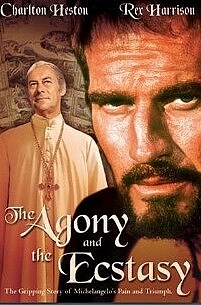
We've recently watched, courtesy of Netflix, the 1965 movie The Agony and the Ecstasy, the story, partly based on Irving Stone's biographical novel of the same name, deals with the conflicts of Michelangelo and Pope Julius II during the painting of the Sistine Chapel's ceiling. It's a reasonable depiction of likely events, I guess. The film was made in the then current style used for epic stories (Ben Hur, El Cid, etc.) but the film comes over, in 2016, more as a lush, expensive documentary; but I'm glad to have seen it, at last.
I had in mind to blog arty-fartily about Michelangelo, but he is too huge a figure in the art world to reduce him to a tiny blog post. Michelangelo's astrology has been picked over many times. His natal chart can be seen at Astro-databank HERE.
A few pointers to his nature, as shown in his natal chart are indicated in a book, DESIRE and DESIGN: A Look at Venus and Mars in Action by Mary Jane Staudenmann, excerpt below from Google Books, HERE.
(Click on images for clearer views).
The sight of one of Michelangelo's masterpiece sculptures in the movie, that of Moses, brought back a question: those mysterious horns on Moses' head! I'd noticed these in the past, but never had the time, or resources, to investigate the mystery. This time I had Google at my finger-tips.
There appear to be two possible explanations for the horns: a mis-translation, or a symbol of power.
From HERE:
And HERE:
I can't help wondering why horns were seen as a symbol of power. Several attempts at explanation can be found on the internet, Wikipedia's page on Horned Deities is probably the most reliable and factual. In a nutshell, it appears that horned animals were held in great esteem in ancient times - rams and bulls for instance. The first two zodiac signs (Aries the ram and Taurus the bull) even depict these animals, as do the astrological glyphs for the signs, with associated astrological ages, BC.
Power and virility were thought to reside in animals' horns - or so the story goes. Ancient warriors are said to have worn helmets bearing the depiction of horns. See HERE. Egypt was likely the source of continuation of an earlier belief, from there spreading through Greece, to Rome and beyond. With the rise of Christianity, though, horns slid into disregard becoming, in time, a pagan symbol of Satan and darkness, even became a common hand symbol for "the cuckold" (index finger and little finger extended, middle fingers bent to palm).
Those explanations, on the face of it, are plausible; something doesn't sit well with me though. Extremely early man could well have held his fellow Earth creatures in high regard, but for such a belief to have bled into later, more sophisticated civilisations, such as those of Egypt and Greece, seems less plausible. But then, I look at this through a 21st century lens. Donning my sci-fi hat (no horns) I could imagine a quite different source: something broadly similar to that Arthur C. Clarke wrote about in a novel I read a few years ago: Childhood's End. Arthur C. Clarke visualised an Earthly memory, surviving in mangled form, from man's earliest hazy days, half-forgotten, half-retained, its source way, way further back in the history of our planet than we are able, currently, to investigate. Fanciful? Sure it is!
I had in mind to blog arty-fartily about Michelangelo, but he is too huge a figure in the art world to reduce him to a tiny blog post. Michelangelo's astrology has been picked over many times. His natal chart can be seen at Astro-databank HERE.
![]() |
| Michelangelo |
(Click on images for clearer views).
The sight of one of Michelangelo's masterpiece sculptures in the movie, that of Moses, brought back a question: those mysterious horns on Moses' head! I'd noticed these in the past, but never had the time, or resources, to investigate the mystery. This time I had Google at my finger-tips.
There appear to be two possible explanations for the horns: a mis-translation, or a symbol of power.
From HERE:
What about the horns? Scholars believe this was a mistranslation of Hebrew scriptures into Latin by St. Jerome, called the Vulgate. It was the Latin translation of the Bible used at that time. Moses is described as having “rays of the skin of his face.” Jerome translated it to horns from the word keren, which means either radiated or grew horns.
Horns were a symbol of wisdom and rulership in ancient times. Was Moses a descendent of antediluvian kings, those who reigned before the flood, as some interpreted it?
Michelangelo was not the only artist to put horns on Moses. Several paintings and sculptures from the medieval and renaissance era depict him this way and can still be seen on the streets and in museums.
And HERE:
In her book The Horned Moses in Medieval Art and Thought (Los Angeles, UC Press, 1970), Ruth Mellinkoff describes how prominent this “mistranslation” became in depicting Jews physically, as well as metaphysically, as being in league with the Devil. Of course, the best known – but certainly not only -- example of this depiction is Michelangelo’s magnificent Moses.
Most commentators have simply said that Jerome mistranslated “keren” as “horned” rather than “radiant.” But Bena Elisha Medjuck, a McGill University Department of Jewish Studies graduate student, offered a more complex explanation in his 1988 thesis “Exodus 34:29-35: Moses’ ‘Horns’ in Early Bible Translation and Interpretation.”[1] Medjuck explains that Jerome was well-acquainted both with the variant meanings of “keren” and with the prevailing translation of his contemporary Jewish scholars – with whom he consulted! Jerome chose the “horned” translation as metaphor faithful to the text: a depiction of Moses’ strength and authority, and a glorification of the Lord! Jerome even explained this in his accompanying commentary!
Horns were almost universally viewed by ancient civilizations as symbols of power, not as the negative or demonic symbols they became for Christians thousands of years later. For example, both Alexander the Great and Attila the Hun were described as wearing horns. Mellinkoff reminds us that horned helmets were often worn by priests and kings, with the horns connoting that divine power and authority had been bestowed upon them.
I can't help wondering why horns were seen as a symbol of power. Several attempts at explanation can be found on the internet, Wikipedia's page on Horned Deities is probably the most reliable and factual. In a nutshell, it appears that horned animals were held in great esteem in ancient times - rams and bulls for instance. The first two zodiac signs (Aries the ram and Taurus the bull) even depict these animals, as do the astrological glyphs for the signs, with associated astrological ages, BC. ![]() |
| Isis, Goddess of Ancient Egypt |
Those explanations, on the face of it, are plausible; something doesn't sit well with me though. Extremely early man could well have held his fellow Earth creatures in high regard, but for such a belief to have bled into later, more sophisticated civilisations, such as those of Egypt and Greece, seems less plausible. But then, I look at this through a 21st century lens. Donning my sci-fi hat (no horns) I could imagine a quite different source: something broadly similar to that Arthur C. Clarke wrote about in a novel I read a few years ago: Childhood's End. Arthur C. Clarke visualised an Earthly memory, surviving in mangled form, from man's earliest hazy days, half-forgotten, half-retained, its source way, way further back in the history of our planet than we are able, currently, to investigate. Fanciful? Sure it is!
Friday, March 11, 2016
Arty Farty Friday ~ Hans Bellmer, Psycho-Sexual Surrealist
Hans Bellmer, born on 13 March 1902 in what is now Poland, isn't an artist/sculptor/photographer whose work I admire, but his natal chart could be of interest. His surrealist psycho-sexual style strikes me as generally unpleasant.
From a book cover at Amazon: Hans Bellmer - The Anatomy of Anxiety
At this link is a 7 minute video outlining his life story and showing some of his work.
Alternatively, if in a hurry, for a quick look at some of his sculptures here's a 90 second video:
Hans Bellmer born on 13 March 1902 in Kattowitz, now in Poland.
Chart set for 12 noon as no time of birth is known.
Oppositions from Uranus to both Pluto and Neptune are generational aspects, but linked as they are here, to Bellmer's natal Sun and/or Mars, forming what astrologers call a T-square makes the generational aspect more personal. The formation reflects difficulties in areas represented by a sensitive but potentially aggressive or overly energetic (Sun/Mars) personality fighting against, challenging or addicted to erotic imaginings (Pluto Neptune), in some out of the ordinary (Uranus) manner.
Venus, planet of the arts, one of 3 personal planets in Aquarius, is in harmonious trine to Pluto (eroticism) and (a little widely) in trine to Neptune (creativity, imagination, addiction).
Natal Moon could be in Taurus, or possibly very late Aries. Moon is said to represent the mother in astrology, It's not easy to speculate which is more likely, Taurus and Pisces are friendly, Aquarius and Aries are friendly He loved his mother but hated/despised his father - said to be represented by Saturn. Perhaps his ascendant was opposite Saturn - not far away, by chance, from how the noon chart is aligned.
After mention of Theodore Adorno in Monday's post, coming across a further mention of him in the extract below, which also mentions Hans Bellmer, prompted me to cut and paste it here.
Extract taken from HERE. Click on it for larger, clearer version:
From a book cover at Amazon: Hans Bellmer - The Anatomy of Anxiety
The German-born Surrealist Hans Bellmer (1902-1975), best known for his life-size pubescent dolls, devoted an artistic lifetime to creating sexualized images of the female body - distorted, dismembered, or menaced in sinister scenarios. In this book Sue Taylor draws on psychoanalytic theory to suggest why Bellmer was so driven by erotomania as well as a desire for revenge, suffering, and the safety of the womb. Although he styled himself as the quintessential Oedipal son, an avant-garde artist in perpetual rebellion against a despised father, Taylor contends that his filial attitude was more complex than he could consciously allow. Tracing a repressed homoerotic attachment to his father, castration anxiety, and an unconscious sense of guilt, Taylor proposes that a feminine identification informs all the disquieting aspects of Bellmer's art.
Most scholarship to date has focused on Bellmer's work of the 1930s, especially the infamous dolls and the photographs he made of them. Taylor extends her discussion to the sexually explicit prints, drawings, paintings, and photographs he produced throughout the ensuing three decades.
At this link is a 7 minute video outlining his life story and showing some of his work.
Alternatively, if in a hurry, for a quick look at some of his sculptures here's a 90 second video:
Hans Bellmer born on 13 March 1902 in Kattowitz, now in Poland.
Chart set for 12 noon as no time of birth is known.
Oppositions from Uranus to both Pluto and Neptune are generational aspects, but linked as they are here, to Bellmer's natal Sun and/or Mars, forming what astrologers call a T-square makes the generational aspect more personal. The formation reflects difficulties in areas represented by a sensitive but potentially aggressive or overly energetic (Sun/Mars) personality fighting against, challenging or addicted to erotic imaginings (Pluto Neptune), in some out of the ordinary (Uranus) manner.
Venus, planet of the arts, one of 3 personal planets in Aquarius, is in harmonious trine to Pluto (eroticism) and (a little widely) in trine to Neptune (creativity, imagination, addiction).
Natal Moon could be in Taurus, or possibly very late Aries. Moon is said to represent the mother in astrology, It's not easy to speculate which is more likely, Taurus and Pisces are friendly, Aquarius and Aries are friendly He loved his mother but hated/despised his father - said to be represented by Saturn. Perhaps his ascendant was opposite Saturn - not far away, by chance, from how the noon chart is aligned.
After mention of Theodore Adorno in Monday's post, coming across a further mention of him in the extract below, which also mentions Hans Bellmer, prompted me to cut and paste it here.
Extract taken from HERE. Click on it for larger, clearer version:
Labels:
art,
astrology,
Hans Bellmer,
photography,
psycho-sexual,
sculpture,
surrealism
Subscribe to:
Posts (Atom)