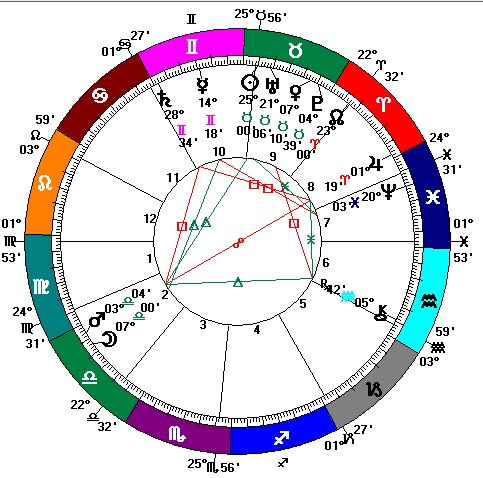
Self-indulgent #6 coming up (#5 is here, with earlier links to #1 to #4).
From here onward I'm dividing remaining stories into three segments: work/play/home & family. Starting today with what's likely to be the most boring segment: WORK:

As the bells rang in New Year 1971 I don't remember whether I was still in Berverley or had moved to be with Bill in Brighton, on the south coast of England. Detailed recollection has blurred. Never mind. Our sojourn in Brighton didn't last long. We moved back north, to Leeds after less than a year, then followed a further couple of years of general muddle and mis-direction. I eventually found a job in the Sales Office of a company who manufactured computer paper (that stuff with green and white lines and holes down each side - remember?) It was just secretarial work for the regional manager, and one or two representatives. This job was alright, though not very stimulating - undemanding. I was on my own in the office for much of the time. Following some reorganisation the Leeds office was closed after a couple of years, yours truly was made redundant. That redundancy did me a big favour. After haunting the Job Centre I eventually landed a post as Clerical Officer in the Civil Service.

I would remain in the Civil Service from July 1975 until retirement some 24 years later. My new job was in the Regional Office of what were then known as The Industrial Tribunals. These days they're called Employment Tribunals. I began as a straight-forward Clerical Officer, dealing with the administrative side of applications from people who had suffered unfair dismissal, or problems with redundancy payments, or had suffered racial or sex discrimination, or had problems relating to equal pay. After a few months the Regional Secretary asked if I'd enjoy "acting up": standing in as Tribunal Clerk when needed. I would, and did.

The Tribunal Clerk's job, back then, was usually carried out by Executive Officers. There were four EOs in the office to cover three tribunal rooms in Leeds, one in a nearby town and one in Hull, an hour's train ride away. I was often called on to assist - in fact it became more or less permanent. I didn't achieve actual promotion to Executive Officer status until the early 1980s, after moving to another department for a year to extend my experience. Once I passed the interview and achieved EO status I returned to the Tribunals and continued as Tribunal Clerk. I travelled out more often, sometimes even to one of the Tribunal offices in London, for weeks. The job was fascinating. I understand that things have changed quite a bit since my day so can relate only my own experience of the job.
The Tribunal Clerk would first meet the parties: applicant, respondent and their representatives (lawyers/union reps) and witnesses. Procedure had to be explained, details taken, questions answered, nerves calmed. The parties were then ushered into a Tribunal Room. Tribunal hearings were open to the press and public. The photograph below is of a mock tribunal set-up, but gives a general idea of the type of scene in a typical Tribunal room.
Tribunals consisted of a Chairman (a well-respected lawyer or judge) some were permanently with the Tribunal Office, others part-time; and two lay-members drawn from a list of people with some knowledge and standing in the commercial, industrial or service worlds, one from what could be termed "the employer's side" and one from "the employee's side" - usually the latter was a Union official or someone with the same type of experience; the former perhaps someone from Chamber of Commerce or an ex-employer of some standing.
As the Chairman and Members entered the room the parties and onlookers were asked to "Stand please!" Seated once more the hearing proper began. In those early years the Clerk remained in the room throughout, took notes, administered the Oath to witnesses, handed exhibits to the Tribunal Chairman and Members. Hearings ranged in length from a full day to several days (occasionally weeks) of evidence. Observing the skill of the Chairman in delivering his detailed decision, after discussions with the Lay Members, having absorbed all the evidence presented with minimal notes to assist, was always absolutely fascinating to me.
As time went on duties and procedures changed. Actual dates are foggy, but by late 1980s the work of the office had grown so much that a move to larger premises became essential. We weren't fully computerised until, I think, the early 1990s, but even then most paper documents were retained. We were being involved in different categories of cases. Clerical Officers were trained to take over the job of Tribunal Clerks, while the Executive Officers, myself included, became section managers.

I was chosen to manage the "Listing Section" consisting of between 5 and 7 Clerical Officers. I was responsible for listing cases to be heard, on a certain date, in a given location, always listing some "spare" cases to make certain the tribunal was not left twiddling their thumbs if the primary case settled at the last minute - as happened regularly. My aim was to keep the Tribunal Rooms filled, and "earning their keep". It was my job, also, to allocate each case to a set of Chairman and Members, booking the Chairmen (if part-time) and the lay-members - all by telephone following up with a notice, and ensuring the case parties, chairmen and members all arrived at the right place on the right date at the correct time. When a last-minute settlement happened another set of parties had to be alerted, often with very little notice. There was lots of room for error, making it necessary to be ultra careful and accurate, always, or things could become very hairy very quickly! Mine could be a stressful job, nobody else wanted it, but I loved it - and though I say it myself, I was good at it - it suited me. The staff management side had to be done too, of course. I didn't enjoy having to write copious amounts of critical and/or back-slapping "stuff" about my team once a year - but it had to be done.
My section was also responsible for dealing with requests for postponement of hearings, and other mailed-in enquiries, and for answering phone calls relative to same. This could, on occasion, become quite lengthy and difficult, especially if a chairman had refused a request for postponement of an important case! I still clearly recall taking such a call just before leaving the office one evening. The caller argued and on and on. I was alone in the office. The whole building had been locked up by the time I'd placated the caller sufficiently; I couldn't find the caretaker to let me out! Trapped! I phoned Bill to tell him I'd be late - and I was, very late. Wandering around 7 or 8 floors looking for another live body I eventually heard the sound of a lone cleaner somewhere, tracked them down and was given the caretaker's phone number.
In time I became senior of the Executive Officers in the office and as such was responsible for taking charge of the whole office in the Manager's absence. I'd sometimes wondered if I could achieve promotion to the next management grade, HEO, and did attempt one interview, for a post as Conciliation Officer (a different but associated department dealing with arbitration and settlements). Not being a driver was a strike against me, but not a complete no-no - that'd be my age at the time. A lot of costly training would have to be undertaken, and it'd go to waste on someone with just a few years to go before retirement. Retirement was at 60 for Executive Officers and above, and was not too far away for me at that point.
If anyone's up for a bit of light reading, here are links to a couple of fairly recent reports of Tribunal hearings in Leeds - my old stomping ground - to give you an idea of what's what:
www.thirdsector.co.uk
and www.dailymail.co.uk
There were vacations - lots of 'em. More on some of these - and more, next time.