Friday, January 13, 2012

Arty Farty Friday ~ William Heinesen of The Faroe Islands

This Arty Farty Friday's artist was born on 15 January in 1900, came from a place he called "the navel of the world", remote islands in the North Atlantic ocean, The Faroe Islands. A cluster of 18 islands to the northwest of Scotland and halfway between Iceland and Norway, territory of Denmark but self-governing. There, one is never more than 3 miles from the ocean, with countryside dominated by steep mountains. Some 70,000 sheep and 2 million pairs of seabirds, including the largest colony of storm petrels in the world share the islands with around 50,000 humans, whose language and culture are distinct to the islands.


Andreas William Heinesen (15 January 1900 – 12 March 1991) was a poet, composer and painter from Tórshavn, capital of the Faroe Islands. He used this remote North Atlantic location as a microcosmic setting for universal social, psychological, and cosmic themes. He is reported to have called Tórshavn "The Navel of the World". Heinesen was captivated by the mysterious part of life. He called himself religious in the broadest sense of the word. His life could be described as a struggle against defeatism. One oft-quoted aphorism of his is that "life is not despair, and death shall not rule".

Heinesen's paintings have been used on Faro Islands postage stamps. Few images of his work are available online - some examples follow, below. His novels and poetry have been translated into some twenty different languages. He was nominated for the Nobel prize, and presented with several litarary prizes. His novels, published between 1934 and 1976 include:
Windswept Dawn, Black Cauldron, Lost Musicians, Good Hope, Tower at the Edge of the World.


Chart is set for 12 noon as time of birth isn't known.
What a distinctive chart it is! A classic "see-saw" configuration with all but Venus in Aquarius involved in a balancing act between Sagittarius/Capricorn and Gemini/Cancer (Moon would have been in Cancer whatever the birth time).

Sagittarius adds philosophical optimism to Capricorn's Earthy commonsense attitude and business sense, with some extra balancing coming from communicative Gemini and sensitive Cancer Moon happy in its own sign of rulership. Mr Heinesen was another from that wonderful Pluto/Neptune in Gemini generation from which so many iconic figures from the arts scene of the world sprang.

Venus, out on a bit of a limb in Aquarius, forms an exact harmonious trine to Gemini Neptune(imagination and creativity)- no need to seek further for source of his inspiration!


Beauty and the Beast


Cover of Baladas Epicas Feroesas (a book on legends of the Faroes, I think)


Information from http://wikitravel.org/en/Faroe_Islands

Some photographs of the islands
HERE and HERE

Slideshow of photographs of the islands

Thursday, January 12, 2012

Back to the Future Fashion?

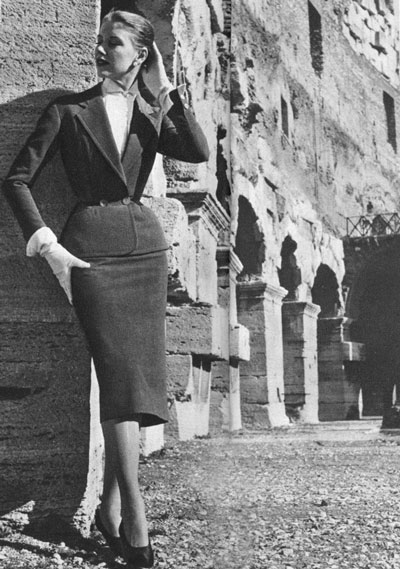
Some photographs, one is shown at left, from fashion designer Jil Sander's ad campaign for spring/summer 2012 rang a bell in my memory bank. More than one bell, in fact.

The bell ringing nearest the surface: early 1960s fashions in Mad Men, the TV series we're in the midst of watching on DVD. See below....Christina Hencricks as Joan; and full cast.


Deeper down a bell rang reminding me of a post from the past which had touched on a possible resurgence of 1960s fashions. A little digging revealed a post of mine from 2008, an extract follows.

Deepest-seated ringing bell of all: my own experiece of 1960s fashions.

Back in 2008 I'd spotted an article by Judy Licht: "The Frill of It All" . The writer had seen hints of an upcoming trend in fashion harking back to the 1950s and 60s.

"Another Fashion Week here in New York, another frenzy. But hidden in all the hairspray, hubbub and hilarious air kisses are clues not only to what we'll be wearing next season, but what that says about us as a society right now, what we're feeling, and where we may be heading. Fashion historians have long known that clothes are just as accurate a barometer of the culture for which they're created as any political or literary histories.........

Everybody is craving comfort clothes....... the kind that reminds everyone of the late fifties and the early sixties, the last time, it seems, when everything was truly right with the world. The last age of innocence.

With an economy that seems scary, but still a bit of an enigma; an election that for the first time in decades seems to be providing an unknown factor (i.e., choices), everyone wants it to be simple again. ..................... great trilby hats and slim single breasted suits for men..they've embraced the sheaths, the full skirts, swing coats and sweaters that screamed oh so subtle under-the-girdled-sex, for-women."

"Sweaters and under-the-girdled sex", said Judy Licht...she obviously hasn't experienced the reality, which had more in common with suits of armour and chastity belts!


Well now, that article appeared just before the 2008 election, after eight years of Republican rule with George W. Bush at the helm. Here we are, four years on, another election year, this one seeming not to offer the "choices" Ms Licht had noted in 2008. Are we seeing another hint of a yen for early 1960s fashions? We could still be wanting to be reminded of (as Ms Licht put it) "the last time when everything was truly right with the world". I see that as questionable in respect of the 1960s - but I do understand what she was getting at.


Any re-birth of circular skirts with stiff petticoats, or the hobbling sheaths and too-tight pencil skirts which required contortionist-like skills for the wearer to be able to sit down at all, nevermind elegantly, will not be greeted with open arms by 2012's "woman in the street". Matching shoes, gloves and handbag? Not a chance! Comfort clothes? Trust me, I'm old enough to know from bitter experience that those were not comfort clothes! Your friendly neighbourhood blogger, at right, in the early 1960s, in Rome, remaining as comfortable as I could manage. I did possess a couple of those "poured-into" dresses, but photographs have not survived.

Back to astrology ~~~ In 2008 I wrote:

Two of the outer planets, thought to influence the collective: Uranus (change, inventiveness, novelty) and Neptune (imagination, creativity, dreams) - correspond with the ingredients involved in fashion trends.

Using tropical zodiac, and covering the period mentioned in Judy Licht's article: from early 1950s to 1956 Uranus was in Cancer, Neptune in Libra. From 1957 to 1962 Uranus was in Leo, Neptune in Scorpio.

The 1950s followed a decade of grinding restrictions affecting almost everything, including clothing in Europe and, to a lesser extent in the USA. In Britain people were allocated "clothing coupons" a form of rationing. When World War 2 was over, the fashion industry re-grouped, and by 1950 it seemed like party-time for them. Uranus moving from comfortable, homely Cancer into more extrovert and showy Leo, and Neptune slipping from elegant Libra to passionate Scorpio heralded some style changes during the later part of the period in question.

Circular skirts and easy little dresses, (a la Doris Day) characterise the easy, homely "apple-pie" phase, of Cancer/Libra, followed by Audrey Hepburn's and Jackie Kennedy's sleeker, more sophisticated looks during the phase of Leo/Scorpio.


Now, in 2012, Uranus is in Aries and Neptune in the last reaches of Aquarius, ready to move into Pisces. The atmosphere is somewhat different from the way it was in 2008 - when I wrote:

I'm surprised that fashion needs to look backward for inspiration during this astrological atmosphere. Neptune and Aquarius in mutual reception (in each other's ruling sign) ought to be breeding creativity of the highest kind. Why would fashionistas want to look back to this era? It's a mystery......I suspect it will be a short-lived affair

A trend wasn't established in 2008. Maybe the election of Barack Obama to the presidency blew away all need for "comfort clothes". With benefit of knowing that President Obama's reign has not been startlingly different from that of his predecessor, will a yen for the 1960s catch on in 2012?

I'd not be surprised to see a return to longer skirt lengths. Neptune in Pisces might bring on some pangs of nostalgia, if nostalgia can be experienced by those whose memories don't reach far enough back to recall the originals. I cannot see young women nowadays willingly wearing the kind of foundation garments needed to make 1960s fashions look the way they did then, but we might possibly be about to see a return to generally more graceful styles.

Wednesday, January 11, 2012

Dickens' Sydney Carton (Tale of 2 Cities) ~ A Speculative Natal Chart

Syndey Carton from A Tale of Two Cities is, for me, Dickens' most memorable character - and that's saying a lot, for the author created so many vivid characters.

Next month will see the 200th anniversary of Charles Dickens' birth, by the way.

I got to wondering about a (fictional) natal chart for Sydney Carton. I can find no hint of when he was said to have been born. We know that he was English, practiced law in London - so "born in London" will suffice for this purpose. We know from Dickens' descriptions that Carton, though a barrister of early promise and sharp intellect, was unmotivated, the "idlest and most unpromising of men", and "a problem of carelessness and recklessness". We come to realise that Carton is, if not an actual alcoholic, then well on his way to it. He is often morose, says at one point, "I am a disappointed drudge, sir. I care for no man on earth, and no man on earth cares for me" . However, in the course of the story's unfolding we see that he is capable of a secret deep unrequited and eventually tragic love. As a result he sees his saving grace being the ability to sacrifice himself for this love. We read Carton's famous last words:
"It is a far, far better thing that I do, than I have ever done; it is a far, far better rest that I go to than I have ever known."

Let's see then......Which Sun sign fits the stereotype? I'm going with Sun in Pisces, ruled by Neptune. I'll need an actual date to construct a chart. We don't know Carton's age, but we do have dates for historic events which form the setting of the novel, and likely dates for many events detailed. The court case when Sydney Carton saves Charles Darnay, by pointing out that he and Darnay are so alike that a witness could not possibly be certain he saw Darnay at a crucial time, is said be set in 1780. The last scene of the novel when Carton goes to the guillotine is set in 1793. I'm guessing that Carton would have been around age 35 in 1780, the time of the court hearing when Darnay was being tried for treason. This gives a birth year of 1745. A speculative birth date, with Sun in Pisces: 18 March 1745, using 12 noon brings up:


I like it! Look at Saturn and Mars opposing his late Pisces Sun - these two traditional "malefics" would act on a normally gentle Pisces Sun, driving it to melancholy - and likely to drink. Neptune, Pisces ruler is in sensitive Cancer and forms a Grand Trine on Water signs with Jupiter in Scorpio and Neptune in Pisces - a powerful harmonious emotional circuit - but note that Pluto is conjunct Jupiter, bringing a dark and secretive element into the circuit. Mercury in Pisces and Uranus in is own sign Aquarius are in semisextile, linking in a bit of the unexpected, a bit of eccentricity.

Moon might have been in Libra or in Virgo depending on time of birth - I'd go for Libra, representing a basic feeling of decency beneath an unfortunate exterior.

A fitting rising sign? Let's see......the way he was seen by others - a bit of a slob, generally unpleasant, hiding his true worth, both mentally and morally....how about Scorpio (the duality of the scorpion and the eagle) rising putting Pluto/Jupiter on the ascendant?


Here's an extra tidbit of symbolism used by Charles Dickens via the character's name. Sydney derives from (Norman) French. Saint Denis (from Latin Dionysius) would be pronounced something like "S'Deni', which in English became Sidney. Dionysus aka Bacchus, Greek god of wine, represents Carton's alcoholism. Saint Denis, patron saint of Paris and a martyr who also by decapitation an echo of Carton's death at the guillotine.

A Tale of Two Cities has been presented on film, stage (as a musical), radio and TV numerous times over the years. Sydney Carton has been played by, among many others, Ronald Colman, Dirk Bogarde, Peter Wyngarde, Orson Welles; and my own favourite portrayal by James Wilby (right) in a 1989 UK TV mini-series.

To end this post, the wonderful words which begin the novel~~
"It was the best of times, it was the worst of times, it was the age of wisdom, it was the age of foolishness, it was the epoc of belief, it was the epoc of incredulity, it was the season of light, it was the season of darkness, it was the spring of hope, it was the winter of despair, we had everything before us, we had nothing before us,we were all going direct to heaven, we were all going direct the other way - in short, the period was so far like the present period, that some of its noisiest authorities insisted on its being received, for good or for evil, in the superlative degree of comparison only."

Tuesday, January 10, 2012

The Future ~ Known Unknown, Unknown Unknown.

I wouldn't normally wish to quote former US Secretary of Defence, Donald Rumsfeld, but for once:

"There are known knowns. These are things we know that we know. There are known unknowns. That is to say, there are things that we know we don't know. But there are also unknown unknowns. There are things we don't know we don't know."


...And follow with an edited version of my post from 2007 touching on mysterious unknowns.

A one-to-one consultation with an astrologer, in person, is something I haven't experienced, having never been in the right place at the right time. I have visited tarot readers on one or two occasions over the years, and had my hand read by fortune tellers. I've attended spritualist meetings, even dabbled in a bit of basic magic. Mysteries such as these have intrigued me for as long as I can remember.

The search for evidence and answers has often been disappointing. Astrology has been consistent in providing me with evidence that "something" is going on, though nobody knows what it is. This is the reason I've chosen to persist in trying to understand when astrology works and when it doesn't. It's a known unknown. The reason why astrology works, when it works, may well turn out as an unknown unknown - something we haven't yet discovered, a factor of which we have as yet no concept at all.

Many consider astrology to be in the same category as fortune telling, tarot, magic and mediums. I don't. Any evidence proving that those other areas of mystery "work" has been scant. A few scattered incidences over a very long period, have been just sufficient that I can't quite close the door, and my mind, on the idea that there is something else going on too.

The scattered incidences:

1 ~~~ A tarot reader, who was probably also a medium in the 1960s, in Devonshire, UK, told me that someone was speaking to her, and that he had a peculiar way of using the expression "it was real" in his conversation (meaning that something was very good). I immediately recognised this person. He wasn't anyone close, simply an acquaintance, but his idiosyncratic way of using the word "real" always used to amuse me. He had died in a car accident some years before. I hadn't even thought about this person much, but was very surprised to recognise him immediately from the reader's description.

2 ~~~ Many years ago (1970s), I persuaded my late partner to accompany me to a spirtualist meeting. The speaker there pointed to him during the meeting and said, "Do you know Peter, wearing RAF uniform?" He gasped, "Yes". "Well, he is saluting you", the speaker said. I knew already that my late partner had had a close friend called Peter, in his youth, during WW2, in the Royal Airforce. Their plane was shot down over France and they escaped together. Sadly, Peter's wife had been unfaithful while he was away in the forces, and he commited suicide just after the war ended.

3 ~~~ Many Moons ago, when I was still a young teenager, a fortune-teller told my mother that I would marry someone "from over the sea, and end my days abroad". That wouldn't sound too unusual nowadays, but in the 1950s before air travel was common, computers still unheard of, it was extraordinary! Anyway, the prediction has been vindicated three times. The second time wasn't a marriage, but a 33 year relationship. # 1 husband was from Italy. # 2 from Northern Ireland. # 3 current husband is American. And here I am, ending my days abroad (hopefully not too quickly). I'm pretty sure that this incidence wasn't what's known as "a self-fulfilling prophecy". I did harbour thoughts of retiring to Spain, which might have been seen as such. I never could have envisioned what actually happened!

4 ~~~ A fortune teller told me, back in 1973 or thereabouts, that there would be 3 men in my life. I was already aware of two - an ex-husband and a current partner. This prediction worried me for a long time. I took it as a sign that I'd somehow lose my partner. I did, but not for another 30 years! Then # 3 appeared.

I can find no logical explanation for any of these instances. They may be manifestations of some magical mystery - an unknown unknown, a mystery beyond anything we are at present capable of understanding.

Monday, January 09, 2012

Music Monday ~~ 4 Born on 9 January

9 January, through the years, seems to have been a propitious day for the birth of singers and musicians. Wikipedia's details of births for this day has more musically inclined people than I usually notice. Some names are familiar, some not universally well-known. I've picked four from the many; four for whom Astrodatabank has times of birth. It could be interesting to compare the charts, because initially one might not expect a glut of musical talent to be aligned with Sun in Capricorn.

Natal charts, with data from Astrodatabank are shown later and together, for ease of comparison.

In date order:


Born 9 January in 1928, a name possibly unfamiliar to anyone not "of a certain age" : Domenico Modugno, Italian singer and songwriter of the late 1950s and 1960s who co-wrote, sang and had a huge hit with Volare ("nel blu dipinto di blu"). His rendition of Piove (Ciao Ciao Bambina) is still, for me, the definitive. I shed many a tear over it back in my Italian-tinged youth. Later in life Modugno got into Italian politics, by the way.


Piove
(sniffle!). It was Italy's entry in the Eurovison Song Contest, 1959.


Born 9 January 1941 ~ Joan Baez - surely familiar to all - almost iconic in fact: American folk singer , recorded over 30 albums; songwriter, musician and human rights activist, campaigner for peace.


Here she is, not a protest song this time, but with Bob Dylan's Forever Young - still sounding great!


Born 9 January 1943: Scott Walker, American lead guitarist, singer, keyboarder and composer, member of the Walker Brothers trio. 1960s and 70s hits included My Ship Is Coming In, The Sun Ain’t Gonna Shine Anymore, No Regrets. His songs were often filled with melancholy. Scott Walker is the most under-appreciated singer of the 20th century. He has sung straight-ahead pop, wonderful renditions of works from The Great American Song Book which compare admirably with any of the biggest name vocalists; superb versions of movie theme songs, interpretations of Jacques Brel's songs- very difficult to do I'd guess; and many self-penned songs, poetry filled with angst but showing off that creamy smooth voice, instantly recognisable as Scott Walker. Yep, after a trawl through YouTube - I'm a fan -all over again! (PS: Bingo! His Mercury and Venus conjoin my natal Sun!)

Singing his favourite Jacques Brel song Alone


Born 9 January 1944:
Jimmy Page, English multi-instrumentalist, songwriter, and record producer, member of The Yardbirds band from 1966 to 1968, later founded the English rock band Led Zeppelin.One of the most influential guitarists and songwriters in rock music.

Jimmy Page with Robert Plant ~ Since I've Been Loving You


THE CHARTS


General similarities:

All four have a Capricorn Sun, of course, which indicates a certain serious, common sense attitude to things in general, including business matters - which, though not an essential part of the musical arts, has to be a help in ensuring some level of worldly success.

3 of the 4 charts have Sun/Mercury conjoined = powerful drive to communicate.

3 of the 4 have Venus (the art and music planet) in Sagittarius. Sagittarius is Jupitarian in character and expansive; we could interpret Venus in Sagittarius, then as indicating a powerful draw towards some sphere of the arts.

(Odd one out in both cases = Scott Walker, who has Venus/Mercury conjoined in Aquarius.)

Other than the above, key to Domenico Modugno's chart, I'd say, is a limelight-loving Leo Moon and communicative Gemini rising. His later draw into politics is likely reflected in Saturn's position in Sagittarius, alongside Venus....providing a "second string to his bow".

Important in Joan Baez' chart, are a series of wide-ish harmonious trines: Sun/Mercury trine Moon/Uranus trine Neptune forming a loose Grand Trine in Earth with a slightly Airy overtone. It's that link of rebellious Uranus to her Sun/Mercury that powers her draw towards social activism; the link to Neptune powers creativity.

For Scott Walker, a post from my archives gives more astro information
see http://twilightstarsong.blogspot.com/2010/11/music-monday-scott-walker-jacques-brel.html From that post

What stands out for me: Grand trine in Air signs which he shares with many of his age group (including moi). In Scott's case the generational trine between Neptune and Uranus links to personal planets Mercury and Venus in Aquarius - connecting this Airy circuit of mavericky creativity to art and communication, so it becomes extra- specially relevant in his personality and in his music.

Sun in Capricorn reflects a serious nature, though not necessarily morbid, or reclusive. To pinpoint that side of Scott's nature we go back to the Grand Trine and note that Saturn lay conjunct Uranus as he was born, and Pluto lay in opposition to Mercury/Venus. The presence of these two potential dampers (Saturn and Pluto) on an otherwise positive configuration explains Scott's early retreat from the spotlight, and his draw to darker, melancholic themes. While Saturn/Uranus conjoined explains how Scott's music can be categorised by the opposing terms "experimental" and "Baroque" (as at Wikipedia). Saturn hooked up to Uranus -the old hooked up to the new!

Watery Pisces Moon and Cancer rising underscore a deeply emotional and sensitive character, which I think can be seen from his young face, and sensed from many of his vocals.


Jimmy Page's Sagittarius Venus is opposed by Uranus and Mars in Gemini - which describes a balancing of Venus's intrinsic artistic beauty with the rebellious, avant garde Uranus and dynamic, aggressive Mars. Sagittarius Venus sextiles creative Neptune in Libra and trines Uranus/Mars in Gemini....superbly configured for a rock musician! Cancer Moon and Scorpio rising add emotional depth.

Saturday, January 07, 2012

Hitler's Britain ~ What ifs & Revisionism

I've recently watched Hitler's Britain on DVD. This was originally a documentary film shown on TV in the UK in 2002, later in Canada, and, I think, on PBS in the USA.

The film, a detailed exercise of the "what if" variety, describes the consequences of a hypothetical German victory over Britain in World War II. The key ingredient is a reversal of the actual British victory in the Battle of Britain. The film has the Germans as victors, allowing them to pursue Operation Sea Lion, a documented plan to invade and occupy Britain. World War II newsreel footage, actual German documentary evidence, modern mock-ups, and interviews with survivors of the war, are combined to present a vision of how life in Britain would have progressed, had a full-scale German invasion occurred.

I usually enjoy "what ifs", but this one was a little too close for comfort. I was a very young baby when World War II broke out, living in one of the country's key east coast ports. I, along with many thousands of others would certainly not have lived the life I have been able to live if this particular "what if" scenario had taken place.

The film covers a lot of ground, ends on a dismal note after revealing much I didn't know about a secret "resistance" army that was in place, at least in the south of England, where much of the attention is focused. The north was to be under the thumb of Lord Halifax, said to have been friendly to the Germans, along with an un-abdicated Edward VIII and his princess Wallis ensconced in Scotland as puppet royals.

Oddly, maybe deliberately, nothing much was said about Britain's powerful Royal Navy, or what remained of the Royal Air Force after Battle of Britain. They would have doubtless put up a strong secondary fight at the time of any attempted German invasion. It was presented as "a piece of cake" - bit too easy; poetic licence I guess. Churchill had been killed. George VI and family had been shunted off to Canada....not that they'd have been of much use in any case. Britain's Jewish residents, and others, brightest and best from Britain's universities, businesses etc. would have been dealt with in much the same manner as their counterparts in German occupied Europe: gotten rid of in the nastiest ways imaginable!

One good thing about watching films like Hitler's Britain: the experience makes one feel thankful for the present, warts and all.

In looking at a few reviews of Hitler's Britain I came across some peculiar revisionist views on World War II. I look on revisionism as the other ugly sister of conspiracy theory - decent sister being honest "what if" exercises. In all cases factors involved are real enough, but have been swivelled and skewed, moulded and twisted to present something different. That's fine if it's purely a creative mental exercise, a result of curiosity, never presented as an alternative truth.

Anything in life is "revision-able", nothing is sacred to revisionists, or to the most determined of conspiracy theorists, especially if the result will sell books and lectures.

I'm not intending to imply that everything we are officially told is always pristine truth. I'm not naive enough to think so. There's always more than enough wiggle room for backroom deals and known unknowns. Even so, Occam's Razor is a fine tool to keep handy.

Friday, January 06, 2012

Arty Farty Friday ~ Alexander Pogrebinsky

Casting around for a Sun Capricorn painter to feature today found me struggling. Henri Matisse was born on 31 December - but, somehow, I didn't feel inclined to feature him, his paintings don't do a thing for me. Pickings are slim. Russian (Ukraine) immigrant to the USA, Alexander Pogrebinsky, born 2 January 1951 is another possibility. Something about his work, the few examples of it I've seen online, attracted me. His style is generally categorised as philosophical realism, though his subjects over the years have also included landscape, still life and portraiture. (Shown left: Infinity 2)

The artist's own website is at http://www.pogrebinsky.com/, with extensive illustration and lots more information. Mr. Pogrebinsky is still a working artist. In this case, I have hesitated to post bigger versions of his work, and hope to avoid falling foul of copyright rules.

(Shown right: Kazak)
Alexander Pogrebinsky was born in Kiev into a family of artists, in whose footsteps he followed. He received a Ph.D in Fine Art from The Academy of Fine Art of the USSR in 1984, after 6 years' study there. His work frequently appeared on magazine covers and was exhibited nationally and internationally, some of it commissioned by the Ministry of Culture. He worked separately on subjects of his own choosing, outside of themes accepted by the Soviet Union: the religious and psychological. Pogrebinsky himself is of no particular faith, but his paintings show a universal interest in religions. Several works depict Jesus Christ. A triptych: Earth, Moon, Sun explores the individual and the forces of good and evil. Inspired by the philosophical writings of Goethe, Pogrebinsky included lines from Faust within the paintings. Many of his paintings deal with creation myths.

(Shown left: Evening)
With the tragedy of Chernobyl, Pogrebinsky seriously began considering immigration.
From a 1994 article about the artist in the Cleveland, Ohio newspaper, Plain Dealer:
They [the Pogrebinsky's] had long doubted the benevolence of the government, but the explosion at the Chernobyl nuclear power plant, 60 miles from their home, cemented their destruct. The disaster struck April 26, 1986. Word reached the Pogrebinskys about five days later. Before citizens even caught wind of the accident, the militia sealed Kiev to prevent an exodus. Meanwhile, state leaders in the region fled in droves. "We just started to see that everything we had been taught was not what they pretended", says Pogrebinsky, 43. "Chernobyl just showed that they didn't care about the people".


In 1990 Pogrebinsky, his wife, and their two children used a travel visa to Paris to escape in December 1990. Travelling through Europe, the family arrived in New York City in January 1991. Afterwards they won political asylum from the U.S. Government.
Information from Wikipedia


(Shown right: Boulgakov3.)
With Sun, Mercury and Venus all in realistic, rational Capricorn this artist was always going to gravitate towards some kind of realism in his art. Eccentric Uranus, though, opposes Sun/Mercury from Cancer bringing more than a hint of innovation - this artist's realism is not always straightforward - though his excellent portraits and still life paintings do fall into that category. His more innovative realism balances the photographic with the creative and often unexpected. Jupiter in its traditional domain, Pisces in sextile to Sun/Mercury reflects his draw to religious subjects.

The transit of Uranus, planet of change, through Capricorn in 1990 and 1991 coincided exactly with the position of Pogrebinsky's natal Sun. Whenever Uranus transits one's most personal planets, change of one kind or another will always be in the air. In Pogrebinsky's case immigration from Ukraine to USA -a complete change of culture and lifestyle, was the gift of an often once-in-a-lifetime Uranus transit.

(Shown right: Yellow Roses)
The small images of paintings used are for information only and not intended to infringe copyright of the artist:

Copyright Disclaimer Under Section 107 of the Copyright Act 1976, allowance is made for "fair use" for purposes such as criticism, comment, news reporting, teaching, scholarship, and research. Fair use is a use permitted by copyright statute that might otherwise be infringing. Non-profit, educational or personal use tips the balance in favor of fair use

Thursday, January 05, 2012

Ongoing Search.....

Back in 2006, when this blog was still wet behind its ears, I bemoaned the fact that I was unable to identify a likely teacher for myself being, so far, a self-taught student of astrology. I've updated that post, with experience of 5 years now behind me:

There's an old saying: "when the student is ready a teacher appears". This runs along the same lines as "cometh the hour, cometh the man". Do either of these ideas ring true ? There are examples upholding the second: Winston Churchill and Martin Luther King spring immediately to mind in support of it. The other saying, about student and teacher, is not as easy to see in action, at least on the world stage.

In my role, as a student of astrology, a specific teacher has never appeared. Perhaps I'm too obtuse or hard to please? Or perhaps my teacher has been around all the time, though not of the living, breathing variety. Perhaps the computer, astrology software, and the huge amount of information available online has, for me, fleshed-out the role of teacher.

I'd still be interested to find an astrologer or writer on the subject with whose ideas I feel comfortable. The further I've searched, the more disillusioned I've become on this score. I have always felt comfortable reading anything written by Jonathan Cainer, but he limits his subject to the elementary area of astrology which I'd like to think I have now mastered. I do admire Robet Hand, especially his excursions into the history of astrology. Even Mr Hand doesn't completely fit the bill for me though.

Where is the searcher who asks questions, looks for answers, and doesn't accept ancient doctrine and dogma wholesale?

Wednesday, January 04, 2012

"It's Only Words.....and words are all I have..."

Words.

Words, astrologically, are province of planet Mercury. My natal Mercury is in Capricorn. Most of the time I try to be fairly disciplined in writing style, down to earth, not given to poetic paragraphs or vicious verbiage. I am not a verbal painter.


Capricorn isn't as pernickety as Virgo when it comes to perfection in the wordsmithing department, but Mercuy in Capricorn stands next in line as stickler for verbal accuracy.

Oddly enough, though, split infinitives don't bother me, inaccurate punctuation, as long as there is some, doesn't bother me nor does bad spelling, as long as the word is recognisable. This partial laissez-faire attitude must come from my Aquarius Sun, I guess....or maybe from Venus in easy-going Sagittarius.

Some inaccuracies or sloppy usage do constantly irritate this Capricorn Mercury. For instance:

Over-used words, these especially prevalent in the USA. I realise this is one result of a national craving for for bigger and better - hyperbole at its worst! Even so, synonyms are easily available:

amazing
awesome
incredible
hilarious
I'm excited to.....

As C.S. Lewis said
Don't use words too big for the subject. Don't say "infinitely" when you mean "very"; otherwise you'll have no word left when you want to talk about something really infinite.

Words/expressions over-used by journalists and pundits which could well be either not understood at all, or misunderstood by readers and listeners:

bloviate
dog whistle issue
hot button issue
kool-aid drinker
wedge issue
let me be clear..... (President Obama says this - a lot - and he is never, ever clear!)

But then, even from the best of 'em:
If we can boondoggle ourselves out of this depression, that word is going to be enshrined in the hearts of the American people for years to come.
Franklin D. Roosevelt


Words pronounced wrongly (to my English ear)

I say sublime - they (or some of them) say "subleem"
I say (when speaking of a gown style with high waist) empire - they say "ompeer"


Inaccurate use of words: - everyday online one can encounter:

affect and effect muddled and used incorrectly. Affect is a verb, effect is a noun.

Correct preposition to use with different is FROM; different to, or different than are incorrect.

Worse, worst, and use, used....I'm not sure how these strange mistakes come about, but certain writers who ought to know better don't seem to realise that worst is the superlative of worse; and that, for instance, "she used to play the piano" is correct, "she use to play the piano" makes no sense at all.

"Would of", "should of" instead of the correct: would have or would've; should have or should've. Tsk - this one is BAD!

"Very Unique" ...if something is unique, it's unique, one of a kind - it cannot be "very unique".


Writing, stringing words together, in a comprehensible way, is a discipline and a craft; stringing them together in an inspirational, beautiful or poetic way is an art. My quibbles in this post relate to the first stage, the discipline and craft of ensuring that words can be properly understood. Perhaps I'm too demanding though? On the topic of writing in general a favourite quote, from a writer I've long admired: S.J. Perelman (1904 - 1979) puts it this way:
"If, at the close of business each evening, I myself can understand what I've written, I feel the day hasn't been totally wasted."

Tuesday, January 03, 2012

THE THATCHER

The Iron Lady movie is going the rounds just now, and Margaret Thatcher has, unfortunately, crept back into the public consciousness....just when I thought we'd all but forgotten the horror that was The Thatcher.

I cannot bring myself to attempt any kind of useful astro-profile on this woman. My prejudice against her is too far gone. I will, though, link to a piece by astrologer Joyce Hopewell. She makes an interesting comparison of the natal charts of Margaret Thatcher and Meryl Streep, who plays the former British Prime minister in the movie.

My only comment on Thatcher's natal chart: she was a total disgrace to Libra, and proof, if proof were needed, that you cannot judge a person by their Sun sign.

I lived thoughout Thatcher's reign in the north of England. She was the single British PM or politician that I hated outright. Many Brits share my feelings about her, many, for some uncanny reason, do not.

I read a long thread of comment about Thatcher on a British Ex-Pats forum the other day; it brought back to the surface much of the hatred I used to feel about the woman. I've copied four of the comments which explain, and resonate with my own feelings.

By "Jon77"
I always remember Frankie Boyles bit on Thatcher.
'give every person in Scotland a spade and they will dig a hole deep enough to deliver her to Satan personally'

No one else can divide the nation like Thatcher because Thatcher divided a nation.

To those living down in the home counties and London the North of England in the 1980's must have seemed like another country. I grew up in Middlesbrough in the 1980's and watched the male members of my family thrown out of their jobs in the factories and the resultant loss of pride and esteem and the decline in to depression. My Grandfather worked in a steel plant that was knocked down in the early 80's, this is the same place that Thatcher took her famous walk in the wilderness on Teesside in the mid 80's promising that new business would follow, that place is still a wilderness to this day.

It was hard to take watching all the money pour in and out of London in the 80's when so many were in such a desperate state in the North. The mines in the North East of England sustained whole communities still, everything revolved around the mine. I hear the arguments about coal extraction not being financially viable any longer, but the way the hearts were ripped out of these communities and the sense of devastation that was felt across the region.

Some from the South of England use the argument that these old industries in the North needed modernising and the region brining up to date as those industries couldn't last. I can actually see the reasoning behind that, but the way it was all dealt with still leaves a bitter taste to this very day in many places up North.

Some towns in the North still have the scars from Thatcher, holes left in the landscape where factories once stood providing employment have never been replaced to this day and if they have been replaced it is with a call centre, if they are still open these days.

From iamthecreaturefromuranus
I lived in East Manchester, never exactly a rich place, but at the time I left school in 1977 it was still a major manufacturing area of heavy industry.

My very first job was at Johnsons Wireworks. I lost it almost before I got started. Within 18 months Thatchers revolution swung into action and my chances of finding work seemed to vanish overnight.. so I joined the forces.

I was away from Manchester for a year or so and when I came back all the industry had gone. I could hardly believe what I was seeing. In the area I had had my job I was told 30,000 manufacturing jobs had been lost.... in seven months.

The area NEVER recovered. The land where all those factories stood remained derelict for a generation and was finally turned into the Commonwealth Games stadium in 2002.

Thatcher and her party, can rot in Hell.


From sheene
I lived in Leyland, Lancashire from 1973 - 1993 and watched the industries collapse. Forget British Leyland - in Leyland itself they made the trucks and buses, which were among the best in the world. Successive buyouts by Volvo and DAF ended a century old manufacturing base, along with the loss of thousands of highly skilled workers. Thatcher thought we didn't need dirty engineering and manufacturing, and replaced them by creating an illusion of wealth from service industries. Well done, very well done. Thatcher? I wouldn't piss on her if she was on fire.

There were many activists with 'different' agendas in the Unions in those times - not least of which was Jack Jones, leader of the T&GWU, who was outed as leaking secrets to the KGB in 2009. By the mid seventies, Jones was regarded as the most powerful political figure Britain, and gave Thatcher all the ammunition she needed to smash the Unions.


From scossie
I went to see 'The Iron Lady' yesterday. Good film... Excellent performance by Meryl Streep.

Could have made more though of what an evil uncaring bitch Thatcher was. Especially the fact that she gleefully assigned a whole generation of people to the scrapheap, (including my Dad) who had worked every day since the end of the Second World War to re-build the country, only to find that in their 50's, they were no longer required...

She killed my Dad, and I will hate and detest her for as long as I live...
In the engineering firm he worked for for over 20 years, my dad started as a tradesman and worked his way up to senior management. We were never particularly well off, but we did ok, and had a holiday every year etc. Life was good. Then Thatcher came along with her policies that decimated the engineering industry in Scotland in a matter of months. All of a sudden my dad found himself both unemployed and unemployable at the age of 53. I then had to watch a once proud family man descend into depression and heavy drinking because he felt he had no self worth, and then ultimately, and early grave...

Monday, January 02, 2012

MOVIE MONDAY ~ Lost in Translation; Beloved; Still Crazy; Mad Men


Thoughts on movies we watched over the festive period, the first on TV (HBO channel), others on DVD ~~~~


Lost in Translation (2003). We both thought we'd already seen this, but it turned out that we were mixing it up with another of Bill Murray's: Broken Flowers. We hadn't seen Lost in Translation after all, and it was nothing at all like Broken Flowers. Bill Murray in a movie is always a good ingredient, whatever theme, whomsoever he stars alongside.

This was a good, thoughtful movie about a relationship between Murray's character, an older man (50s) and a late teenage young woman (Scarlett Johansson) just out of university. They are "thrown" together, by force of circumstance, in a country and culture foreign to both: Japan. I'll not give away more than that. Just a word about Bill Murray's natal chart: he has Sun, Mercury, Venus and Saturn all in perfectionist's sign Virgo, and Moon in quirky Aquarius. That must be a difficult juggling act to perform! Astrodatabank has no information on his time of birth - perhaps his rising sign is helpful in that juggling act!


Beloved (1998) - a DVD I picked up on our travels, somewhere in Texas. I'd never heard or read about this film, based on a 1987 novel by Toni Morrison, produced by Oprah Winfrey's production company, starring.... Oprah Winfrey (yikes!) and Danny Glover (the reason I bought the DVD). Storyline is set in the area around Cincinnati, Ohio, in the years after the Civil War. Parts of the movie are completly predictable, other parts weirdly unexpected and requiring a definite suspension of disbelief. Good performances all round though, especially from Thandie Newton who skilfully plays a difficult part : a deranged young woman whose moods range from rabidly evil to child-like. Oprah Winfrey (Sun in Aquarius) is so good at everything she does, it's sickening - but all credit for this movie has to be due to her vision.


Still Crazy(1998) - a DVD found on e-bay after having seen a trailer on a VCR tape. This was a British movie, written by Dick Clement and Ian la Frenais, a brilliant pair of writers who've been responsible for a string of TV hits in the UK (for example:The Likely Lads, Porridge, Lovejoy and Auf Wiedersehen, Pet, some movies too, including The Commitments, Goal!, Flushed Away, Across the Universe and The Bank Job.

Still Crazy is the tale of a used-to-be rock band from the 1970s trying to get together again for a come-back. Cast includes (among others) wonderful actor Bill Nighy; Jimmy Nail, a favourite of mine from way back; Billy Connolly, always good value; and Timothy Spall, who has, over the years, developed into an excellent character actor, now popping up quite unexpectedly in all maner of movies.

I'm not sure what American audiences would make of this film. British regional accents could cause problems. I loved seeing this cast working together, they seem like old friends of mine. The story was totally predictable, but it didn't matter. I've written a little, astro-wise, about Jimmy Nail and Billy Connolly in the past - see HERE and HERE.


Mad Men, we watched the first half dozen episodes of season 1 (2007) - I had splashed out and bought a used set of DVDs seasons 1 to 3 = 12 DVDs, 3 episodes on each disc. Enough to keep us occupied through the winter months.

I knew nothing about the series, other than that it had won an award or two, and that it depicts a group of characters in the advertising industry. The setting is Madison Avenue, New York, heart of the US advertising industry - if advertising does, in fact, have a heart which is doubtful. "Madison" Men - see? I had assumed the title was just a play on ad-men becoming mad men -it probably is that as well.

It's hard to say from this sampling whether the series will turn out to be in the same league as Boston Legal - I doubt it. The episodes were engaging enough, allowing us to get a handle on the characters and the setting: 1960.
Oh yes, I remember it well! The cigarette smoking, all the time, even at meals, even pregnant women smoked; smoking morning, noon and night; we also see lots of cheating on spouses. The fashions are much as I remember. The female "place" in the home and in the workplace, as depicted, is a wee bit disconcerting, not exactly as I remember from my own experience. But then I wasn't living in the USA, nor did I work in advertising. I can't be sure whether the characterisations presented are clichéd or fairly accurate.


John Hamm was the only vaguely familiar name in the cast list. He plays the lead advertising executive, Don Draper. I look forward to discovering more about this character, presented as a guy having something he'd rather forget in his past (sigh, don't they always?)

I do suspect there's chiché-ness rampant here.

We have to remember that the series was created and written by Matthew Weiner who wasn't even born in 1960 - his birth data: 29 June 1965, in Baltimore Maryland. He's not writing from personal experience then. Interestingly he has Sun in Cancer, John Hamm, his lead character has Sun in Pisces....both Water signs - they probably got along well.

From Wikipedia
(Hamm) went through numerous auditions, and explained each time to the casting directors what he could bring to the character, if given the part. Alan Taylor and Mad Men creator Matthew Weiner thought that Hamm was too handsome for the role, but decided that "it was perfect to cast sort of the perfect male in this part"; Weiner also sensed that the actor had not been raised by his parents, similar to Draper's backstory.
Cancerian intuition and sensitivity in action?